
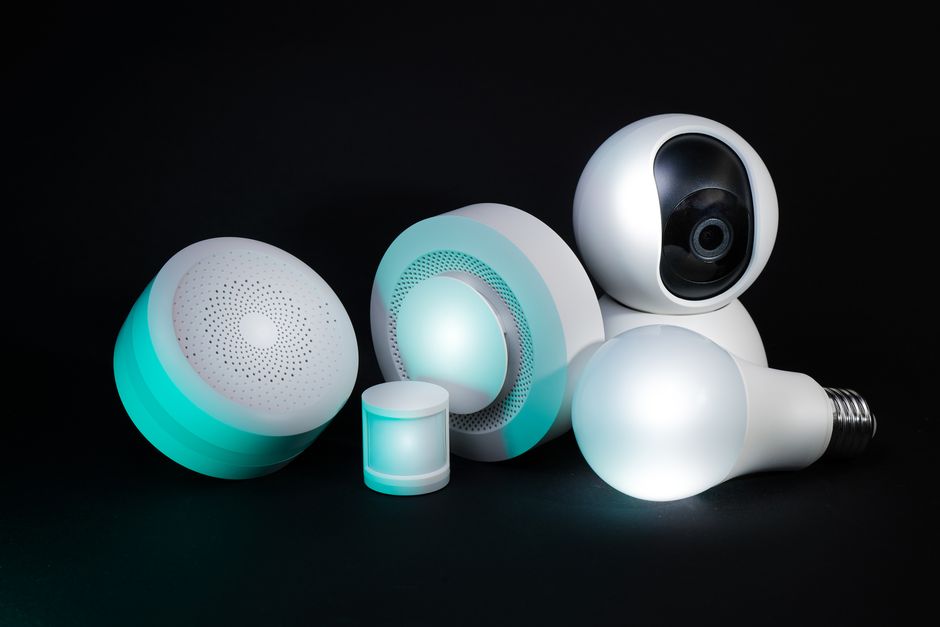
Smart Home Automation Products: What They Are and Which Ones Matter in 2026
Smart home automation products have gone from a luxury to a practical reality for millions of households. As of 2026, around 576 million households worldwide are using smart home technologies — and 84.9 million of those are in the United States alone.
Here’s a quick look at the most popular smart home automation product categories available today:
| Category | What It Does | Examples |
|---|---|---|
| Smart Hubs | Central control for all devices | SwitchBot Hub 3, Aqara Hub M200 |
| Smart Thermostats | Automates climate and energy use | Aqara Thermostat Hub W200 |
| Smart Security | Cameras, sensors, locks, and alerts | ADT, Vivint, SimpliSafe |
| Smart Lighting | Schedules, scenes, and voice control | Philips Hue, IKEA, Tapo |
| Control Panels | Wall-mounted touchscreen dashboards | SONOFF NSPanel Pro |
| Voice Assistants | Hands-free device control | Amazon Alexa, Google Assistant, Siri |
| Smart Plugs & Switches | Automates appliances and outlets | Tapo, Kasa |
Whether you want to cut your energy bill, boost security, or just stop walking across the house to turn off the lights — there’s a product built for it.
The challenge most homeowners run into isn’t finding devices. It’s getting them to work together reliably, without constant troubleshooting.
That’s exactly what this guide is here to help with.
I’m Dominic Hesano, founder of Smartmait, a home and business automation company focused on designing, installing, and supporting smart home automation products for homeowners and small businesses who want technology that actually works. My background in franchising, operations, and local service businesses gives me a practical lens on what separates a frustrating smart home setup from one that runs smoothly for years.
The Evolution and Benefits of Smart Home Automation Products
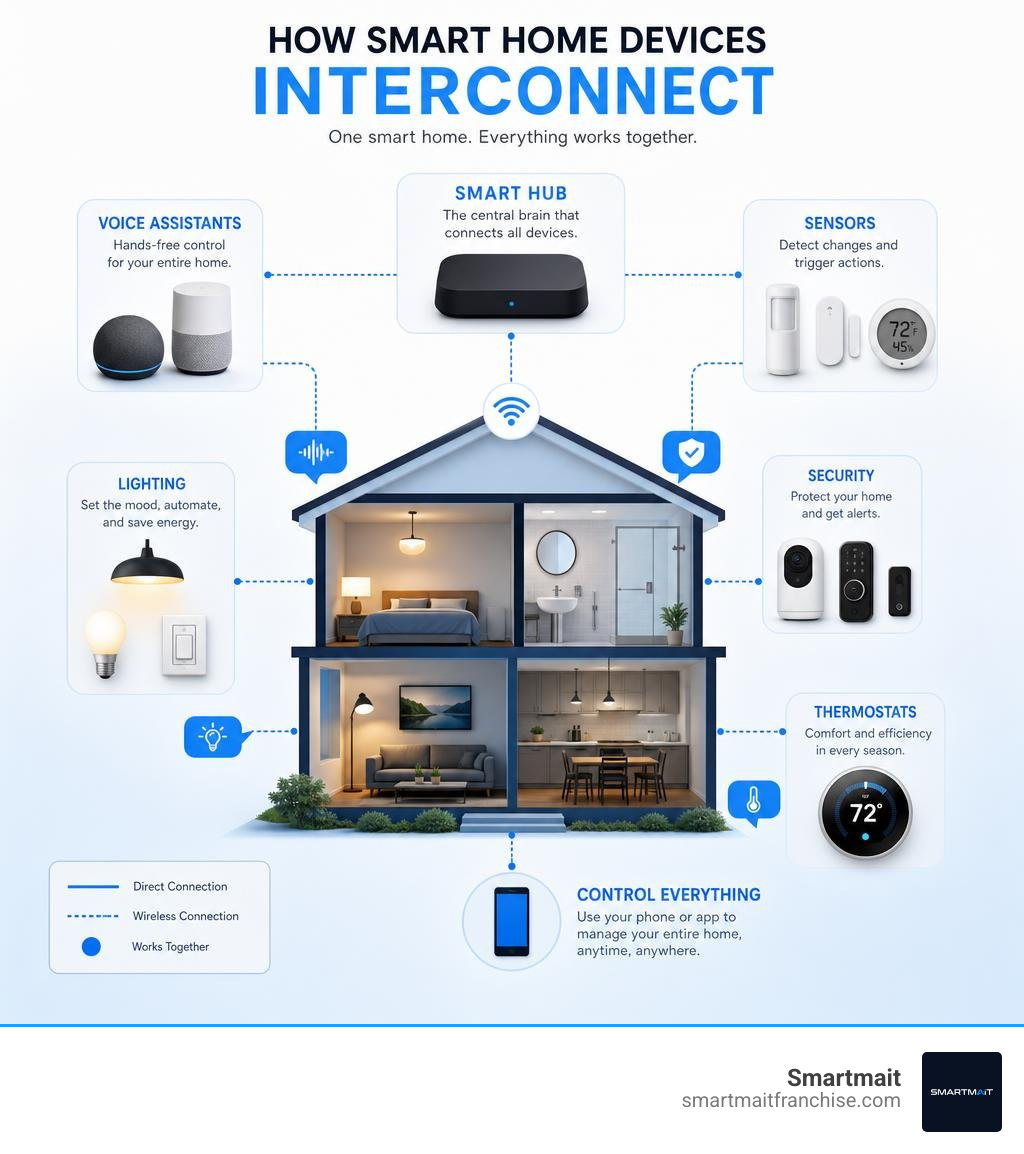
Not long ago, a “smart home” meant having a few standalone gadgets that required three different apps just to turn on a single lamp. Today, the landscape of smart home automation products has evolved into a highly integrated, intelligent ecosystem. Devices no longer just wait for your command; they anticipate your needs based on time, weather, and even your physical presence in a room.

This evolution brings massive practical benefits, particularly when it comes to safeguarding your home. If you have ever wondered whether home security systems are worth the investment, the data is clear:
- Homes without security systems are 300 percent more likely to experience a burglary.
- 60 percent of burglars admit that the mere presence of a security system would cause them to look for an alternative target.
- Video surveillance tools remain the most widely used home security technology for keeping an eye on property boundaries.
Beyond deterrents, smart security also directly protects your wallet. Insurance companies hate paying out claims—and since about four percent of all insurance claims are due to theft, insurers are highly motivated to help you secure your home. Because of this, 26 percent of insured homeowners and 31 percent of insured renters receive direct insurance premium discounts simply for having a qualified home security system installed.
But security is only one piece of the puzzle. Modern automation systems play a massive role in energy efficiency and environmental sustainability. Smart thermostats learn your daily routines to optimize heating and cooling, while automated window treatments adjust based on the sun’s position to reduce HVAC strain.
For many families, these technologies also provide life-changing accessibility. Voice-controlled lighting, automated door locks, and environmental sensors allow older adults or individuals with limited mobility to maintain their independence and live safely at home for much longer.
If you are currently planning a new property, thinking ahead is crucial. Integrating these systems early on saves time and money, which is why we highly recommend looking at the Smart Home New Construction Must-Have Features for Your Dream Build to plan your infrastructure from the ground up.
Top Smart Home Automation Products to Upgrade Your Space
Building a reliable smart home is like building a house: you need a rock-solid foundation. In the smart home world, that foundation consists of your hub, your climate controllers, and your primary user interfaces.
To help you navigate the options available in 2026, here is how the top central control hardware options compare:
| Product | Primary Protocols | Key Feature | Best For |
|---|---|---|---|
| SwitchBot Hub 3 | Matter, Wi-Fi, IR, Bluetooth | Dial Master & 4-in-1 Smart Sense | All-in-one IR and environmental control |
| Aqara Hub M200 | Matter, Thread, Zigbee, IR, PoE | Local Automations 2.0 & 360° IR | Robust local automation and wired power |
| SONOFF NSPanel Pro | Zigbee 3.0, Wi-Fi, Matter Bridge | 3.95″ Touchscreen, Home Assistant integration | Centralized wall-mounted dashboard control |
Let’s dive deep into the best-performing hardware categories of the year.
Central Hubs: The Brains of Your Smart Home Automation Products
A central hub acts as the translator for your entire home. Without it, your Zigbee motion sensor cannot talk to your Wi-Fi light bulb, and your Apple HomeKit app cannot adjust your IR-controlled air conditioner.
Two standout hubs dominate the market in 2026:
1. SwitchBot Hub 3
The SwitchBot Hub 3 | Matter Smart Home Hub | Temperature & Humidity Monitor | SwitchBot US is a powerhouse for multi-platform environments. It features native Matter support, allowing you to bridge up to 30 sub-devices directly into Apple Home, Google Home, or Home Assistant.
Equipped with an IPS display, four programmable scene buttons, and a physical control dial, the Hub 3 is more than a passive bridge. It includes built-in sensors for temperature, humidity, light, and even CO2 monitoring (when paired with the Meter Pro CO2). Its 4-in-1 Smart Sense automation engine allows you to trigger complex routines based on environmental changes, weather forecasts, time, or GPS location.
2. Aqara Hub M200
If you want ultra-reliable, local-first control, the Hub M200 – Aqara LLC (also available via the Hub M200 – Aqara LLC European portal) is an exceptional choice. The M200 functions as a Zigbee hub, a Thread border router, and a Matter controller all in one.
One of its biggest advantages is support for Power over Ethernet (PoE), which eliminates the need for messy power adapters and ensures a stable, wired network connection. Its built-in 360° IR blaster can learn commands from legacy remotes and even detect when those physical remotes are used, keeping your smart system’s status perfectly in sync. With Automations 2.0, the M200 runs complex WHEN-IF-THEN logic completely locally, meaning your schedules and security triggers will keep working even if your internet connection goes down.
Climate Control: Smart Thermostats as Essential Smart Home Automation Products
Heating and cooling make up the largest portion of a home’s energy bill. Upgrading to a smart thermostat that can coordinate with other sensors is one of the fastest ways to see a return on your investment.
Aqara Thermostat Hub W200
The Aqara Thermostat Hub W200: Comfort that Adapts to You (detailed further on the Thermostat Hub W200 – Aqara LLC product page) is a device that completely redefines the thermostat category. Rather than just managing your HVAC system, the W200 doubles as a Zigbee hub, a Matter controller, and a Thread border router.
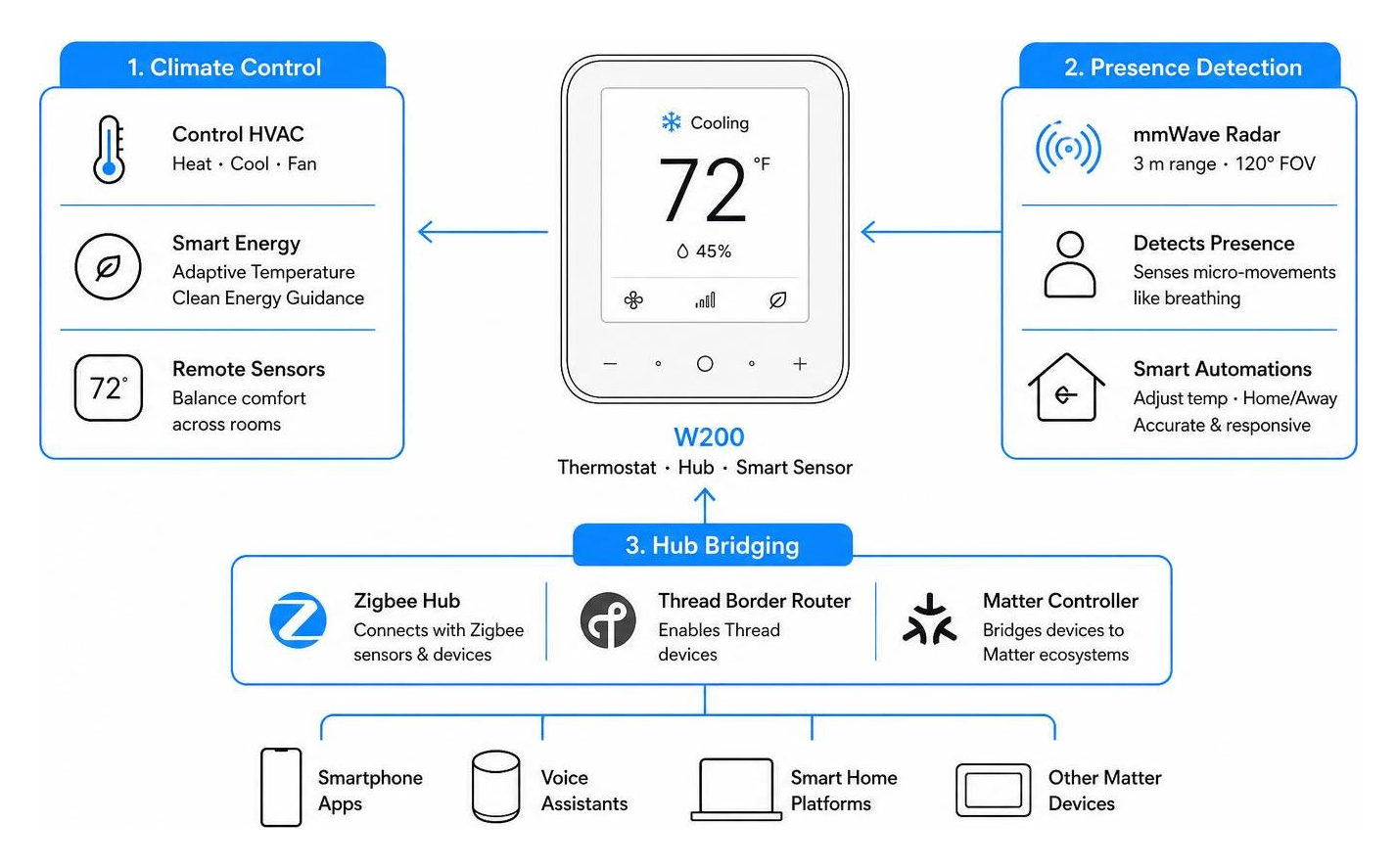
What makes the W200 truly unique in 2026 is its native integration with Apple’s Adaptive Temperature and Clean Energy Guidance features. It can automatically shift your energy usage to times when the local electrical grid is running on cleaner, cheaper energy.
Furthermore, the W200 features a built-in mmWave radar presence detector with a 3-meter range and a 120° field of view. Instead of relying on basic motion sensors that turn off when you sit still, mmWave detects micro-movements (like breathing). This allows the thermostat to know if a room is truly occupied, adjusting the temperature or triggering home-away routines with pinpoint accuracy. You can also connect remote temperature sensors to average out hot and cold spots across different rooms, ensuring perfect comfort wherever you are in the house.
Smart Control Panels: All-in-One Wall Displays
While voice commands and smartphone apps are convenient, nothing beats having a dedicated, physical command center mounted on the wall where the whole family can access it.
SONOFF NSPanel Pro
The SONOFF NSPanel Pro Smart Home Control Panel 86 Type is a beautiful 3.95-inch capacitive touchscreen wall panel that acts as a central Zigbee 3.0 gateway. It allows you to monitor live security camera feeds, arm or disarm your security system, and control lighting directly from its display.
For advanced smart home enthusiasts, the NSPanel Pro is highly customizable. It features a built-in Matter Bridge to sync devices across ecosystems and supports web shortcut features. This means you can easily load a customized Home Assistant dashboard directly onto the screen, giving you complete, low-latency control over every local automation in your home without needing to root the device.
Professional Installation vs. DIY Smart Home Setups
When building a smart home, you will face a fundamental choice: do you buy the equipment off the shelf and install it yourself, or do you hire a professional integration service?
The DIY route can be highly rewarding for hobbyists who enjoy tinkering, writing scripts, and troubleshooting network issues. If you want to dive deep into the technical side of things, you can read our guide on DIY NodeMCU Home Automation: Stop Clapping, Start Coding to learn how to build custom hardware from scratch.
However, for most homeowners, the DIY path quickly leads to “smart home fatigue.” Managing IP addresses, dealing with devices that randomly drop offline, and trying to get different brands to talk to one another can turn into a frustrating second job.
This is where professional installation and ongoing maintenance make all the difference. At Smartmait, we believe a smart home should serve you—not the other way around.
The benefits of a professionally integrated system include:
- Unified Ecosystems: We ensure that your locks, cameras, lighting, and climate controls work together under a single, intuitive interface.
- Network Optimization: Smart devices can easily clog a standard home Wi-Fi router. We install robust, commercial-grade local networks designed to handle hundreds of connected devices without slowing down.
- Ongoing Support & Maintenance: Technology changes, firmware updates break integrations, and hardware eventually needs tuning. Our franchise model is built on providing long-term maintenance and optimization, ensuring your system remains secure and functional year after year.
If you are interested in how we maintain high standards of reliability and build lasting relationships with our clients, check out our guide on Smart Home Customer Retention Strategies That Actually Work.
Frequently Asked Questions About Smart Home Systems
How do Matter, Zigbee, and Z-Wave protocols differ?
Zigbee and Z-Wave are older, highly reliable wireless mesh technologies. They operate on low power and require a dedicated hub to translate their signals so your phone or router can understand them. Because they run locally, they are incredibly fast and do not rely on an active internet connection.
Matter is a newer, universal smart home standard introduced to solve interoperability. Backed by industry giants like Apple, Google, Amazon, and Samsung, Matter allows certified devices from different brands to communicate directly with one another over your existing Wi-Fi or Thread networks without needing proprietary bridges.
Can smart home devices lower my home insurance premiums?
Yes, absolutely. Because water damage and theft make up a massive percentage of insurance claims, many insurance companies offer discounts of up to 10 to 15 percent on homeowner’s or renter’s insurance policies if you have professionally monitored security systems, smart locks, and connected water leak detectors installed. In fact, data shows that 31 percent of insured renters and 26 percent of homeowners currently utilize these discounts.
How do smart home systems protect user privacy and security?
Privacy is a valid concern when placing cameras, microphones, and sensors inside your living space. To protect your data, we recommend prioritizing systems that support local execution (like Home Assistant or Aqara’s local automation engines). This ensures that your automation data, video feeds, and usage habits are processed locally inside your home rather than being sent to a third-party cloud server.
Additionally, always ensure your smart home network uses strong WPA3 encryption, and keep all device firmware updated to patch potential security vulnerabilities.
Conclusion
The era of the “clunky” smart home is officially over. In 2026, smart home automation products are faster, more reliable, and more intelligent than ever before. From hubs like the SwitchBot Hub 3 and Aqara M200 that bridge legacy devices into modern ecosystems, to the climate control of the Aqara W200 thermostat, the technology exists to make your home incredibly comfortable, secure, and energy-efficient.
But having great hardware is only half the battle. To truly experience the magic of a brilliant home, the system must be designed, installed, and maintained correctly.
At Smartmait, we take the complexity out of the equation. We handle the wiring, the network configuration, the programming, and the long-term maintenance so you can simply enjoy the benefits of a truly connected home.
Ready to transform your living space from dumb to brilliant? Visit Smartmait Home Automation Services today to schedule a consultation with a local integration expert in your area.