
Why Smart Home Battery Storage Matters
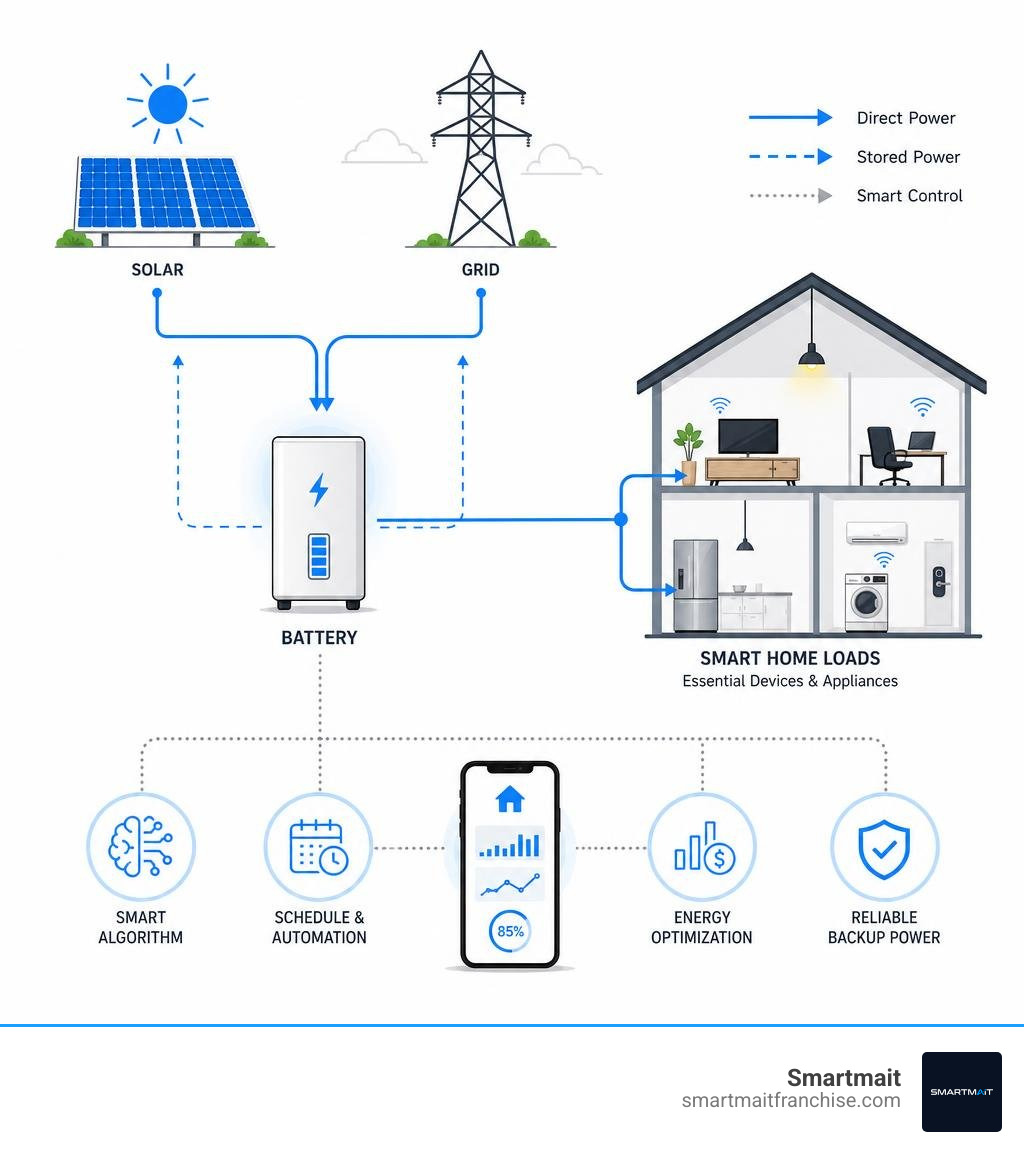
Smart home battery storage keeps essential devices running during an outage and can lower electricity costs by storing solar power or lower-priced grid power for later use. The right system matches two numbers to your goals: battery capacity in kilowatt-hours (kWh) for runtime, and power output in kilowatts (kW) for the appliances it can run at once.
A battery is not a fuel generator or a basic power bank. It can switch on automatically, work with solar panels and utility rates, and use smart controls to prioritize essentials such as refrigeration, Wi-Fi, lighting, security, and medical equipment. Some systems back up selected circuits; others are designed for most or all of a home.
I am Dominic Hesano, a smart home automation professional focused on practical technology systems for homes and businesses. My work in connected devices, networking, automation, and long-term service support informs this guide to smart home battery storage and the systems around it.
Smart home battery storage vocabulary:
Understanding How Smart Home Battery Storage Works
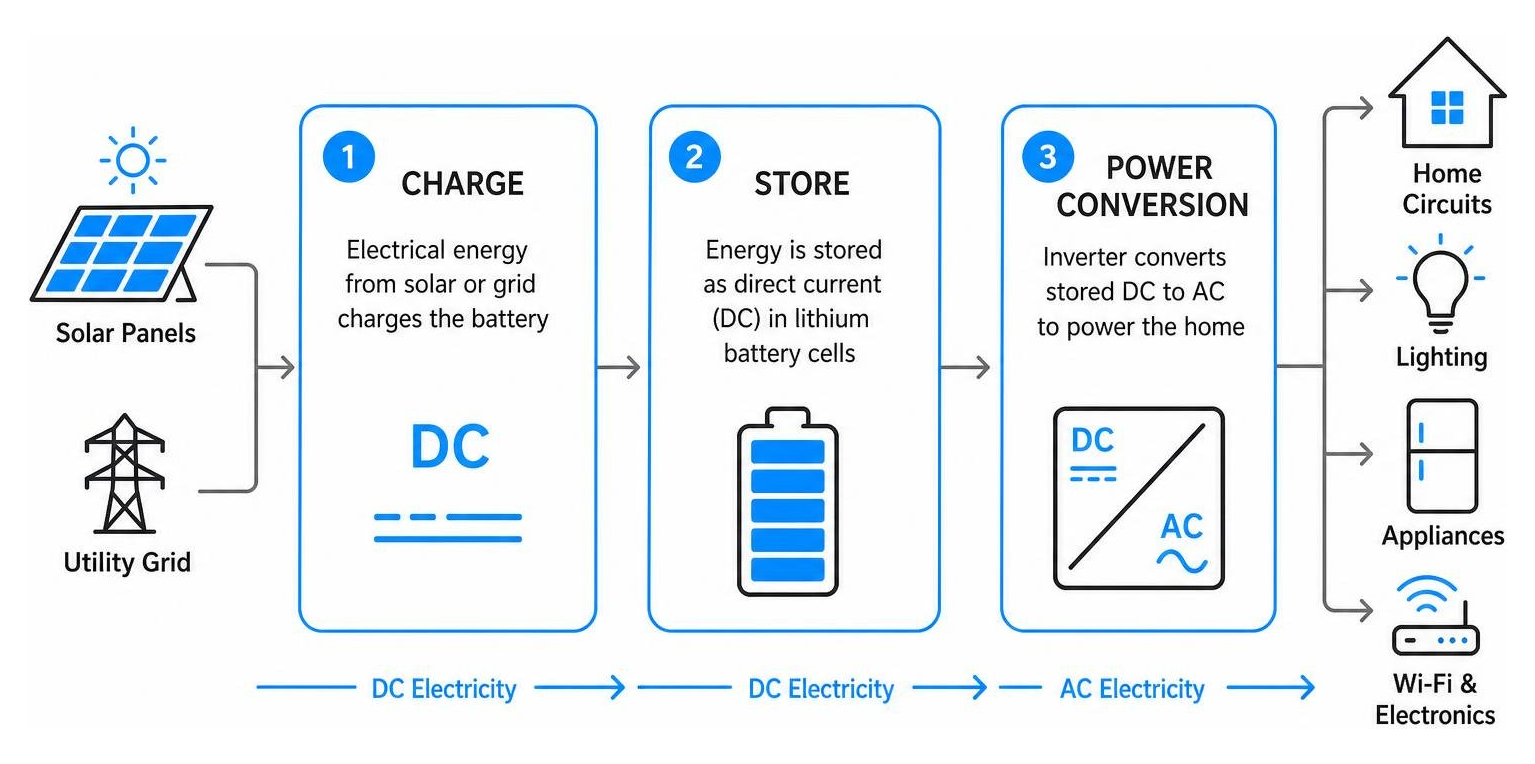
A residential battery storage system captures electrical energy from rooftop solar panels or the local utility grid and stores it as direct current (DC) inside high-density lithium cells. An inverter then converts that stored electricity into alternating current (AC) to power household circuits.
Unlike a passive emergency power pack, a connected storage system actively tracks household energy demand, dynamic utility rates, and grid health. Deploying these units gives you automated, round-the-clock control over your power consumption. To explore how intelligent hardware optimizes daily consumption patterns, review the complete guide to smart home power management for energy savings.
Emergency Backup vs. Continuous Energy Management
When an unexpected storm knocks out the local grid, standard fossil-fuel generators take anywhere from 10 to 60 seconds to crank over, produce exhaust, and supply power. That delay causes digital clocks to flash, desktop computers to restart, and home servers to shut down.
Modern energy storage systems utilize high-speed automatic transfer switches (ATS) capable of islanding a property in under 10 to 20 milliseconds (<10ms). This instantaneous switch-over acts as a whole-property uninterruptible power supply (UPS). Sensitive electronics, medical devices, and Wi-Fi networks operate continuously without interruption.
Beyond backup, smart storage provides dynamic load management. If an extended outage occurs, the system automatically sheds heavy, non-essential electrical circuits (like hot tubs or secondary heating zones) while reserving continuous kilowatt-hours for food preservation, lighting, and communication.
Solar Self-Consumption and Rate Arbitrage
In regions where utility providers have adopted modern billing frameworks like NEM 3.0, exporting midday solar generation back to the grid yields minimal credit. Smart home batteries resolve this by storing excess daytime generation directly on-site. When electricity rates peak during evening hours, the system discharges its stored energy to run the home, eliminating expensive utility purchases.
With modern systems achieving round-trip efficiency ratings between 94.5% and 95.4%, homeowners avoid conversion penalties and keep their generated power inside the home. For detailed data on storage efficiency metrics, explore the technical specifications on residential storage efficiency.
Core System Architectures: Comparing Battery Types and Configurations
Choosing the right storage architecture depends on whether you are retrofitting an existing rooftop solar array or building a unified system from the ground up.
AC-Coupled vs. DC-Coupled Systems
In an AC-coupled configuration, the battery system operates with its own dedicated storage inverter separate from the solar inverter. This design makes retrofitting existing solar arrays simple because it links straight to the home’s main AC service panel without rewiring existing rooftop hardware.
In a DC-coupled configuration, solar panels and the battery pack share a single hybrid inverter. Power generated by the solar panels charges the battery directly in DC form, avoiding multiple conversions between AC and DC. This direct architecture can yield the equivalent of up to 10 days of additional usable energy per year. Many modern systems also rely on specialized energy storage backup interfaces to isolate backup loads safely during blackouts.
| Feature | AC-Coupled Storage | DC-Coupled Storage | Modular Low-Voltage (48V) | All-in-One Power Station |
|---|---|---|---|---|
| Best Application | Retrofits on existing solar | New combined solar + storage | Flexible multi-room zoning | Compact utility installations |
| Round-Trip Efficiency | ~89% – 92% | ~94% – 95.5% | ~92% – 94% | ~90% – 93% |
| Expansion Flexibility | Independent unit add-ons | Inverter-limited module stacks | Up to 8+ parallel packs | Modular internal cabinets |
| Installation Complexity | Moderate (Standard AC breaker) | Moderate to High (Hybrid wiring) | Low to Moderate | Low (Integrated hardware) |
| Inverter Setup | Dual inverters (PV + Battery) | Single shared hybrid inverter | Matched low-voltage inverter | Built-in hybrid inverter |
All-in-One Power Stations vs. Modular Mesh Storage
All-in-one power stations integrate the hybrid inverter, battery management system (BMS), disconnect switches, and energy management computing into a single unified chassis. This consolidated design minimizes conduit runs and speeds up commissioning in dedicated utility spaces.
Conversely, modular mesh systems deploy localized, plug-and-play storage units throughout the home. These units synchronize over local wireless mesh networks to distribute power across distinct zones without requiring centralized subpanel overhauls. Homeowners setting up their first automation networks can reference smart home 101: a beginner’s guide to getting started to see how modular, decentralized devices coordinate across local networks.
Sizing and System Design for Residential Energy Needs
System sizing requires evaluating two distinct technical metrics: continuous and surge power output (measured in kilowatts, kW), and total usable energy capacity (measured in kilowatt-hours, kWh).
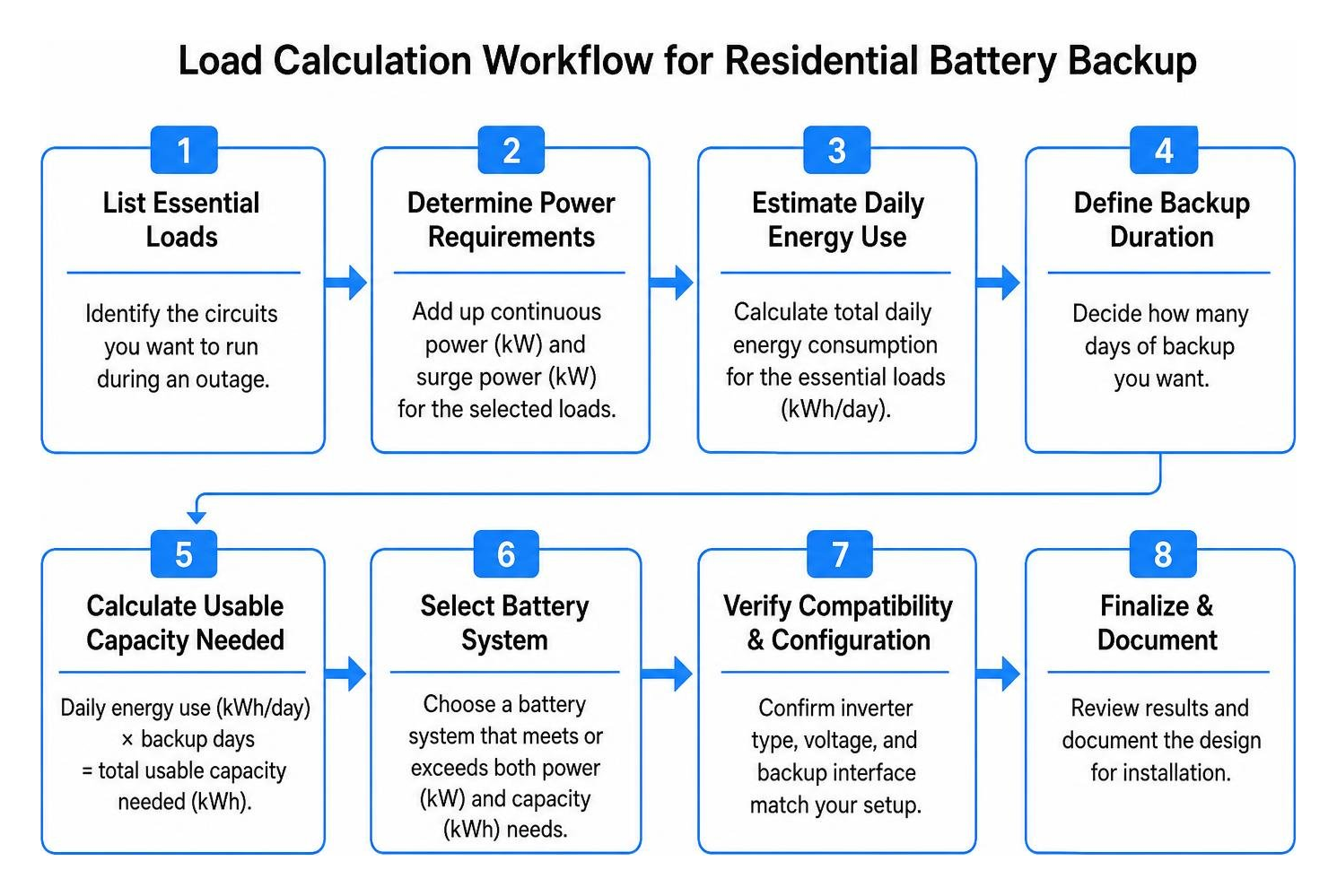
To establish an accurate design before purchasing hardware, review the smart way to plan your next smart home system upgrade.
Sizing Your Smart Home Battery Storage Capacity
A standard American household consumes approximately 28 to 30 kWh of electricity per day. During grid emergencies, basic preservation mode drops demand to 8 to 12 kWh daily by powering only essential circuits.
- Partial-Home / Critical Load Backup (5 kWh to 15 kWh): Dedicated to essential appliances including standard refrigerators (32+ hours runtime), network modems and Wi-Fi routers (130+ hours), interior LED lighting (150+ hours), and critical medical monitors.
- Whole-Home Standard Resilience (16 kWh to 30 kWh): Capable of running essential loads alongside high-draw appliances such as sump pumps, refrigeration, microwave ovens, kitchen cooktops, and ductless mini-split heat pumps.
- High-Demand / Multi-Day Off-Grid Storage (30 kWh to 60+ kWh): Built for larger estates, EV charging needs, central heat pump compressors, and continuous multi-day operation paired with daytime solar generation.
Battery Chemistry, Safety, and Lifespan
Modern residential systems have transitioned away from older Nickel Manganese Cobalt (NMC) cells to Lithium Iron Phosphate (LFP / LiFePO4) chemistry.
LFP chemistry provides unmatched thermal stability, eliminating the risk of thermal runaway fires. These cells easily support daily cycling over a 10-year lifespan while retaining over 70% to 80% of their original capacity.
When selecting hardware, look for testing against the UL9540A standard. Systems certified under UL9540A have completed rigorous unit-level thermal runaway testing, confirming they can be safely wall- or floor-mounted in garages, utility rooms, or basements with minimal clearance spacing.
Smart Integrations, Automation, and Maintenance
Modern battery storage operates as an active component within a larger smart home ecosystem rather than an isolated utility box.
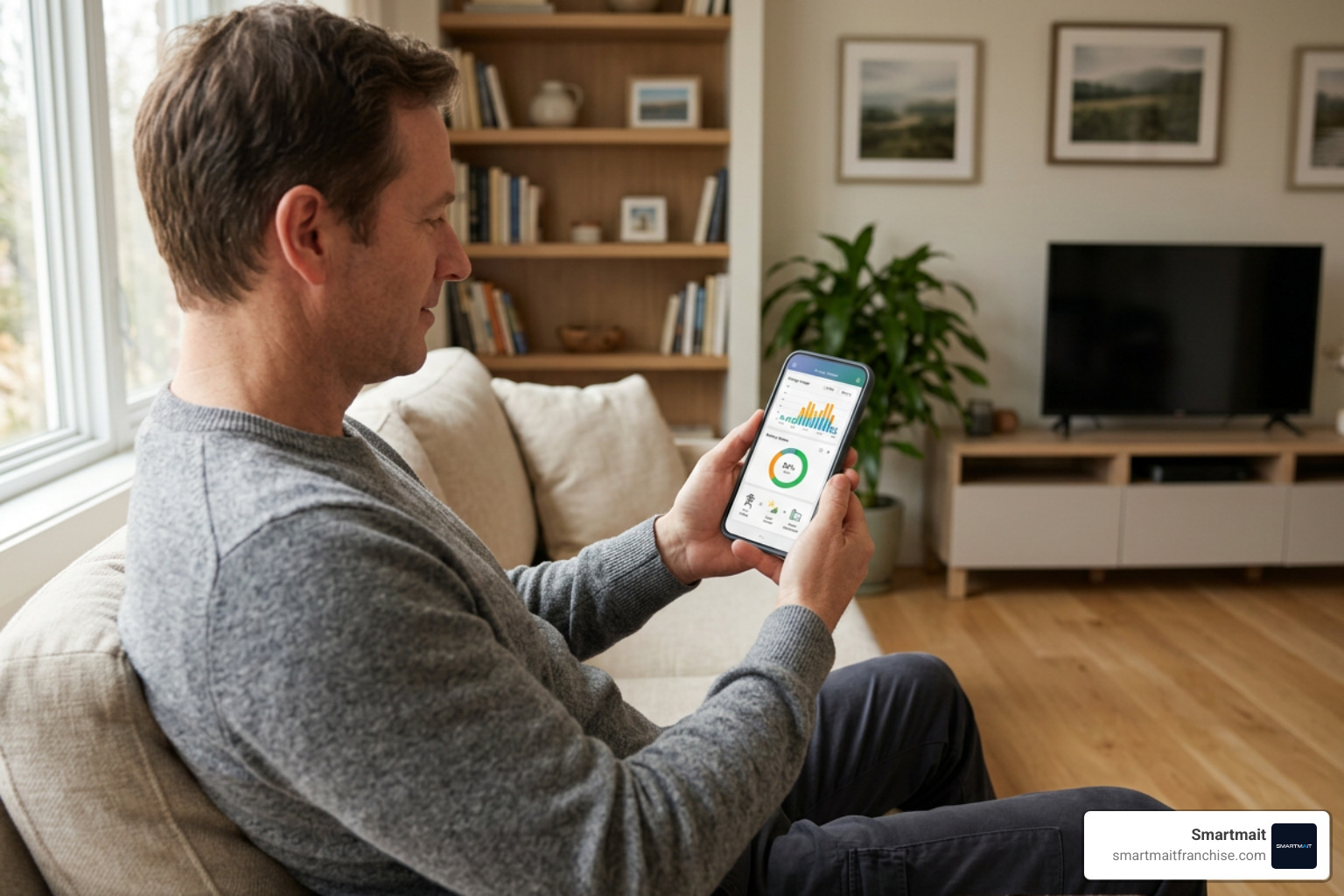
Integrating Smart Home Battery Storage with Automation Ecosystems
High-performance batteries provide local open APIs, Matter compatibility, and native MQTT integration. This allows homeowners to connect their storage hardware directly to local automation controllers like Home Assistant without mandatory monthly software subscriptions. For practical automation ideas that pair seamlessly with energy systems, check our detailed guide to practical home automation solutions.
Smart integrations unlock powerful automated behaviors:
- Severe Weather Pre-Charging: Energy systems monitor local weather feeds and automatically charge battery reserves to 100% capacity from the grid prior to an anticipated severe storm.
- Dynamic Thermostat Setbacks: When the home shifts to island backup mode, the system communicates with connected smart thermostats to adjust temperature set points by a few degrees, instantly extending battery runtime.
- Appliance-Level Circuit Management: High-draw loads, such as pool pumps and water heaters, can be paused automatically when the battery drops below a 30% reserve threshold. Real-time feedback can be tracked directly using the hardware detailed in our in-depth guide to geo trio ii touch button smart energy monitor.
Installation Requirements and Ongoing System Upkeep
Installing hardwired residential storage involves line-voltage electrical work, municipal permitting, utility interconnection approvals, and precise load calculations. Systems utilizing integrated smart disconnects or intelligent stacking can often avoid costly main electrical panel upgrades (MPUs), saving thousands in upfront project costs.
Stationary lithium batteries require no fluid top-offs, oil changes, or exhaust venting. However, ongoing software updates, cell balance monitoring, and automated performance diagnostics are vital for maintaining warranty protection and maximum lifespan. For insights on automated health monitoring, explore how predictive maintenance: let smart tech fix your home before it breaks.
At Smartmait, we provide turnkey system installations paired with routine remote diagnostics and scheduled on-site maintenance to keep your residential energy infrastructure performing reliably year after year.
Frequently Asked Questions About Home Battery Backup Systems
How many kWh of battery storage do I need to power my home during an outage?
For backing up critical circuits like refrigerators, internet routers, lights, and device charging, a 10 kWh to 15 kWh battery typically provides 24 to 36 hours of continuous operation. If you want whole-home backup that runs central air conditioning, heat pumps, and large appliances, you will generally need 25 kWh to 35 kWh of capacity, especially if you want multiple days of resilience without immediate solar recharging.
Can a home battery system completely replace a standby fuel generator?
Yes, provided the battery is paired with an appropriately sized rooftop solar array. While fuel generators rely on continuous deliveries of propane, diesel, or natural gas—which can fail during severe regional storms—a solar-plus-storage setup continuously recharges every day sunlight is available. For homes with extremely high winter loads or limited roof area, hybrid setups can coordinate both battery storage and a standby generator for multi-week backup.
How long do residential lithium batteries last before losing performance?
Modern residential Lithium Iron Phosphate (LFP) batteries are engineered for daily cycling and carry standard 10-year manufacturer warranties. In typical residential environments, high-quality LFP cells maintain 70% or more of their original capacity after 10 to 15 years of daily charging and discharging.
Conclusion
Smart home battery storage gives you reliable backup protection during grid failures and lowers long-term electricity bills through automated time-of-use rate management. By pairing high-density LFP cells with intelligent load management, modern storage systems deliver quiet, instantaneous power right when you need it most.
Selecting the best system requires matching inverter continuous output, total kilowatt-hour capacity, and smart automation capabilities directly to your property’s daily load profile. Contact our certified team at Smartmait to explore custom, fully supported installation and maintenance plans on our professional smart home energy management solutions platform.