
Understanding the Smart Home Franchise Model and Market Potential
The market for smart home and smart building technology is expanding rapidly as smart automation technology becomes increasingly affordable. Valued at $30 billion in the U.S. alone, the industry has evolved from a niche luxury reserved for high-end custom builds into a standard feature for everyday residential properties and commercial facilities. Homeowners and business operators are eager to adopt energy-efficient HVAC controls, smart lighting, automated security, mesh networking, and integrated audio/video. However, most consumers lack the technical skill or time to configure, integrate, and maintain these devices effectively.
This disconnect creates a massive market gap. Traditional maintenance companies often lack the technical expertise to handle low-voltage, connected environments, while independent tech installers frequently focus solely on one-off installations without offering long-term support. A dedicated business model that bridges installation with ongoing preventative care sits directly in the sweet spot of modern consumer demand.
Why Invest in a Smart Home Franchise Opportunity vs. Going Independent?
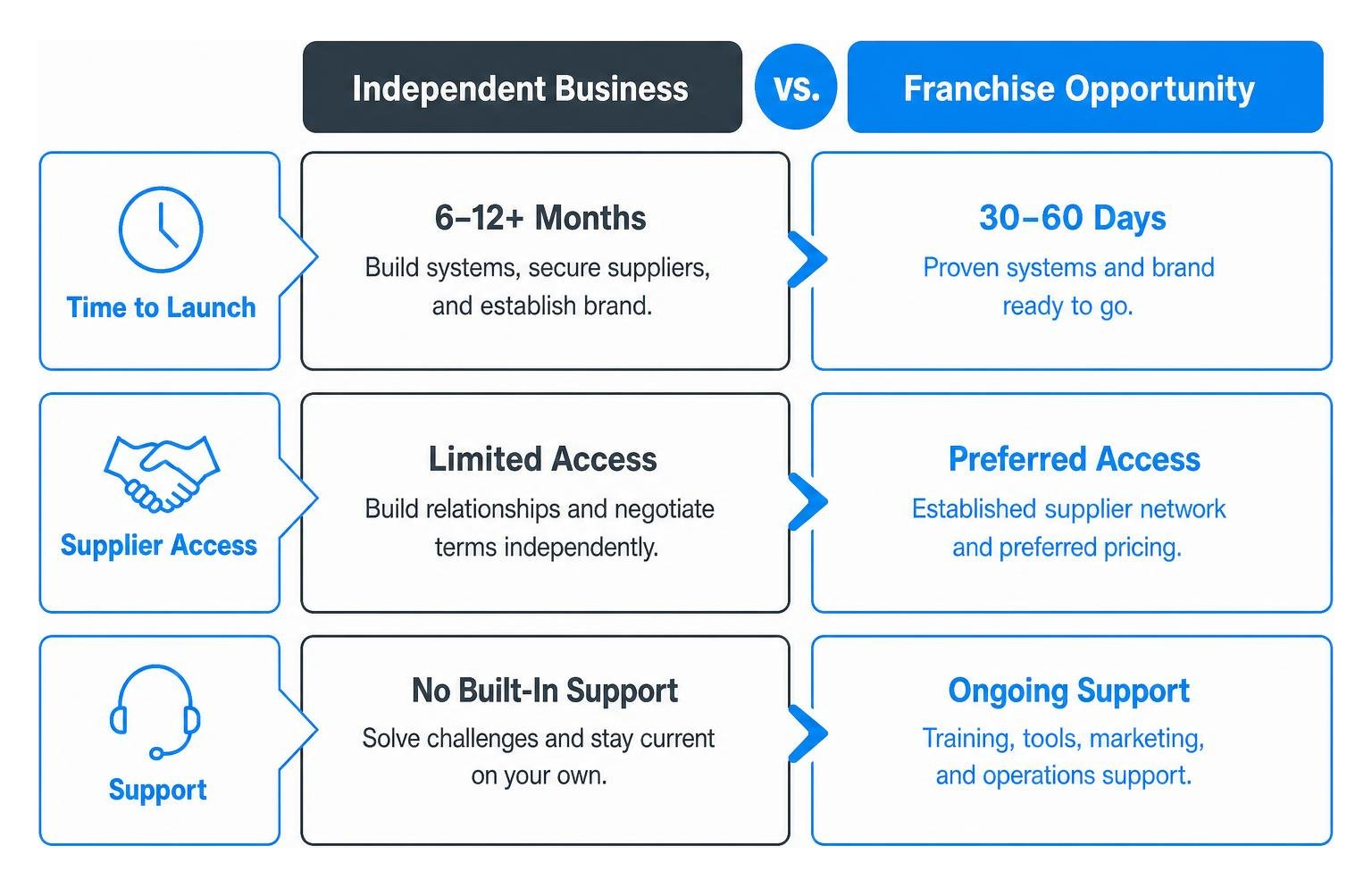
Launching an independent technology integration business requires building everything from scratch. You have to secure supplier relationships, design operating procedures, develop local brand equity, create marketing campaigns, and keep up with rapidly shifting tech standards completely on your own.
Choosing a smart home franchise opportunity dramatically reduces operational risk by giving you access to a turnkey business framework. Instead of spending months negotiating terms with hardware vendors, franchisees gain immediate access to established supplier networks and preferred pricing. Furthermore, operating under an established brand instills instant trust with homeowners, home builders, and commercial clients who might hesitate to hire an unvetted independent contractor. To learn more about how this framework operates, read The Complete Guide to Smart Home Franchises.
Business Models and Generating Built-In Recurring Revenue
The fundamental strength of our franchise model lies in its multi-stream revenue structure. Independent installers often suffer from seasonal income fluctuations because they rely exclusively on one-time installation fees. Once the hardware is on the wall, their revenue stream dries up until the next customer calls.
By contrast, our model combines upfront project revenue with predictable, long-term service memberships. By offering routine maintenance memberships, smart home businesses build genuine, recurring revenue into their daily operations. To dive deeper into client retention tactics, see How Smart Home Franchises Can Lock in Client Loyalty.
| Revenue Category | Independent Business Model | Smart Home Franchise Model |
|---|---|---|
| Initial Setups & Installs | Primary income source (one-time) | Core initial income source |
| Recurring Memberships | Rare or difficult to manage | Built-in routine maintenance plans |
| Hardware Pricing | Standard retail/wholesale pricing | Direct supplier access & preferred pricing |
| Support & Upgrades | Ad-hoc, reactive service calls | Structured tech support & system upgrades |
| Commercial Integrations | Limited by individual network | Scalable commercial building packages |
Evaluating the Costs and Financials of a Smart Home Franchise Opportunity

Evaluating a franchise investment requires a clear understanding of initial capital requirements, ongoing operating costs, and long-term earnings potential. Because most smart home franchise operations can be run as a home-based business without expensive retail storefront leases, startup overhead remains lean compared to traditional brick-and-mortar franchises.
When reviewing a franchisor’s Franchise Disclosure Document (FDD), you will evaluate three primary financial components:
- Initial Franchise Fee: The upfront cost securing your right to operate under the brand name, access proprietary training, and receive launch support.
- Startup Capital: Funding allocated for initial toolkits, branded work vehicles, local marketing pushes, licenses, and initial working capital.
- Ongoing Royalties: System fees—typically structured as a percentage of gross revenue—that support ongoing field coaching, technology platforms, brand development, and corporate support services.
Territory Selection and Exclusive Rights
Securing an exclusive territory ensures you own the rights to market and serve clients within a designated geographic region without internal competition from other franchisees. Territory sizes are typically determined using local demographic metrics, population density, homeownership rates, and median household income levels.
Having exclusive territory rights allows you to systematically build relationships with regional home builders, interior designers, commercial property managers, and real estate professionals. To understand why clear boundary definitions are essential for protecting your investment, explore our guide on Smart Home Franchise Exclusive Territory Rights and Why They Matter.
Qualifications, Training, and Franchisee Support Systems
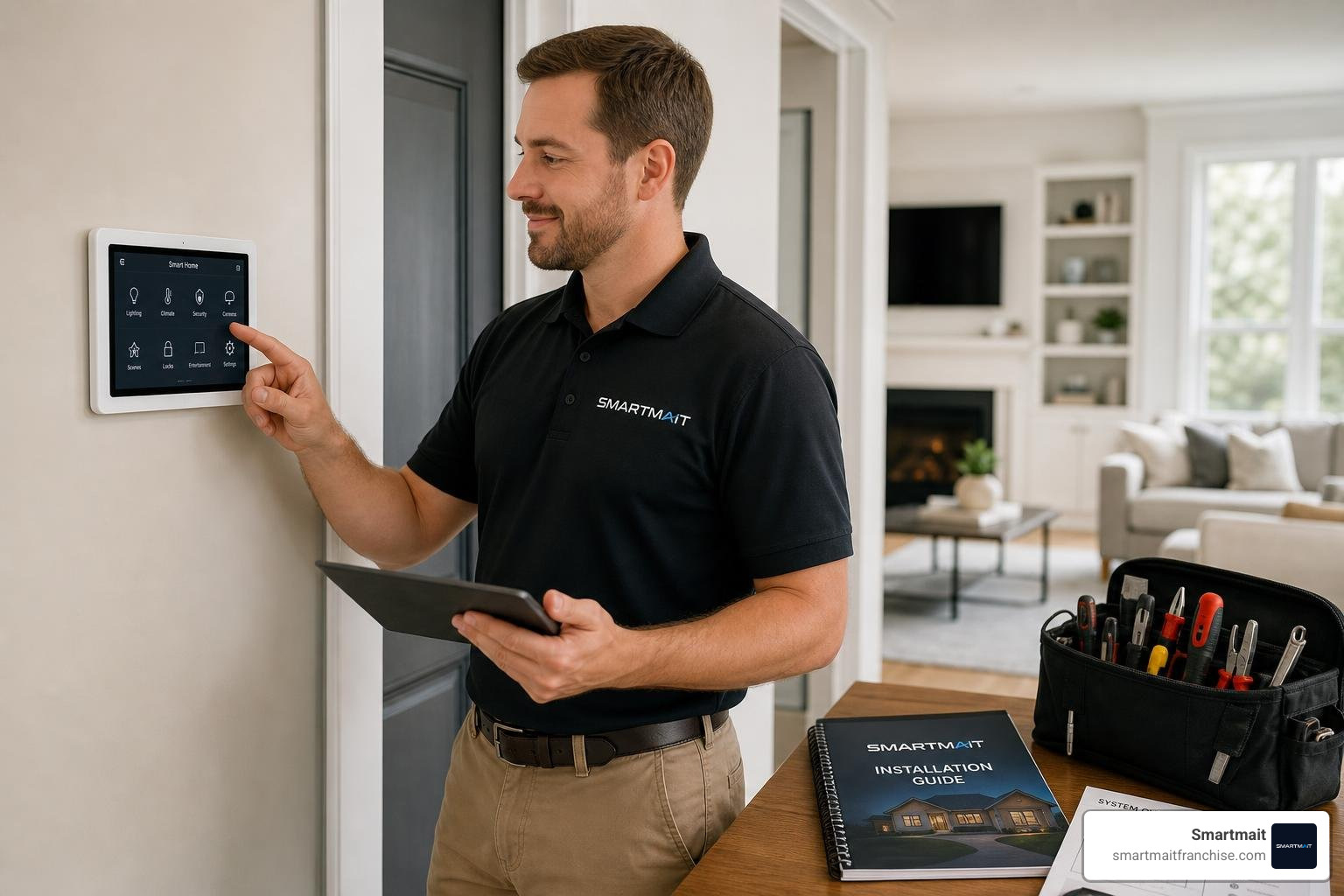
A common misconception about entering the technology service industry is that you must be a computer engineer, master electrician, or software programmer. In reality, modern smart home systems are engineered for intuitive setup, and franchisors provide full operational instruction.
Essential Qualifications and Mindset for a Smart Home Franchise Opportunity
Prior technical experience is not required to own or operate a franchise. What matters far more is your operational mindset, leadership capability, and dedication to delivering top-tier customer service.
The ideal candidate exhibits:
- Strong Interpersonal Skills: The ability to communicate clearly with homeowners, build rapport, and explain smart technology in simple, accessible terms.
- Entrepreneurial Drive: A proactive attitude toward local networking, customer acquisition, and team leadership.
- Organization and Management: Willingness to follow established operational systems, manage service schedules, and coordinate field operations efficiently.
Whether you plan to operate as an owner-operator completing field work directly or act as an executive manager hiring tech-savvy Integrators, the franchise system gives you the tools needed to train and lead your team effectively.
Turnkey Support, Marketing, and Staying Industry-Competitive
Staying ahead in the technology sector requires continuous education, robust supplier relationships, and streamlined marketing. Franchisors provide the infrastructure needed to keep your business relevant and visible within your local community.
Key support systems typically include:
- Done-For-You Marketing: Professionally crafted local SEO campaigns, digital advertisement assets, printed collateral, and automated social media strategies to drive inbound inquiries.
- Automated Review Systems: Software integration that prompts satisfied customers for digital reviews immediately following a successful install or service call, building rapid local credibility.
- Industry Trend Updates: Direct alignment with trade standards, emerging protocol updates (such as Matter) and Thread), and continuous product training directly from manufacturing partners.
- Proprietary Operating Platforms: Integrated scheduling, invoicing, CRM, and inventory tracking systems designed specifically for low-voltage service and subscription maintenance management.
Implementing these tools ensures high customer satisfaction and repeat business. For more practical tactics on building customer loyalty, check out Smart Home Customer Retention Strategies That Actually Work.
Onboarding, Rapid Launch, and Scalability Potential
One of the greatest advantages of buying into a proven concept is speed to market. Building an independent business can take years of trial and error before achieving standard operational stability. A franchise model streamlines this process through a structured, step-by-step launch system.
The 60 to 90 Day Launch Timeline
Most franchisees successfully launch their operations within 60 to 90 days after signing their franchise agreement. This accelerated onboarding process follows a clear sequence designed to get your business operational and generating revenue as quickly as possible.
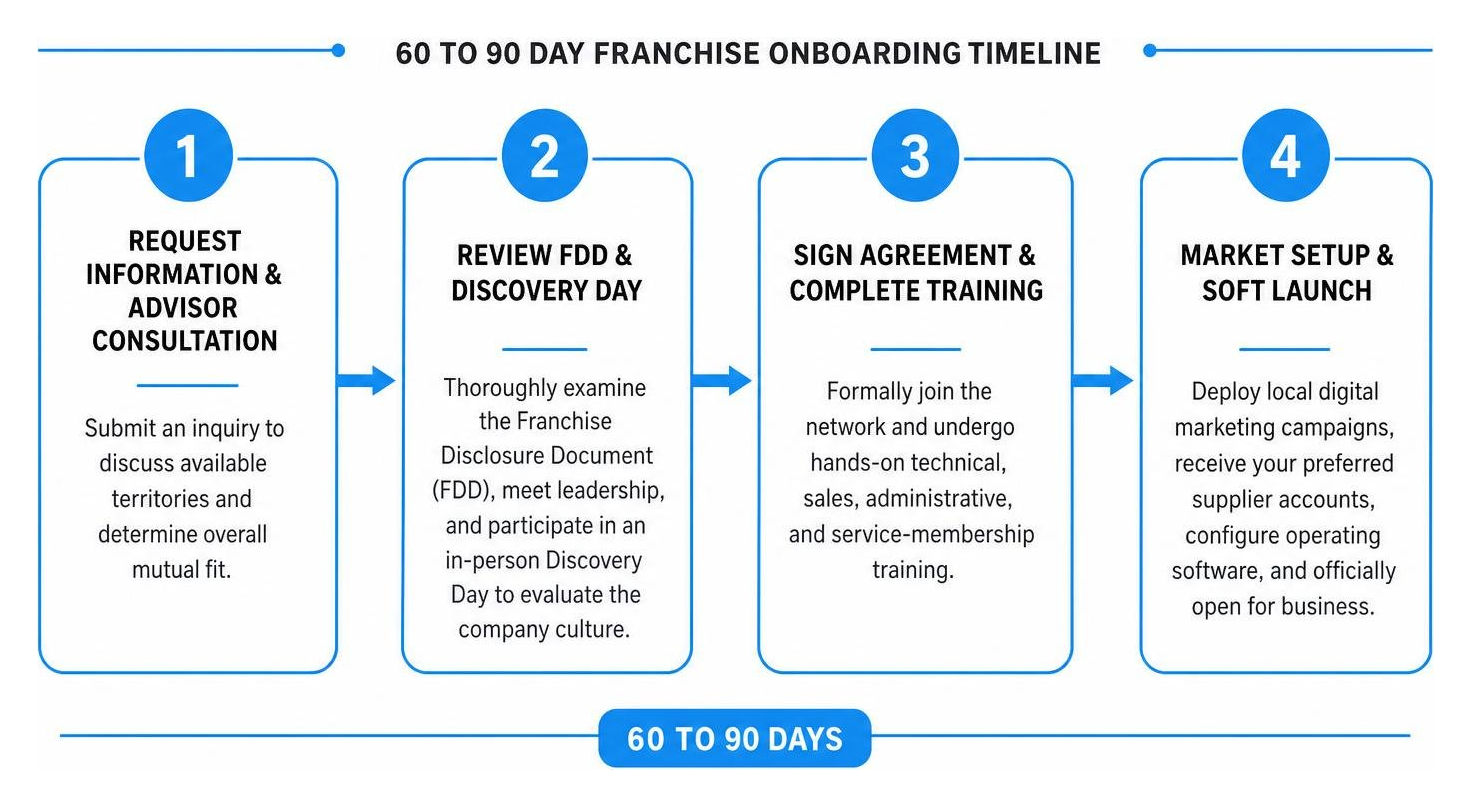
- Request Information & Advisor Consultation: Begin by submitting an inquiry to discuss available territories and determine overall mutual fit.
- Review FDD & Discovery Day: Thoroughly examine the Franchise Disclosure Document (FDD), meet leadership, and participate in an in-person Discovery Day to evaluate the company culture.
- Sign Agreement & Complete Training: Formally join the network and undergo hands-on technical, sales, administrative, and service-membership training.
- Market Setup & Soft Launch: Deploy local digital marketing campaigns, receive your preferred supplier accounts, configure operating software, and officially open for business.
Once operational, scaling your business can involve expanding field technician teams, adding mobile service vehicles, or acquiring additional territory rights for multi-unit expansion.
Frequently Asked Questions About Smart Home Franchises
Do I need prior technical experience to run a smart home franchise?
No, prior technical experience is not necessary. Franchise training programs teach you and your team everything required to install, configure, troubleshoot, and support smart technology hardware. Ongoing technical support and field guidance ensure you are never stuck when handling complex systems.
Is a smart home franchise business model home-based?
Yes, most franchisees start operating directly from a home office and manage a mobile fleet of service vehicles. This eliminates the heavy overhead of commercial real estate leases, inventory showroom space, and retail buildouts during your initial growth phase.
How fast can I launch and start generating revenue?
Most franchisees launch within 60 to 90 days after signing their franchise agreement. Because the onboarding pathway, marketing collateral, supplier channels, and operational software are pre-configured, you can begin serving clients and generating revenue shortly after completing certification.
Conclusion
Investing in a smart home franchise opportunity gives you a direct entry point into an expanding $30 billion market while minimizing the risks of launching an independent business from scratch. By combining low overhead, direct vendor access, full operational support, and recurring maintenance memberships, this model delivers long-term stability in a high-demand tech sector.
If you are ready to explore available territories and take control of your professional future, explore our full range of Smart Home Franchise Opportunities. Visit our Blog to learn more about industry trends, or Contact our team today to connect with a franchise advisor.