
Choose the Smart Home Monthly Service That Matches Your Risk
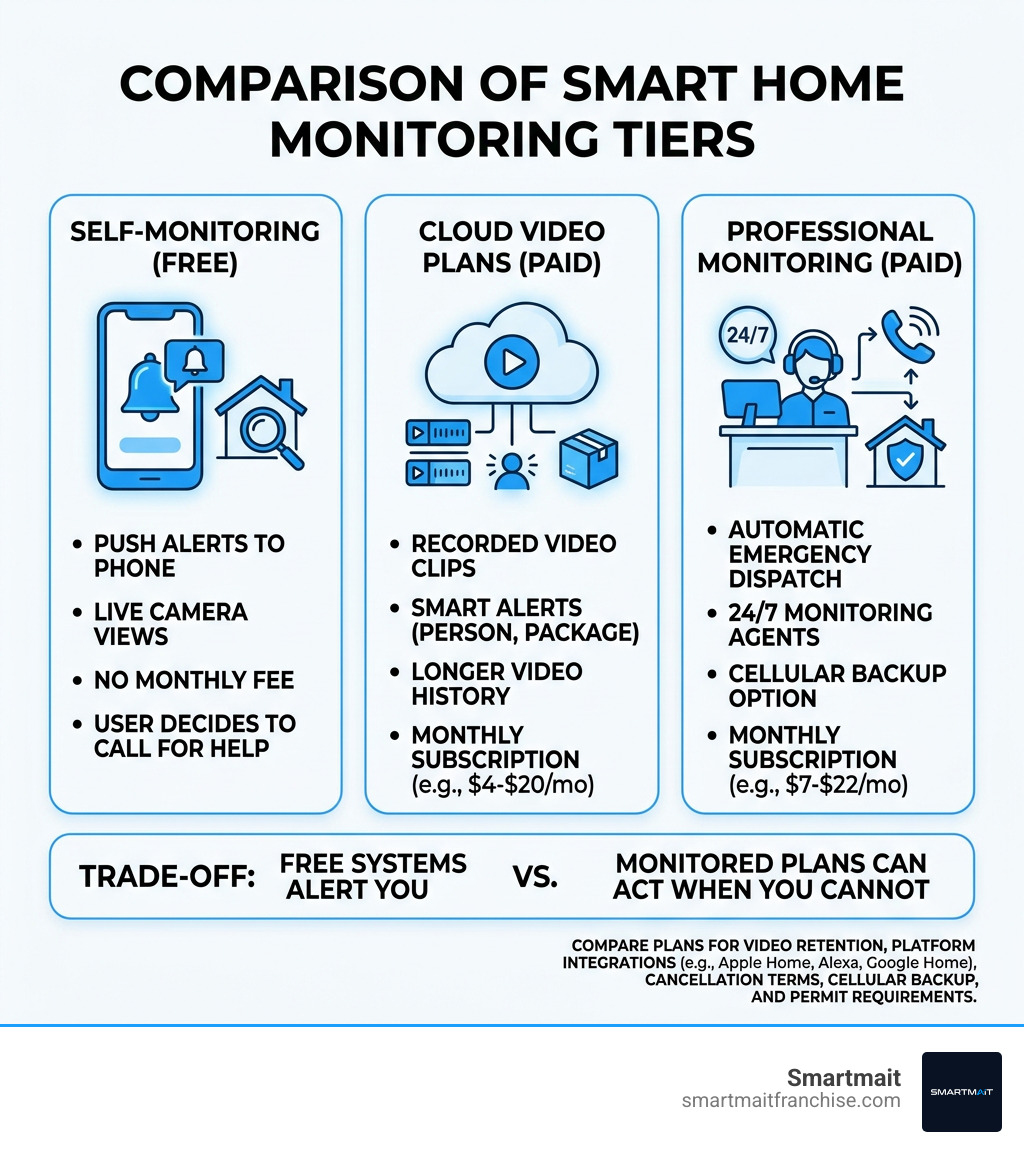
The best smart home monthly service depends on what you need it to do when you are busy, asleep, or away. Start by choosing the service level that fits your home:
- Self-monitoring: Best for push alerts, live camera views, and no monthly fee. You decide whether to call for help.
- Cloud video plans: Best if you want recorded clips, smart person/package alerts, and longer video history. Many plans range from about $4 to $20 per month.
- Professional monitoring: Best for automatic emergency dispatch, often with cellular backup and 24/7 agents. Expect roughly $7 to $22 per month, plus hardware costs.
The key trade-off is simple: free systems can alert you, while monitored plans can act when you cannot. Before subscribing, compare video retention, supported platforms such as Apple Home, Alexa, and Google Home, cancellation terms, cellular backup, and any alarm-permit or insurance requirements.
I am Dominic Hesano, a franchise development professional and business operator building SmartMait around reliable home and business automation, security, networking, and ongoing service. My work with smart home monthly service models focuses on helping customers get predictable support and practical value from the technology they rely on.
Smart home monthly service helpful reading:
Key Tiers of a Smart Home Monthly Service
Choosing a monthly plan for your connected household is all about matching technology to your lifestyle. When we look at the smart home ecosystem as of September 2026, subscription structures generally divide into three primary categories: free self-monitoring, cloud video storage tiers, and full 24/7 professional dispatch services.
| Service Tier | Average Monthly Cost | Video Storage & Retention | Emergency Dispatch | Best For |
|---|---|---|---|---|
| Free Self-Monitoring | $0 / mo | Local storage only (microSD / Hub) or live streaming | Manual (User calls 911) | Renters, basic security, zero recurring budget |
| Basic Cloud Video | $3.99 – $10 / mo | 14 to 30 days of event-based clips | None | Single or multi-camera setups needing AI filtering |
| Advanced Cloud & AI | $10 – $20 / mo | 30 to 60 days event + 10 days 24/7 continuous | None | High-traffic properties, smart home automation fans |
| Pro Monitoring Base | $7 – $12 / mo | Typically optional add-on or basic event clips | 24/7 Live Agent & Emergency Dispatch | Homes with intrusion sensors and fire alarms |
| Complete Pro & Cloud | $14 – $22 / mo | Full 30–60 day history + cellular backup | 24/7 Emergency Dispatch with verified video | Whole-home automation, insurance discounts |
Finding the sweet spot between zero ongoing costs and comprehensive coverage means understanding how each tier handles alerts, video retention, and hardware communication.
Free Self-Monitoring vs. Basic Cloud Plans
The free self-monitoring tier allows your hardware to function as a closed loop. If a window opens or motion is detected, your base station sounds an audible alarm, and your mobile device receives an instant push notification. You can open the companion app to view a live video feed, speak through two-way audio, and decide whether an emergency call is warranted.
However, running high-resolution camera feeds and connected sensors without subscription-backed server support places significant demands on your local network. Implementing smart home wifi setup 101 stop your devices from fighting for bandwidth ensures your high-definition cameras do not drop frames or disconnect during unexpected traffic spikes.
When you upgrade to a basic cloud plan (such as single-camera or multi-camera recording options starting at $3.99 to $7 per month), you unlock cloud video history. Rather than losing footage the moment a live stream closes, recorded events are securely backed up for 14 to 30 days. These entry-level paid plans also introduce basic computer-vision filtering to distinguish between moving trees and actual people.
Comprehensive 24/7 Professional Monitoring Tiers
Professional monitoring takes response duty off your shoulders. When an intrusion, fire, or environmental sensor triggers, signals route instantly to a central monitoring station staffed by certified security professionals. If you cannot answer your phone, monitoring agents review the event, verify the threat, and dispatch local emergency responders (police, fire, or EMS) on your behalf.
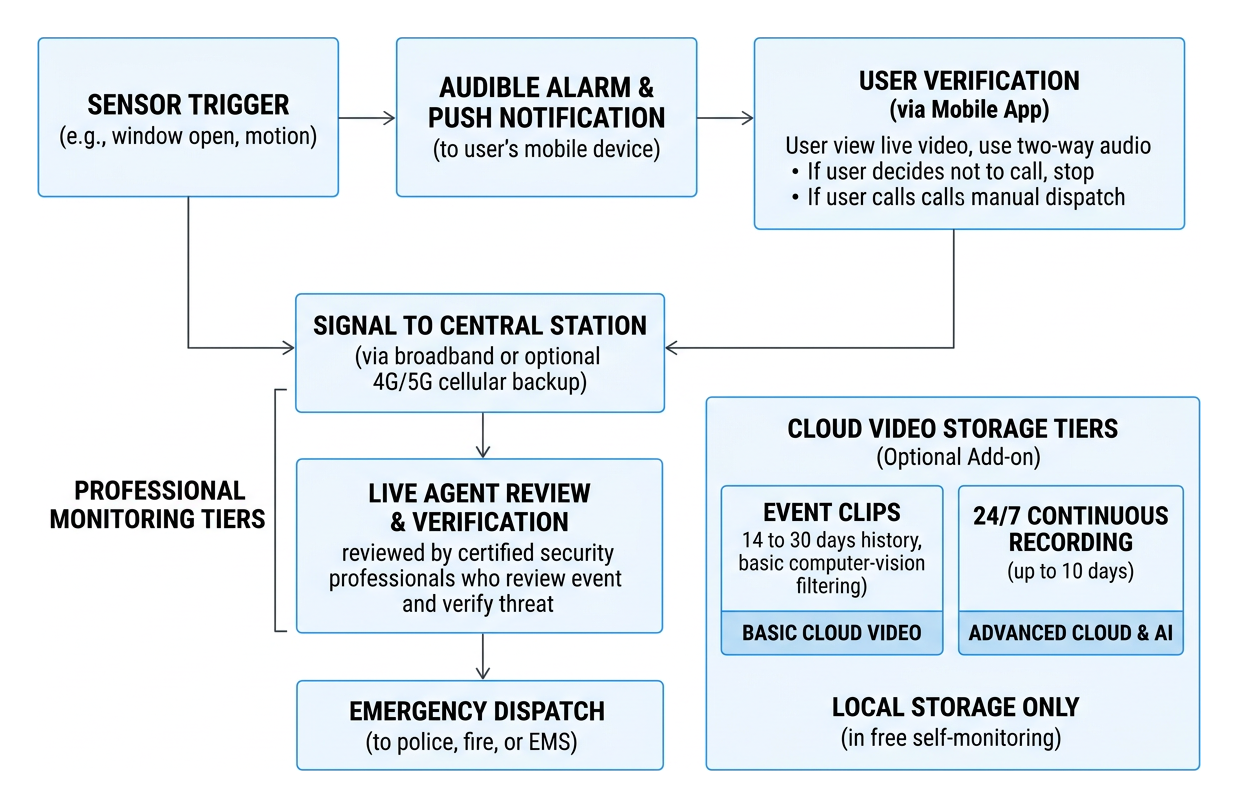
Before choosing a professional plan, review smart home alarm monitoring tips 2026 to understand jurisdictional requirements. Many municipalities require valid alarm permits before police respond to automated dispatch calls. Professional monitoring tiers often include 4G or 5G cellular backup, keeping your security hub active even during power cuts or broadband outages.
Comparing Subscription Models for Home Automation and Security
Smart home hardware extends far beyond cameras—it encompasses motion detectors, smart locks, leak sensors, and environmental monitoring devices. Determining whether you need a dedicated camera plan or a holistic security subscription depends on how deeply your devices integrate.
Camera-Only vs. Whole-Home System Coverage
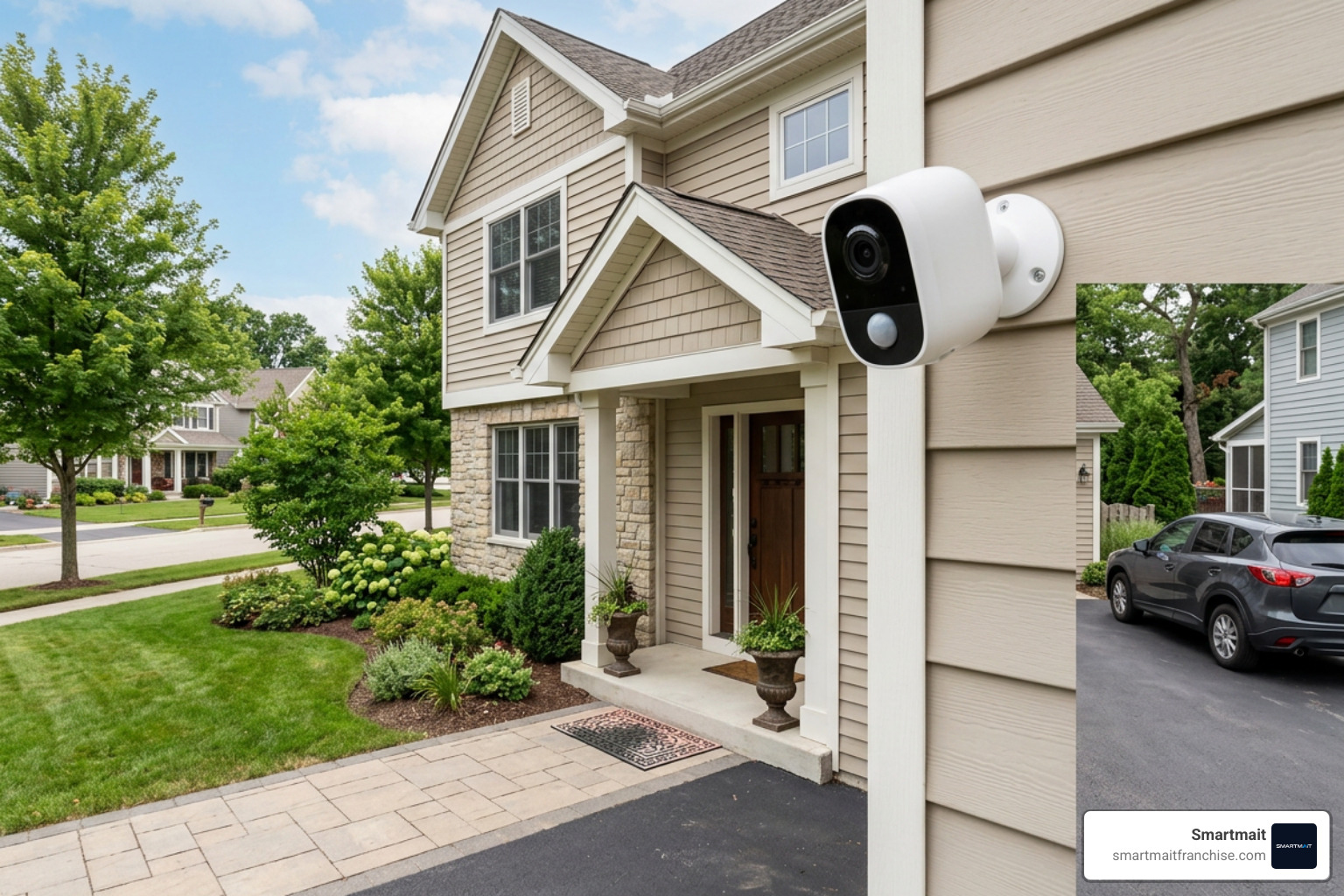
Subscription plans differ significantly between camera-centric setups and whole-home security networks:
- Camera-Only Plans: Focus heavily on video capabilities. They provide extended cloud storage, 24/7 continuous video recording (CVR), and rich AI notifications detailing package deliveries, familiar faces, and vehicle movements. These plans (such as the Google Home Premium Subscription or the Basic Plan Subscription Agreement – eufy US) are perfect for perimeter monitoring.
- Whole-Home Security Plans: Focus on physical entry points and life-safety sensors. These subscriptions incorporate door/window contacts, glass-break sensors, freeze monitors, and smart smoke detectors. Modular systems, as detailed in the ecobee Smart Security Service Agreement, let users start with core device notifications and layer on intrusion or life-safety dispatch add-ons as needed.
Whole-home plans frequently link security states with automated actions. For example, disarming your alarm system at sunrise can simultaneously unlock the front door, turn off perimeter spotlights, and adjust interior climate schedules.
Evaluating Total Cost with a Smart Home Monthly Service
A common question is whether a subscription pays off compared to a zero-fee local setup over time. Let us compare the total first-year cost of ownership:
While hardware-only solutions have no recurring charges, cloud and professional monitoring tiers deliver significant value through automated offsite archiving, routine device health checks, and substantial homeowners insurance discounts that can offset the subscription costs.
Essential Features and Ecosystem Compatibility
A modern smart home should function harmoniously without forcing you to switch between multiple disjointed apps. Advanced monthly services deliver ecosystem-wide automations that streamline home management.
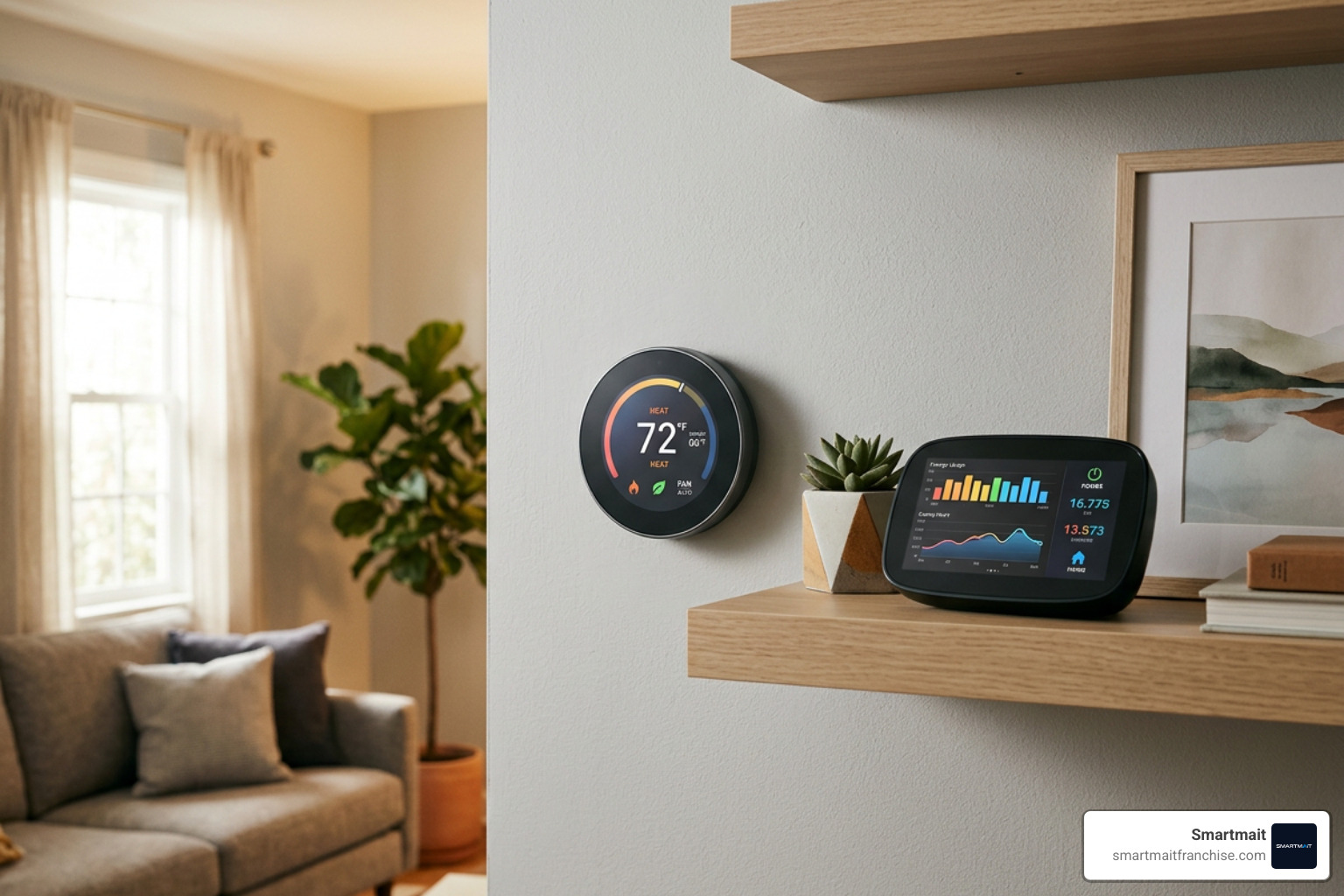
Core Capabilities of an Advanced Smart Home Monthly Service
Today’s monthly plans provide intelligent capabilities that go beyond simple video recording:
- Generative AI and Natural Language Automation: Conversational assistants let you create custom schedules using natural language prompts (e.g., “Turn off all exterior lights and set the alarm when my phone leaves the house”).
- Contextual Alert Filtering: Advanced vision models filter out swaying branches, shifting shadows, and small pets, preventing notification fatigue.
- Comprehensive Energy and Climate Integration: Advanced tiers coordinate climate control with environmental occupancy data. Refer to the ultimate guide to smart energy monitoring to see how combining smart thermostats with occupancy sensors reduces unnecessary heating and cooling loads.
Platform Integration: Matter, Zigbee, and Voice Assistants
System compatibility determines how smoothly your hardware interacts with your preferred interface. When selecting a subscription service, verify its interoperability with major protocols:
- Matter & Thread: The universal standard ensuring cross-platform support across Apple Home, Google Home, Amazon Alexa, and Samsung SmartThings.
- Zigbee & Z-Wave: Established, low-latency mesh protocols ideal for extensive sensor deployments, smart wall switches, and door locks.
- Native Platform Support: While many systems integrate with Alexa and Google Assistant, native Apple HomeKit integration (especially with HomeKit Secure Video) requires specialized hardware support.
Connecting physical devices like smart thermostats to central monitoring systems requires proper low-voltage wiring. If you are upgrading your climate hardware, explore the no panic guide to home thermostat wiring and installation to ensure proper C-wire power delivery before syncing with your automated routines.
Contract Flexibility, Hidden Fees, and Insurance Savings
Long gone are the days when home security required rigid multi-year agreements with heavy cancellation penalties. The modern smart home industry has shifted toward consumer-friendly, flexible monthly options.
No-Contract Plans and Cancellation Terms
Leading smart home platforms now operate on a month-to-month basis with cancel-anytime policies. Users can activate professional monitoring when leaving for an extended summer vacation and downgrade to self-monitoring upon returning.
When reviewing terms on support hubs like the Help Centre, look out for common billing specifics:
- Billing Cycles: Most platforms offer month-to-month billing alongside discounted annual plans (typically offering 15% to 20% savings).
- Trial Conversions: Many systems provide a 30-day to 6-month trial. Check whether the service auto-renews or requires manual activation when the trial concludes.
- User Access Controls: Multi-tiered plans often let you assign customized administrative or guest permissions to family members and visitors.
Maximizing Home Insurance Discounts and Long-Term Value
Enrolling in a qualifying professional monitoring plan can yield meaningful financial returns on your homeowners insurance policy. Major insurance carriers frequently offer discounts ranging from 5% to 20% (and occasionally up to 30%) for homes protected by certified 24/7 central station monitoring.
To qualify for these policy savings, insurers generally require an official Alarm Monitoring Certificate. Systems that combine burglary protection with professionally monitored smoke, carbon monoxide, and water-leak detection secure the highest discount tiers, making the net cost of your monthly plan remarkably affordable over the course of a year.
Frequently Asked Questions About Smart Home Subscriptions
What features function without a smart home monthly service?
Without a subscription, modern smart home systems still support essential core features:
- Real-time mobile push notifications for motion, open doors, and sensor triggers.
- Live video and two-way audio streaming through the smartphone app.
- Local audible sirens and base station chime alerts.
- Local video recording if your devices include microSD slots or a local storage hub.
- Basic smart home automations and direct voice assistant commands.
How much can professional monitoring reduce homeowners insurance?
Professional monitoring typically lowers homeowners insurance premiums by 10% to 20%, depending on your provider and system capabilities. To maximize your discount, install a combination of intrusion sensors, monitored smoke detectors, and automated water shutoff valves, then request a monitoring certificate from your service provider to submit to your insurer.
Does cellular backup require an extra subscription charge?
In most cases, yes. Cellular backup requires an active SIM card and an ongoing cellular data connection to maintain hub communication during broadband outages. This redundancy is standard in premium professional monitoring tiers (generally $15 to $22 per month), whereas free or basic cloud plans rely exclusively on your local home Wi-Fi and broadband connection.
Conclusion
Selecting the right smart home monthly service comes down to balancing your desired level of hands-on involvement with the peace of mind you need. If you are comfortable managing push alerts yourself, a contract-free, self-monitored setup with local storage provides solid day-to-day awareness at zero recurring cost. If you prefer automated video archiving, intelligent threat detection, and 24/7 emergency dispatch, a modular monthly subscription delivers dependable protection without locking you into long-term contracts.
At Smartmait, we specialize in taking the confusion out of smart home design, installation, and long-term optimization. We combine professional setup with ongoing hardware maintenance and system tuning, ensuring your connected ecosystem stays reliable, secure, and easy to use. To learn how we can build or optimize a smart home setup tailored to your family’s exact needs, explore our full range of solutions at Smartmait smart home solutions.