

Build a Smart Home Vacation Rental That Saves Time and Utilities
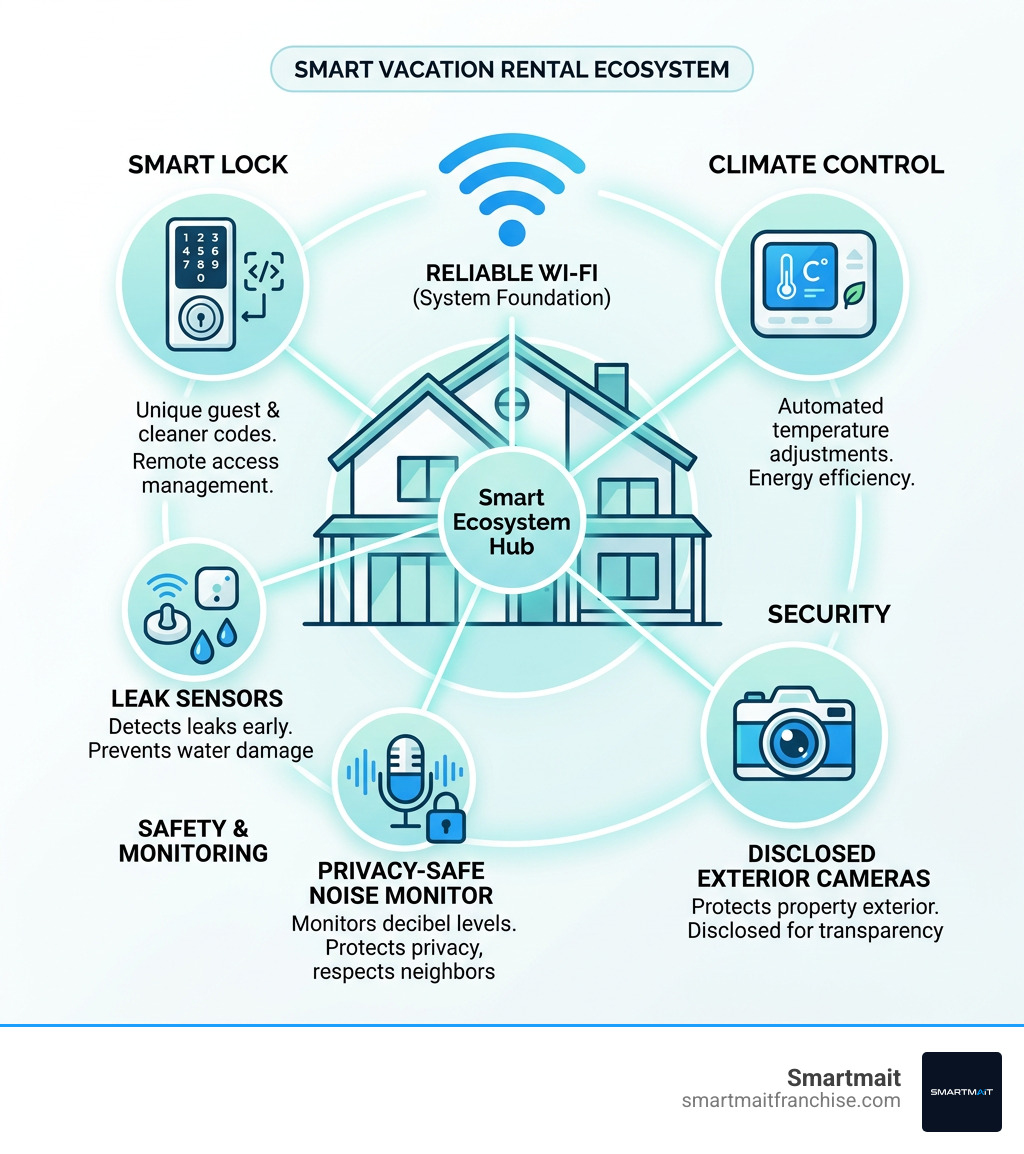
For most hosts, the best smart home vacation rental setup starts with four tools: a keypad smart lock, a smart thermostat, leak sensors, and a privacy-safe noise monitor. Add reliable Wi-Fi and disclosed exterior cameras where appropriate. This stack makes check-in easier, reduces wasted heating and cooling, and helps catch water, noise, or access issues before they become expensive problems.
Start with the devices that solve real operational jobs:
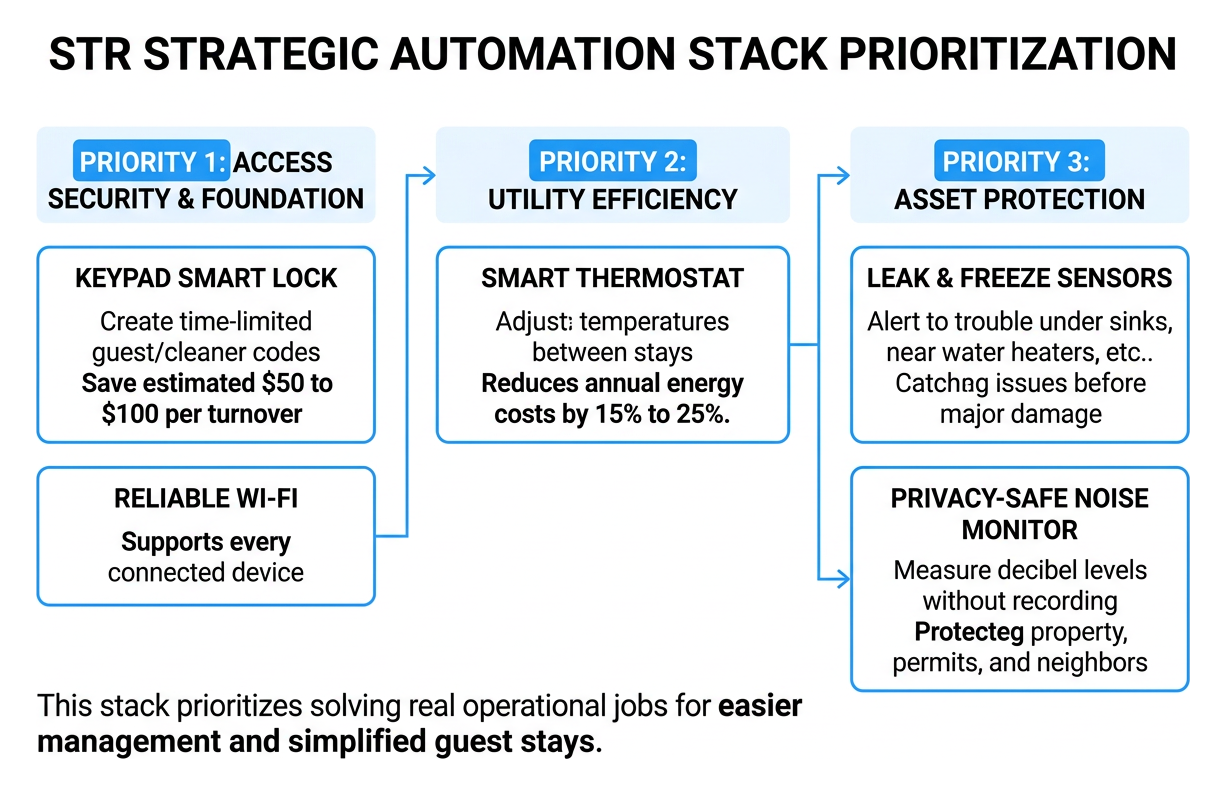
- Smart lock: Creates unique, time-limited guest and cleaner codes. It can save an estimated $50 to $100 in coordination costs per turnover.
- Smart thermostat: Adjusts temperatures between stays while keeping the home comfortable before arrival. Installed systems typically reduce annual energy costs by 15% to 25%.
- Leak and freeze sensors: Alert you to trouble under sinks, near water heaters, behind appliances, and in cold areas before a small leak becomes major damage.
- Noise monitor: Measures decibel levels without recording conversations, helping protect neighbors, permits, and the property.
- Reliable Wi-Fi: Supports every connected device and is now a basic guest expectation.
The goal is not to fill a rental with gadgets. It is to create a stay that feels simple for guests and is easier to manage from anywhere. Smart locks remove key handoffs, climate automation limits empty-home utility waste, and safety alerts give owners a chance to act fast.
I am Dominic Hesano, a franchise development professional and business operator building SmartMait, a home and business automation concept focused on professionally installed, supported connected systems. My work with security, networking, access control, energy management, and smart home vacation rental technology centers on helping owners get dependable results without a complicated DIY tech stack.
Handy smart home vacation rental terms:
The Highest-ROI Smart Home Vacation Rental Tech Stack
Operating a short-term rental in 2026 demands efficiency. Industry studies show that properties equipped with smart home features command 5% to 15% higher nightly rates and see up to 30% shorter vacancy windows compared to non-automated properties. However, randomly buying smart gadgets quickly leads to app fatigue, guest frustration, and maintenance headaches.
To achieve maximum profitability, we recommend purchasing hardware by operational function rather than tech novelty. Following established 2026 smart vacation rental device benchmarks, your investments should prioritize access security first, utility efficiency second, and asset protection third.
Keyless Entry: The Smart Home Vacation Rental Foundation
The front door lock is your most critical operational touchpoint. Lost physical keys, hidden lockbox jams, and midnight lockout calls represent the single largest operational friction point for vacation rentals.
A commercial-grade smart deadbolt eliminates key coordination entirely, saving roughly $50 to $100 per turnover in administrative and vendor dispatch costs.
- Keypad Deadbolt Replacements (e.g., Yale Assure Lock 2, Schlage Encode Plus): These complete deadbolt replacements offer touchscreen or physical button keypads. They connect via Wi-Fi or Matter, allowing remote code generation and integration with booking calendars. Physical button models are particularly resilient in freezing or rainy climates.
- Retrofit Units (e.g., August Wi-Fi Smart Lock): Retrofit units mount onto the inside of your existing deadbolt, keeping exterior hardware and building master keys intact. This makes them ideal for condo units governed by strict HOA regulations.
- Portfolio Platforms (e.g., RemoteLock 5i): Built for multi-property operators, these commercial units provide centralized code provisioning across dozens of doors from a unified dashboard.
Always maintain a coded mechanical backup lockbox on-site with a physical key. If a lock battery fails unexpectedly, your guests won’t be stranded outside.
Smart Climate Control and Utility Optimization
Heating and cooling an unoccupied property is pure profit loss. Guests on vacation often crank the air conditioning down to 60°F while heading out for an eight-hour day at the beach, or leave the furnace blazing with windows cracked open.
Installing a smart thermostat—such as the Ecobee Smart Thermostat Premium or Google Nest—costs between $200 and $400 installed and consistently reduces heating and cooling expenses by 15% to 25% annually.
Ecobee’s Smart Thermostat Premium is ENERGY STAR certified for 23% to 26% HVAC energy savings, allowing the hardware to pay for itself in just 7 to 11 months. Applying comprehensive smart home power management strategies allows you to set automated vacancy setpoints (e.g., 58°F in winter, 78°F in summer) that trigger immediately upon checkout, while ensuring the home automatically returns to a comfortable baseline before the next guest steps through the door.
Asset Protection: Noise, Freeze, and Water Leak Monitors
Defensive tech protects your operating permits and physical structure.
- Noise Monitors (Minut, NoiseAware): Unmonitored parties can cause structural damage and ruin relationships with neighbors and local code enforcement. Modern noise sensors measure sound volume (decibels) without recording audio or listening to conversations. Data from PriceLabs shows that active noise monitoring leads to 20% more positive guest reviews and reduces property damage risks by 40%. In pilot deployments, automated SMS warnings resolved 100% of noise threshold spikes within 20 minutes.
- Smart Water Shutoff Valves (Flo by Moen): Water damage represents one of the most expensive property insurance claims, with single-event repairs routinely running between $10,000 and $50,000. Whole-home smart shutoff valves actively monitor water pressure and flow rates, automatically severing the main water line the moment an abnormal burst or major leak is detected.
- Freeze and Leak Puck Sensors: Inexpensive wireless sensors placed under every sink, behind the washing machine, near water heaters, and along exterior-facing crawlspaces deliver instant freeze and moisture alerts to your phone.
Compliant Exterior Security and Entryway Cameras
Exterior visibility helps verify guest occupancy limits, confirm vendor arrival, and monitor turnover operations without invading guest privacy.
- Video Doorbells and Floodlight Cameras (e.g., Ring Floodlight Cam Plus): Position outdoor cameras strictly focused on driveways, entry gates, and the front perimeter.
- Smart Smoke and Carbon Monoxide Detectors: Connected safety sensors send real-time severity alerts directly to your mobile device if smoke or dangerous CO levels are detected, allowing remote verification before emergency crews are dispatched.
When planning security hardware layouts, review established commercial security camera best practices to verify optimal field-of-view coverage while strictly avoiding any private outdoor zones such as hot tubs or saunas.
Integrating Property Management Software with Smart Devices
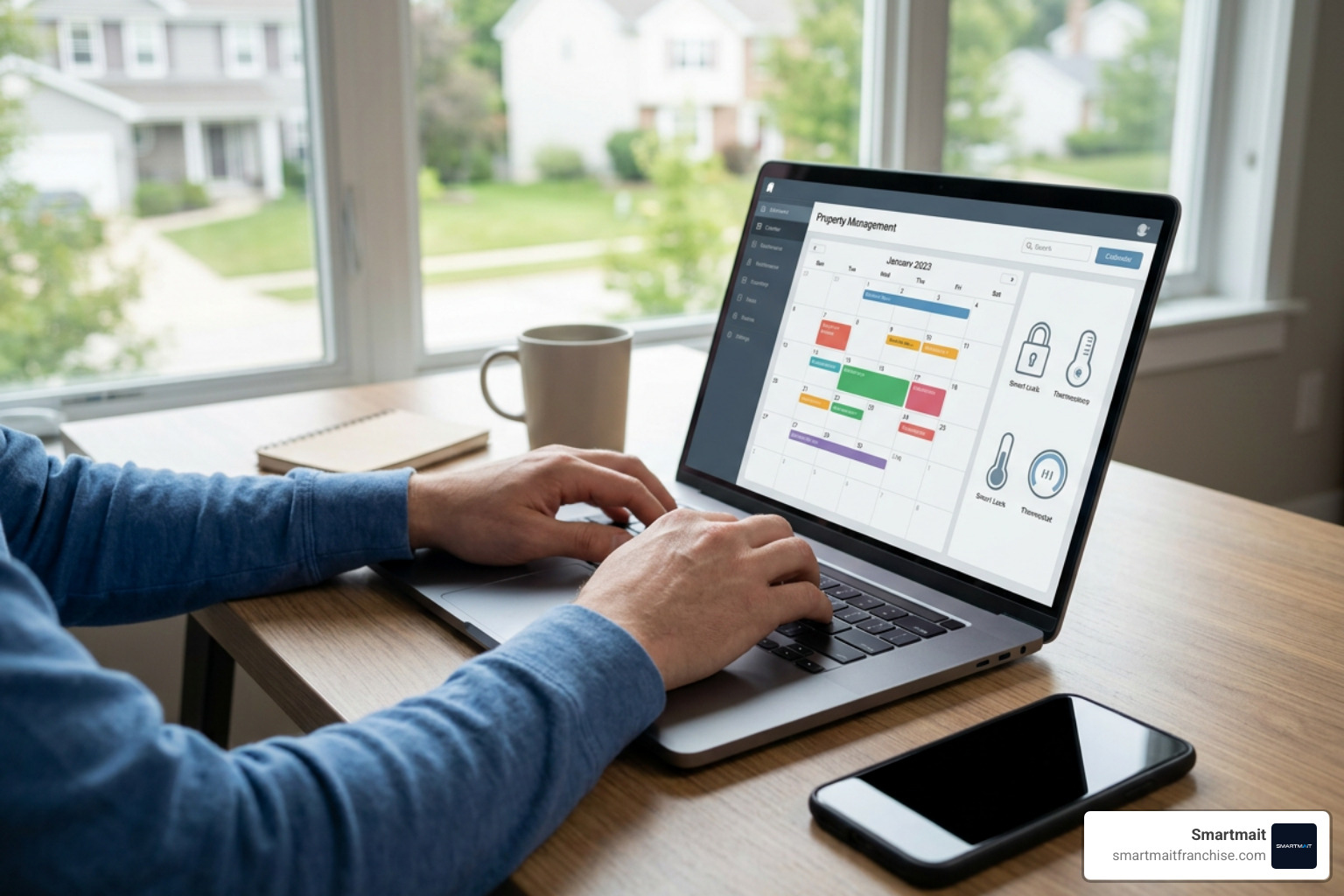
The true power of smart rental technology emerges when devices are tethered directly to your Property Management System (PMS) or booking channels via platforms like Rental Home Automator or EasyHub.
Automated Calendar Sync and Code Generation
Rather than manually programming access codes for every reservation, native PMS integrations automate the entire lifecycle:
- Automated Code Rotation: The system syncs with booking calendars on Airbnb, Vrbo, Guesty, Hostaway, or Hospitable. Upon reservation confirmation, the lock automatically creates a 4-digit PIN (often the last 4 digits of the guest’s phone number).
- Time-Fenced Access: The PIN activates precisely at check-in time (e.g., 4:00 PM) and expires automatically at checkout (e.g., 10:00 AM).
- Cleaner and Vendor Windows: Cleaning teams and maintenance staff receive dedicated permanent or recurring access codes that track when turnover tasks start and finish.
- HVAC Buffer Synchronization: Following industry benchmarks documented in recent PMS thermostat integration data, automated systems dynamically pre-cool or pre-heat the home two hours before scheduled arrival, returning to eco-mode the minute the checkout code expires.
What to Skip in Your Smart Home Vacation Rental Strategy
Not every consumer smart device belongs in a rental. Cluttered ecosystems create technical friction, generate guest complaints, and expose hosts to privacy disputes. When designing your layout, prioritize essential smart home upgrades and leave these low-ROI gadgets off your shopping list:
- Voice Assistants (Amazon Echo, Google Nest Audio): While 1 in 5 Americans use smart speakers at home, rental guests frequently unplug them over privacy and surveillance concerns.
- Over-Automated Lighting Scenes: Smart bulbs that require complex apps or break when a wall switch is turned off irritate guests. Use standard switches or basic motion sensors in hallways instead.
- App-Dependent Hardware: Never install locks, blinds, or amenities that force guests to download third-party mobile applications or register accounts.
- Smart Mirrors and Decorative Gadgets: High failure rates and frequent firmware crashes turn decorative tech into a customer service liability.
Balancing Guest Privacy, Compliance, and Network Reliability
Deploying smart devices requires a clear commitment to guest privacy and robust network infrastructure.
Airbnb Camera Policy Compliance and Audio Privacy
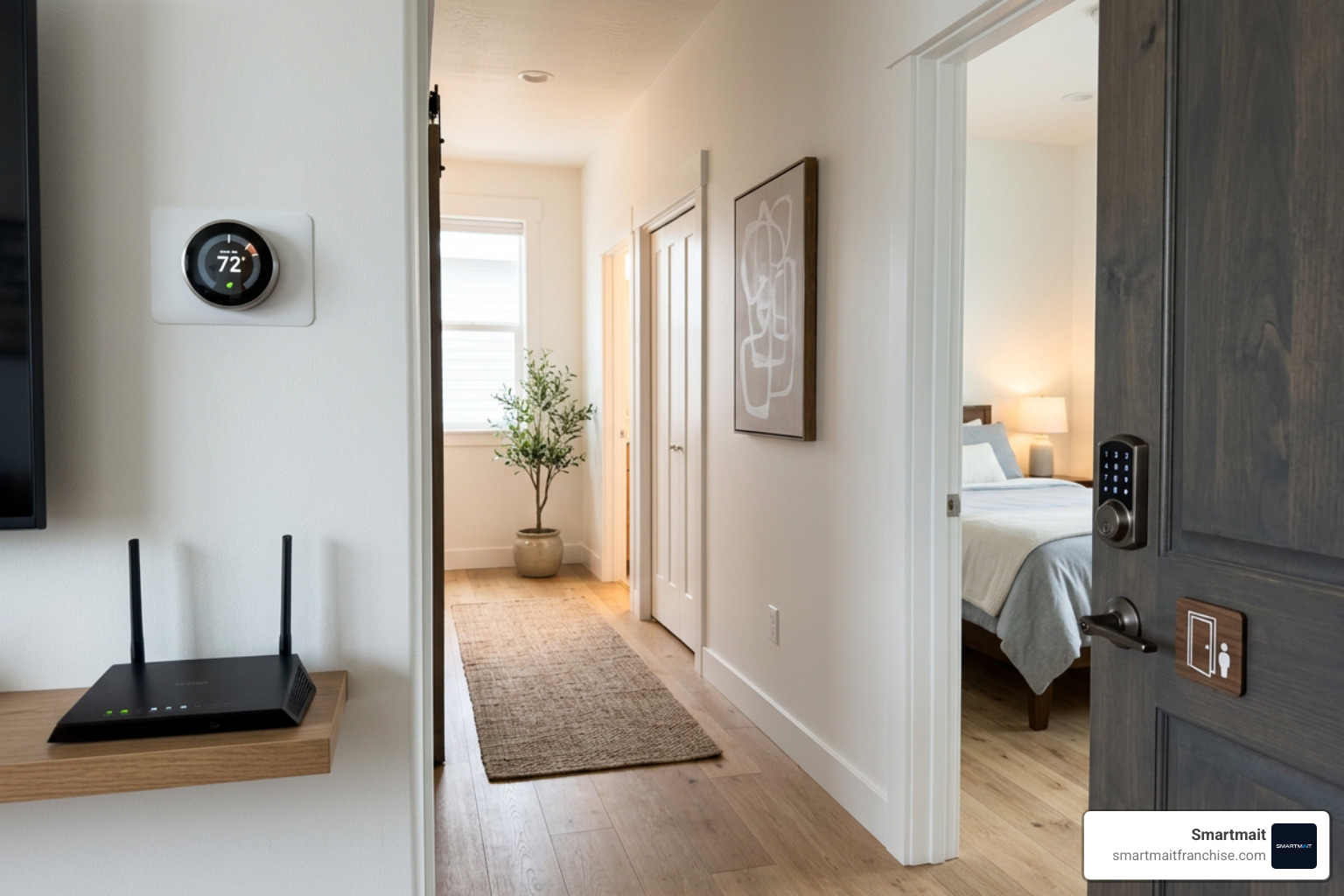
Short-term rental platforms, including Airbnb’s comprehensive policy updates, prohibit all indoor surveillance cameras and recording equipment within listings—regardless of whether the devices are turned off or disclosed.
To maintain compliance and protect your operational licenses:
- Zero Indoor Cameras: Never place cameras or optical sensors inside the home, garage, or enclosed patio areas.
- Strict Listing Disclosures: Clearly state the presence, location, and monitoring purpose of all exterior cameras (doorbells, driveway floodlights) in your public listing description and digital house manual.
- Decibel-Only Sensors: Ensure all interior noise monitoring devices (such as Minut or NoiseAware) are certified decibel-only sensors that lack microphones capable of recording raw audio or conversations.
- Graduated Alert Workflows: Configure noise sensors to send gentle, automated SMS reminders when volume exceeds 75 dB for more than 10 consecutive minutes after 10:00 PM, giving guests the opportunity to self-correct before you intervene.
Dedicated IoT Network Segmentation and Outage Resilience
Every smart device relies on uninterrupted network connectivity. To keep your system operational:
- Network Segmentation: Establish a primary dual-band mesh Wi-Fi network for guests, and isolate all smart locks, thermostats, and sensors on a separate, password-protected IoT SSID. This prevents guests from inadvertently reconfiguring your smart devices.
- Cellular Failover: Install a cellular backup hotspot or a router equipped with auto-failover to keep your locks and security sensors online during local broadband outages.
- Offline Lock Memory: Quality smart deadbolts cache access codes locally in onboard memory. Even if your Wi-Fi router loses power, active guest PINs continue working seamlessly on the exterior keypad.
- Auto-Reboot Smart Plugs: Plug your main modem and router into an auto-cycling smart plug that detects internet drops and automatically power-cycles the network equipment.
If you are planning your overall network backbone, follow our foundational home security setup guide to ensure proper device pairing, wiring protection, and stable signal distribution.
Cost Breakdown, ROI Projections, and Payback Timeline
Investing in a professionally configured smart home stack delivers measurable financial returns across utility savings, turnover coordination, and damage mitigation. Industry modeling from Rently indicates an average 8-month payback period and an estimated 781% five-year ROI for a fully automated property.
| Tech Tier | Included Hardware | Upfront Cost (Installed) | Monthly Operational Savings | Estimated Payback Period |
|---|---|---|---|---|
| Basic Core Stack | Keypad Smart Lock, Smart Thermostat, Mesh Wi-Fi Hub, Backup Lockbox | $600 – $950 | $75 – $140 / mo (HVAC & Lockouts) | 5 – 7 Months |
| Asset Protection Stack | Core Stack + Decibel Noise Monitor, 4x Water Leak Sensors, Video Doorbell | $1,200 – $1,800 | $140 – $260 / mo (Utilities + Labor) | 7 – 9 Months |
| Comprehensive Portfolio Stack | Protection Stack + Smart Water Shutoff Valve, Outdoor Floodlight Cam, Auto-Reboot Network | $2,200 – $3,100 | $280 – $450 / mo + Major Loss Avoidance | 8 – 11 Months |
A single prevented water damage incident via a smart shutoff valve ($10,000 to $50,000 in avoided structural remediation) easily covers the equipment cost across an entire multi-property portfolio.
Frequently Asked Questions About Vacation Rental Automation
Are noise monitors legal and compliant with rental privacy policies?
Yes. Commercial noise monitors like Minut and NoiseAware do not capture, record, or transmit raw audio data or conversations. They track sound pressure levels (measured in decibels) over time. To stay fully compliant with booking platform rules and local privacy laws, you must disclose the presence and location of the device in your listing description and house rules.
How do smart locks prevent late-night lockout calls during internet outages?
Modern smart deadbolts store active access codes locally within the physical lock mechanism rather than relying on a live cloud ping to unlock the deadbolt. If your internet connection drops, the guest’s 4-digit PIN will continue to operate normally on the keypad. Keeping a mechanical backup key inside a secondary lockbox ensures 100% access redundancy.
What is the average payback period for a complete smart rental stack?
The typical payback period ranges between 7 and 11 months. This rapid ROI is driven by 15% to 25% reductions in heating and cooling bills, the elimination of turnover key coordination costs ($50 to $100 per stay), and the prevention of unauthorized parties and plumbing leaks.
Scaling Your Rental Portfolio with Smartmait
Building an automated short-term rental portfolio is about creating a predictable, hands-off business model. Smart locks eliminate the logistical headache of physical key management, connected thermostats protect your monthly margins, and environmental sensors safeguard your physical real estate around the clock.
At Smartmait, we specialize in taking the complexity out of smart property infrastructure. As a dedicated national franchise, we provide turnkey smart-home and smart-building installation, system configuration, network optimization, and ongoing maintenance services. We ensure your locks, thermostats, sensors, and security hardware operate seamlessly on dedicated networks with routine battery maintenance, automated health monitoring, and immediate support.
Whether you operate a single mountain cabin or manage a scaling regional rental portfolio, discover how Smartmait professional installation and maintenance can protect your properties, slash your operating expenses, and deliver exceptional five-star stays for every guest.