
Step 1: Evaluating the Smart Home Tech Franchise Market and Financial Viability
To launch a smart home tech franchise successfully, entrepreneurs evaluate market viability and overhead, secure exclusive territory rights, complete hands-on technical training, and deploy targeted marketing systems. Combining installation projects with ongoing service memberships establishes predictable recurring revenue and strong long-term equity.
Smart automation is no longer a luxury reserved for custom mansions. In September 2026, connected devices and the broader Internet of Things (IoT) ecosystem have become foundational to how residential households and commercial spaces run. From automated climate controls and intelligent security cameras to energy-monitoring setups, property owners are investing heavily in connected infrastructure. Yet, while purchasing smart hardware is easier than ever, properly integrating, securing, and maintaining these systems remains a major obstacle for the average consumer.
This gap between hardware availability and technical execution has created massive demand for professional smart building and residential automation services. To see the broader data on why this sector delivers sustained margins, review The Definitive Guide to Smart Home Solutions Franchise Viability.
Operating without a brick-and-mortar storefront dramatically reduces startup risk. Franchise partners eliminate high commercial leases, physical retail utility bills, and large on-site staffing requirements. By functioning with mobile inventory and cloud dispatching, your capital stays focused on marketing, customer acquisition, and operational tools.
| Factor | Single-Operator Model | Territory Management Model |
|---|---|---|
| Initial Investment | Lower entry cost; minimal equipment setup | Moderate capital; scaled field deployment |
| Primary Focus | Hands-on field integration and direct service | Team leadership, local business development, and scaling |
| Vehicle & Tool Requirements | Single fully equipped service vehicle | Fleet of branded vehicles managed by technicians |
| Office Requirement | 100% home office | Home office or small administrative workspace |
| Revenue Ceiling | Capped by personal billable hours and service slots | Scalable across multiple concurrent routes and large accounts |
| Best Suited For | Hands-on entrepreneurs and owner-operators | Growth-focused investors building an enterprise asset |
Assessing Startup Costs and Revenue Potential in a Smart Home Tech Franchise
Evaluating an investment requires looking past the initial franchise fee to understand your complete runway, working capital, and break-even horizon. Initial startup commitments in this industry generally cover your initial franchise fee, comprehensive hands-on certification, proprietary software onboarding, branded vehicle setup, and your foundational inventory package.
Because overhead stays exceptionally lean, franchisees can direct their cash flow directly toward growth rather than facility upkeep. For an in-depth breakdown of unit economics and cash flow trajectories, check out The Ultimate Guide to Smart Home Franchise Investment Viability.
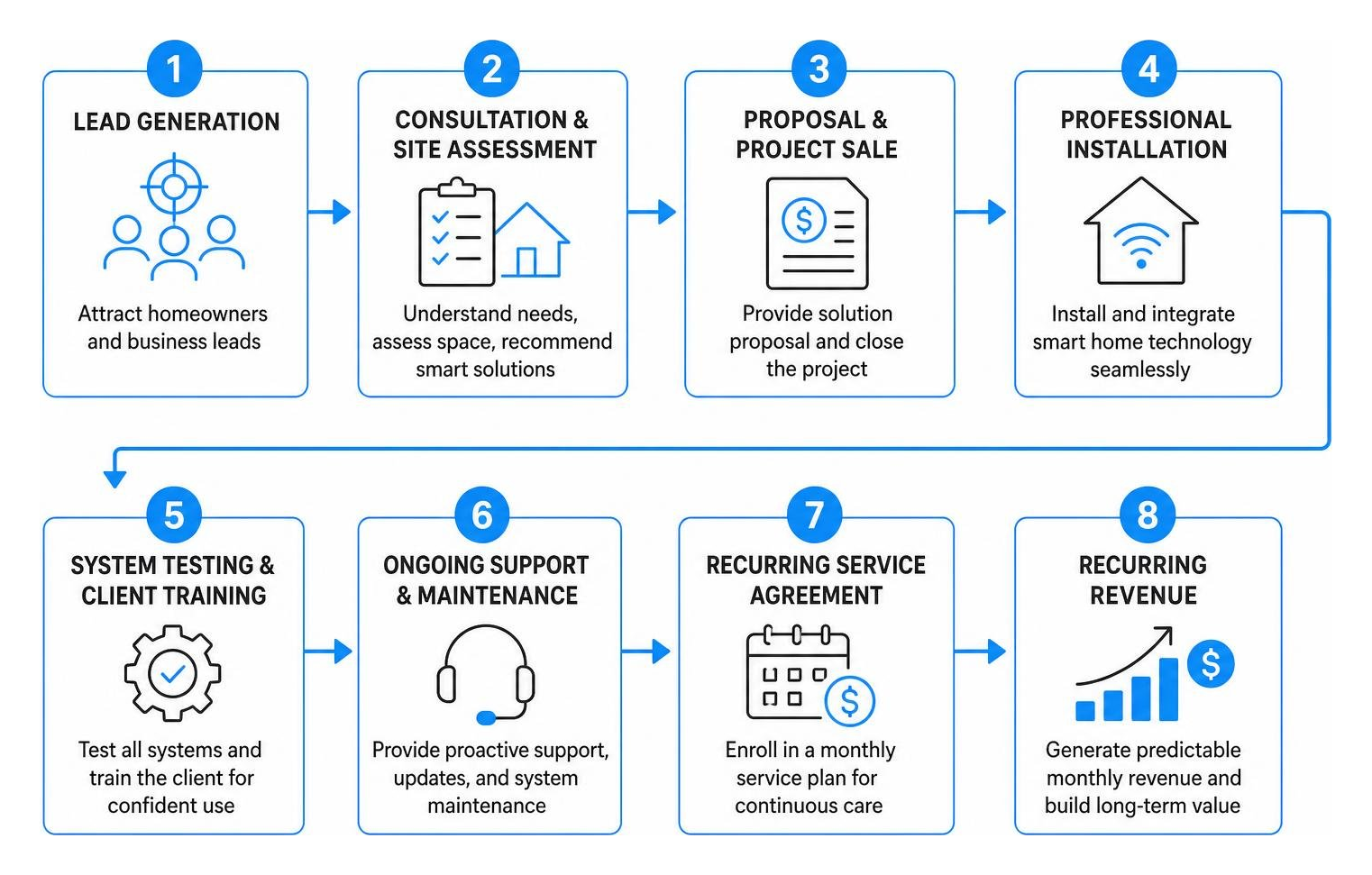
Unlike traditional trades that rely on unpredictable one-and-done transactional jobs, our approach pairs project-based hardware installations with ongoing service plans. By combining initial hardware margins with monthly recurring maintenance revenue, franchise partners create predictable cash flow curves and build strong equity value in their client base.
Choosing the Right Business Model: Single Operator vs. Territory Management
Choosing your franchise model depends on your lifestyle preferences, investment size, and long-term goals:
- Single-Operator Approach: You handle the field consultations, oversee the smart integration projects directly, and build one-on-one relationships with clients. This keeps overhead at rock-bottom levels and allows you to capture maximum profit margins from day one.
- Territory Management Approach: You act as the executive manager. Your focus shifts to hiring certified field technicians, securing partnerships with local builders and property managers, and driving customer acquisition.
Both paths benefit from our centralized operational workflow, cloud dispatch systems, and vetted supply chains, allowing you to transition from an owner-operator to a multi-vehicle territory owner over time.
Step 2: Securing Exclusive Territories and Reviewing Agreements
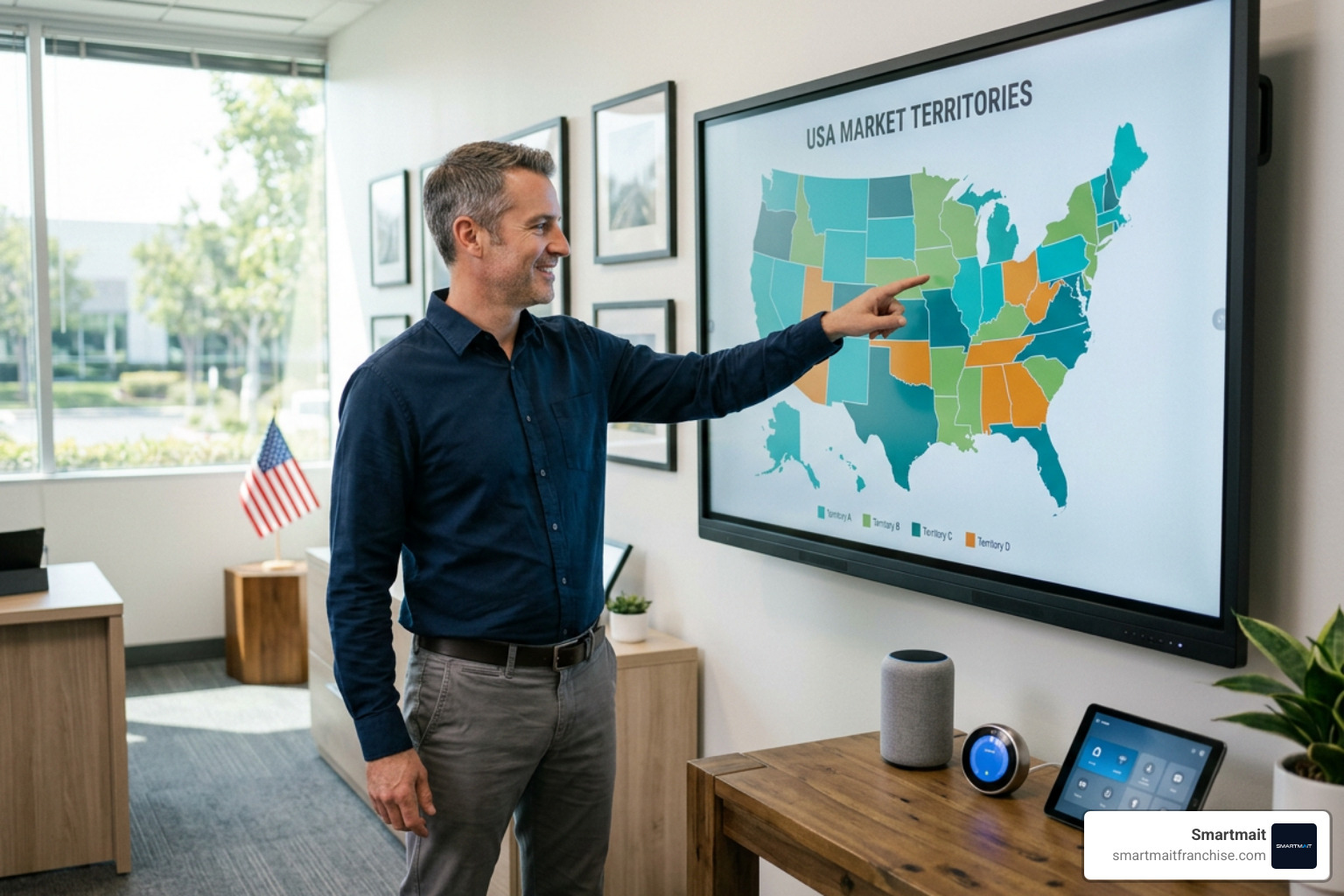
A protected territory guarantees that you have the exclusive operational rights to market, install, and manage ongoing memberships within a defined demographic boundary. We use detailed market mapping software to analyze household income, single-family home density, commercial real estate development, and local technology adoption rates before finalizing territory lines.
Securing exclusive boundaries ensures that you are not competing against other owners under the same brand name. To better understand how territory mapping influences the valuation and growth potential of your business, see Smart Home Franchise Exclusive Territory Rights and Why They Matter.
When reviewing franchise documentation, pay close attention to:
- Demographic minimums within your assigned area.
- Exclusivity protections across both residential and light-commercial accounts.
- Clear renewal options and asset-transfer rights if you decide to sell your business later.
Step 3: Mastering Training, Integration, and Ongoing Operations
Franchisees succeed because they operate on proven, repeatable systems rather than trial and error. From the day you sign your agreement, you receive step-by-step guidance covering technical integrations, proprietary dispatch software, customer relationship management, and vendor logistics.
We partner directly with leading manufacturers to provide exclusive supplier relationships, preferred product pricing, and pre-vetted supply chains. This ensures you always source premium smart-tech hardware at rates that protect your project margins. To explore how standardized installation workflows prevent field issues, read A Comprehensive Guide to Reliable Smart Home Integration.
Technical Training Requirements for a Smart Home Tech Franchise Owner
A common misconception is that you need an advanced background in electrical engineering or computer science to operate a technology franchise. In reality, our comprehensive training program takes motivated entrepreneurs and equips them with all the necessary installation methodologies, network design principles, and troubleshooting protocols.
Franchisees learn how professional Integrators map out smart hubs, low-voltage wiring, automated lighting systems, access control units, and robust Wi-Fi mesh networks. If complex technical edge cases occur on-site, our real-time field support and diagnostic checklists give you instant access to master technicians who can guide you through any challenge.
Building Recurring Revenue Through Ongoing Service Memberships
Traditional installation businesses face a constant challenge: once a system is installed, their revenue drops back to zero until they find another customer. We designed our business model around long-term maintenance memberships to solve this problem.
Smart ecosystems are dynamic networks that require periodic firmware updates, security patches, hardware recalibrations, and network optimizations. By enrolling customers into ongoing service plans, franchise partners deliver reliable peace of mind while locking in predictable monthly revenue. To see how these services drive client lifetime value, read Smart Home Customer Retention Strategies That Actually Work.
These recurring agreements include:
- Scheduled bi-annual or annual system health checks.
- Priority remote tech support and troubleshooting.
- Discounted hardware upgrades and system expansions.
- Network bandwidth tuning and cybersecurity checks.
Step 4: Launching Marketing Campaigns and Acquiring High-Value Clients
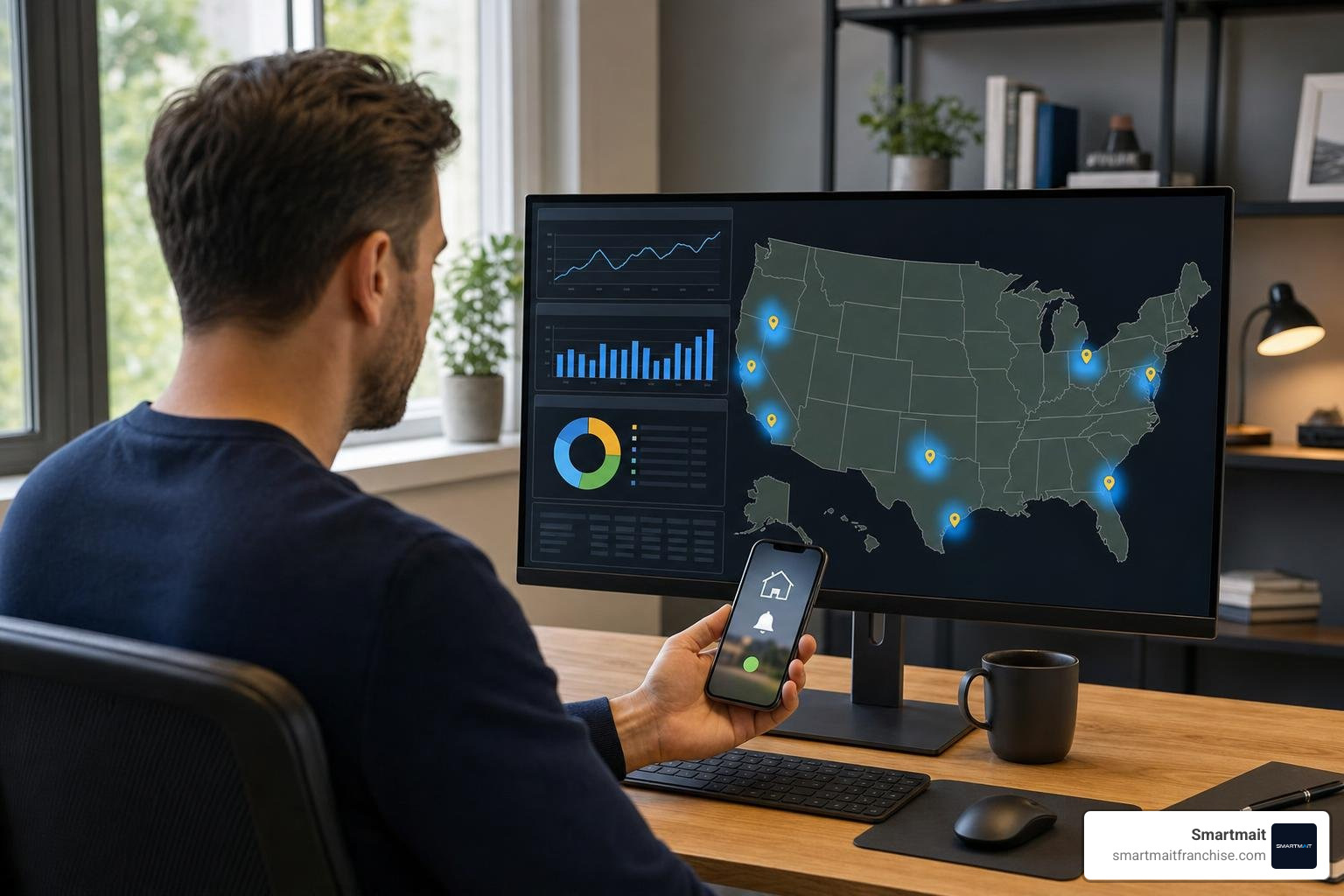
A great service model needs a steady stream of qualified customer inquiries to reach its full potential. We equip franchise owners with a done-for-you marketing system designed to generate pre-qualified local leads right from launch. Instead of relying on cold outreach, you gain access to localized search engine optimization, hyper-targeted digital advertising campaigns, and polished brand assets.
For a broader breakdown of how systematic marketing supports new franchise owners, review The Complete Guide to Smart Home Franchises.
Our launch strategy connects you with high-value referral channels across your territory, including:
- High-end interior designers seeking automation partners.
- Custom home builders and electrical contractors.
- Commercial property managers needing unified security and energy management.
- Real estate agents aiming to increase listing values with smart technology.
Frequently Asked Questions About Smart Home Franchises
Do I need prior electrical or technical experience to own a franchise?
No, prior trade experience is not required. While having an interest in technology is helpful, our certification curriculum covers everything from fundamental low-voltage wiring to advanced system commissioning. New owners with zero technical background can master our installations by following Smart Home 101: A Beginner’s Guide to Getting Started. Our operational manuals and support ensure you deliver high-quality work on every job.
How quickly can a new franchise location launch and generate revenue?
Most franchise owners complete their initial onboarding, territory setup, and training within 60 to 90 days of signing their franchise agreement. Because there is no commercial buildout or complex retail lease negotiation, you can launch operations as soon as your technical certification is complete and your mobile inventory arrives.
Can this business be operated from a home office?
Yes. Operating from a home office keeps overhead low and allows for high operating margins. Field technicians dispatch directly from their homes to customer locations, managing schedules, job notes, and billing through proprietary mobile field software. All you need is a secure storage area for tools and high-demand inventory.
Conclusion
The smart technology industry is moving fast, and residential and commercial customers need dependable professionals to design, install, and support their connected environments. By choosing a franchise model that combines hardware installations with recurring maintenance memberships, you can build a resilient, scalable service business.
At Smartmait, we provide the full operational blueprint, hands-on training, preferred supplier pricing, and marketing engines you need to succeed in your local market. Take the next step toward business ownership by exploring our smart home tech franchise opportunity today.