
Smart-Home Features That Create Service Opportunities
The most practical features of smart homes for a service business fall into five categories: lighting and shading, climate and energy control, security and access, safety sensors, and the networks that connect them. For prospective franchise operators, the opportunity is not just installing devices. It is keeping those systems reliable through maintenance, updates, and ongoing support.
A single smart plug may need little help. A building with connected locks, cameras, lighting, and climate control creates more complex service needs. The list below moves from basic devices to whole-building integration so you can assess which services fit your skills and market.
I’m Dominic Hesano, a franchise development professional helping build Smartmait around connected-home and low-voltage services. My work in franchising and business operations shapes how I evaluate the features of smart homes as practical service categories for operators. Industry research from the Internet of things continues to show that connected-building adoption is expanding across both residential and commercial properties, which reinforces the long-term service opportunity for integration businesses.
Features of smart homes terms to learn:
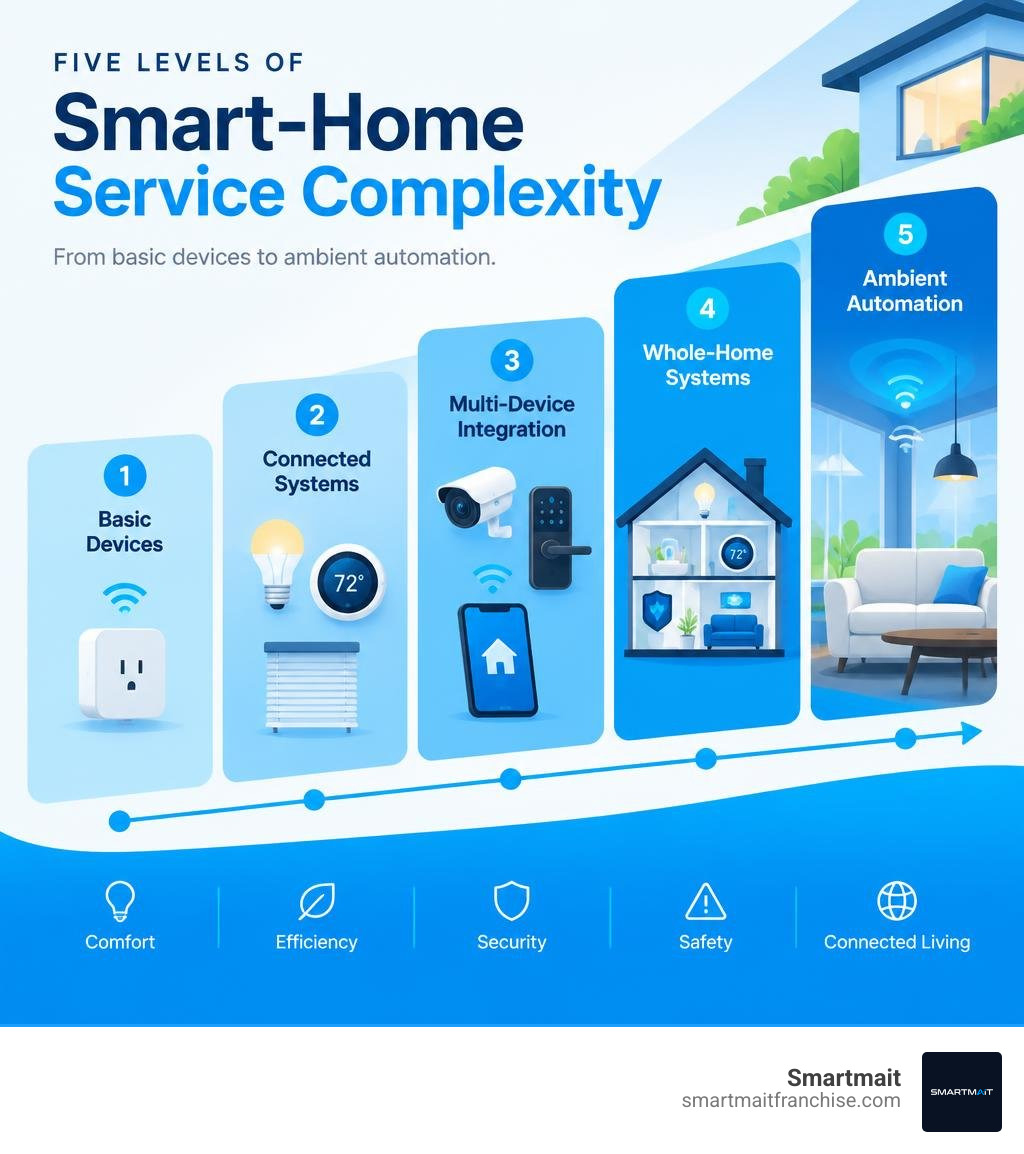
Core Smart-Home Service Categories: Five Levels of Automation
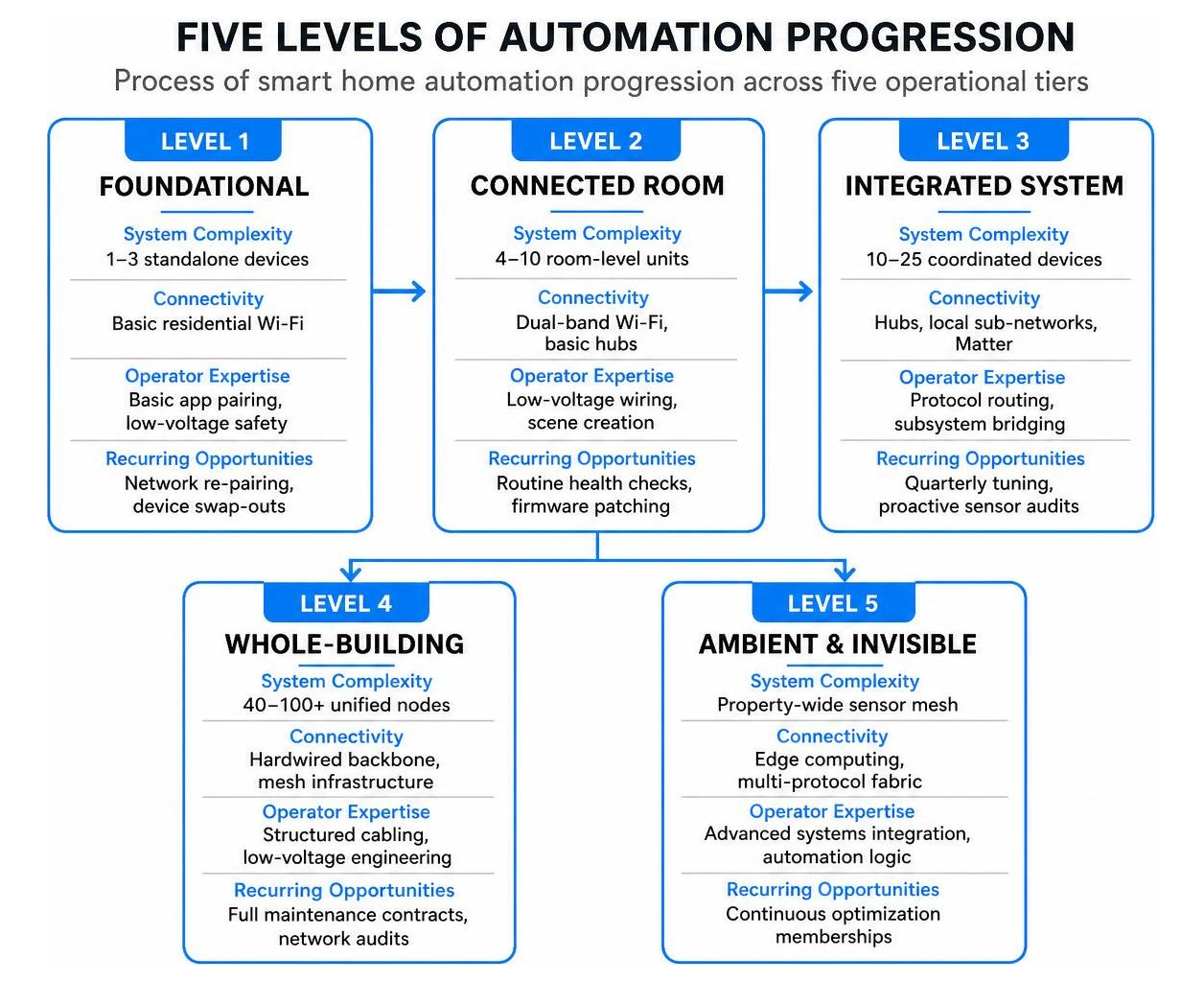
Understanding the smart-building landscape begins with categorizing system maturity. As consumer demand expands across both single-family properties and modern rental units, service complexity grows from isolated gadgets into fully unified environments. For franchise candidates and independent low-voltage business owners evaluating a franchise model, aligning your technical offerings with clear operational tiers helps you build repeatable workflows and long-term service agreements.
| Service Level | System Complexity | Connectivity Requirements | Operator Expertise Needed | Recurring Service Opportunities |
|---|---|---|---|---|
| Level 1: Foundational | 1–3 standalone devices | Basic residential Wi-Fi | Basic app pairing, low-voltage safety | Network re-pairing, device swap-outs |
| Level 2: Connected Room | 4–10 room-level units | Dual-band Wi-Fi, basic hubs | Low-voltage wiring, scene creation | Routine health checks, firmware patching |
| Level 3: Integrated System | 10–25 coordinated devices | Hubs, local sub-networks, Matter | Protocol routing, subsystem bridging | Quarterly tuning, proactive sensor audits |
| Level 4: Whole-Building | 40–100+ unified nodes | Hardwired backbone, mesh infrastructure | Structured cabling, low-voltage engineering | Full maintenance contracts, network audits |
| Level 5: Ambient & Invisible | Property-wide sensor mesh | Edge computing, multi-protocol fabric | Advanced systems integration, automation logic | Continuous optimization memberships |
Moving from transactional product setups to whole-property integration shifts an operator’s business model from one-time labor to dependable customer relationships. When you review the blueprint for smart home construction, you see that modern properties require ongoing oversight rather than simple set-and-forget installations.
Foundational Services: Entry-Level Devices and Hubs
At the introductory level, residential and commercial clients require support configuring core platforms such as Amazon Alexa, Google Home, or Apple HomeKit. Customers frequently struggle with standard network connectivity, proper bridge placement, and initial voice profile pairing.
For a new franchise operator, entry-level work serves as an accessible customer acquisition vehicle. These service calls require foundational low-voltage knowledge, clean cable management, and professional customer communication. Operators can refer to smart home 101 concepts to establish standardized onboarding checklists for field technicians. This ensures every basic setup satisfies proper safety protocols and sets the stage for future upgrades.
Advanced Services: Ambient and Whole-Building Integration
Advanced integration connects lighting, motorized shading, climate, access, and audio into an intuitive control structure. Rather than opening separate applications, occupants manage the environment through smart home scene automation triggered by wall keypads, scheduled events, or presence sensors.
Providing whole-building services requires structured low-voltage wiring, centralized equipment racks, and robust local network architectures. These complex deployments create natural retention channels. Clients require ongoing support for seasonal scene changes, device updates, and integration with new building subsystems, giving the franchise operator a steady operational pipeline.
Energy Management and Climate Services

Energy efficiency remains a primary driver for smart-building investments. Modern properties use automated load shedding, zoned HVAC systems, and dynamic shading to reduce consumption without sacrificing comfort. Commercial and residential clients increasingly treat these features as essential operational infrastructure rather than luxury additions.
For a franchise enterprise, energy services provide measurable client value. Developing standardized maintenance offerings around smart home power management allows operators to perform periodic calibrations that verify sensor accuracy, confirm scheduled setpoints, and diagnose environmental inefficiencies.
Intelligent Lighting and Automated Shading
Automated lighting and motorized shades balance natural daylight with interior fixtures. High-end spaces leverage daylight harvesting and occupancy detection to illuminate rooms only when occupied, while automated shades adjust throughout the day to mitigate thermal gain.
Franchise technicians install low-voltage control panels, programmable switches, and automated window treatments. As properties change ownership or layout, clients rely on professional operators for smart home performance tips and scene reconfiguration, providing reliable service touchpoints.
Smart Climate and Whole-Building Power Management
Smart climate control has evolved past basic programmable schedules. Today’s systems integrate multi-stage HVAC equipment, remote temperature sensors, and dedicated ventilation dampers. By incorporating smart energy monitoring, technicians give property managers clear visibility into power usage across individual circuits.
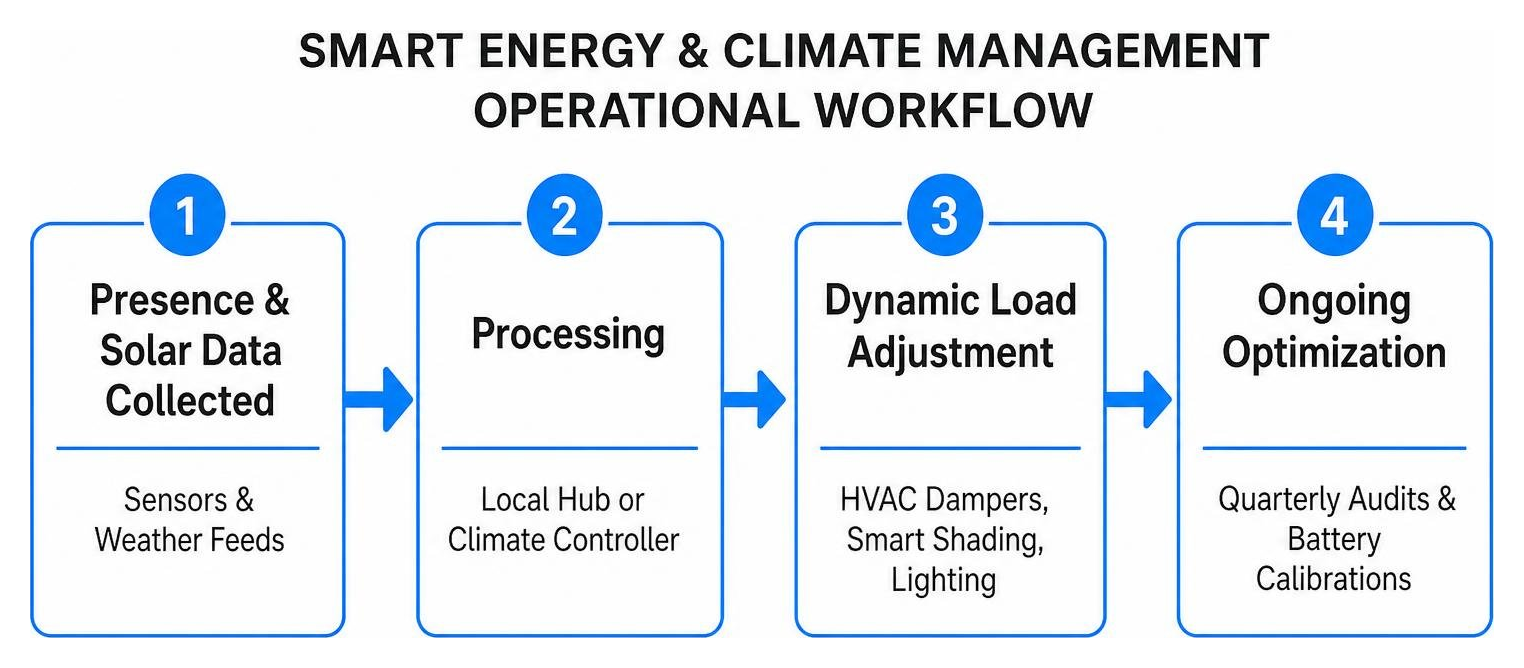
Integration businesses also deploy and maintain smart home battery storage systems to support uninterrupted power and load balancing. Routine service contracts cover firmware maintenance, sensor recalibration, and battery health inspections to ensure climate systems operate smoothly across peak seasons.
Security, Access, and Safety Services
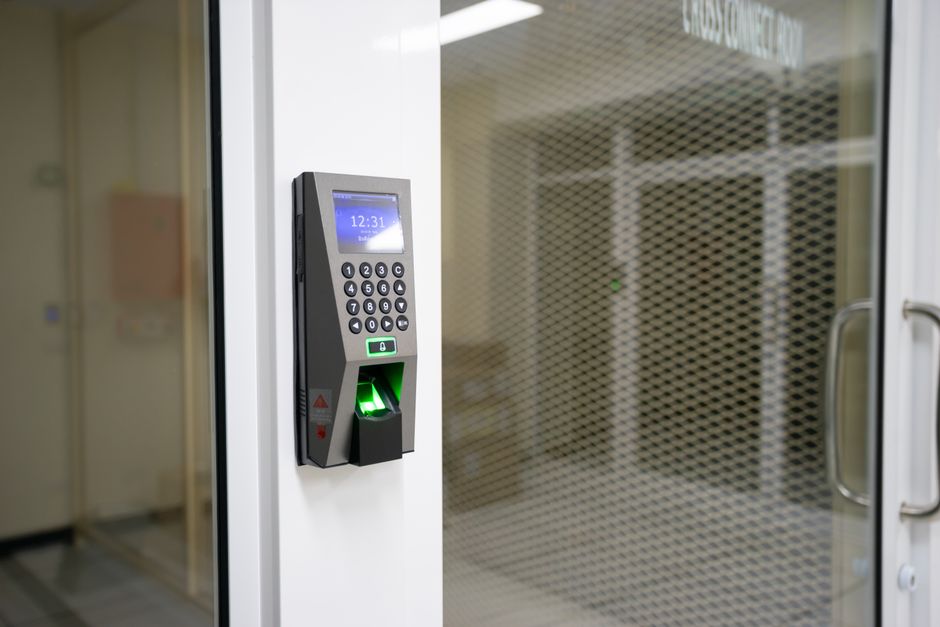
Connected protection represents one of the most critical service verticals in low-voltage integration. Modern building owners expect unified access control, crystal-clear perimeter surveillance, and proactive environmental sensors working in unison.
Franchise operators design and install these mission-critical systems, providing clients with centralized control and immediate event logging. When building owners plan smart home new construction, security infrastructure serves as the primary backbone around which other smart amenities are integrated.
Perimeter Surveillance and Smart Access
Modern access control pairs commercial-grade smart locks with video doorbells, license-plate recognition cameras, and smart gate controllers. Operators configure credentialing systems that grant time-limited entry codes for guests, cleaning staff, or delivery drivers.
Integration technicians run structured Cat6 cabling, position Power-over-Ethernet (PoE) security cameras, and set up network video recorders. Franchise teams handle ongoing system maintenance, including field of view adjustments, storage drive health checks, lens cleaning, and secure credential management.
Hazard Prevention and Asset Protection
Environmental safety devices protect properties against catastrophic physical damage. Technicians deploy connected water leak sensors, motorized main shut-off valves, smoke detectors, and low-temperature monitors that alert occupants before small issues become costly disasters.
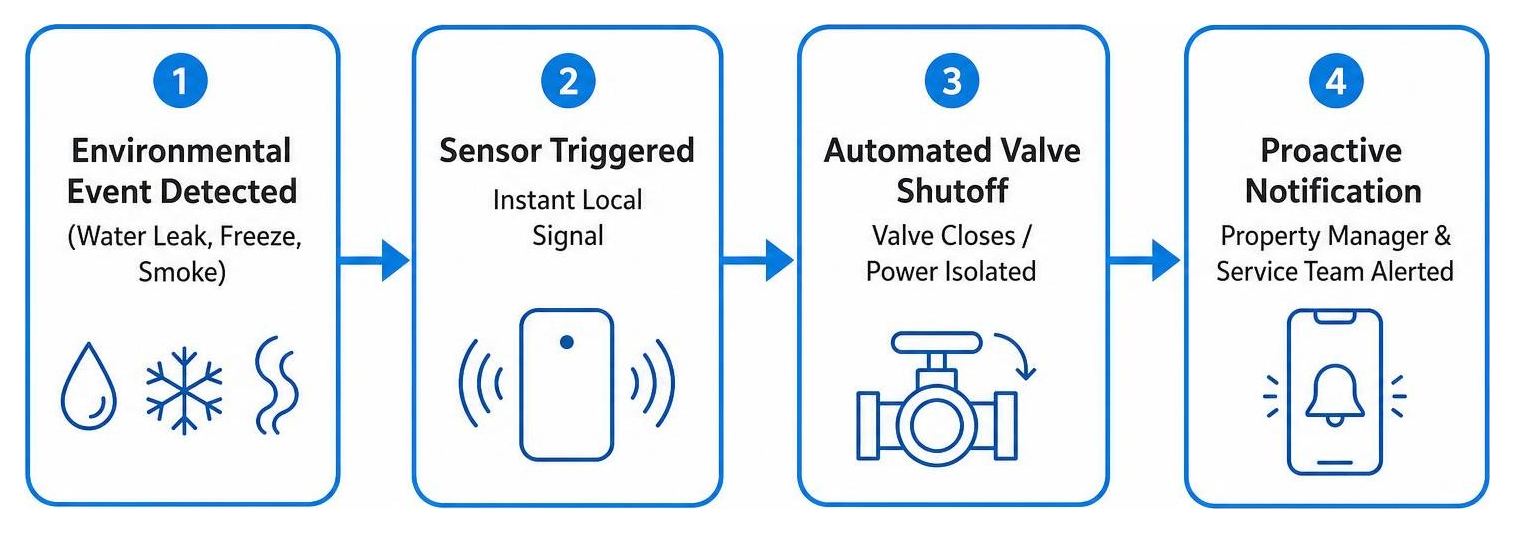
Franchise service memberships often include semi-annual physical inspections and simulated valve shut-off tests. These recurring safety reviews give property owners peace of mind while establishing consistent service revenue for the local integration business.
Connectivity, Privacy, and Emerging Standards
A connected home is only as dependable as the network that powers it. As homes incorporate dozens or hundreds of connected nodes, standard consumer routers quickly become bottlenecked, leading to dropped signals and laggy automation responses.
Franchise operators specialize in delivering enterprise-grade connectivity. By designing enterprise Wi-Fi mesh layouts, implementing dedicated IoT virtual local area networks (VLANs), and following the complete guide to choosing a smart home connectivity solution, franchise technicians build reliable backbones capable of supporting high-density smart properties.
Interoperability Across Ecosystems
The introduction of the Matter standard and Thread networking protocols has transformed device interoperability. Different equipment categories can now communicate locally across unified networks without relying on disparate vendor clouds.
Operators assist clients in navigating these standards by deploying Matter-certified controllers, configuring smart home voice commands, and bridging legacy sub-systems into modern control dashboards. Technicians keep these diverse ecosystems operating seamlessly across ongoing platform updates.
Data Security and Network Optimization
Network security and user privacy are foundational requirements for modern integration businesses. Clients want assurance that internal video streams, entry logs, and automation routines remain protected from outside vulnerabilities.
Operators prioritize smart homes without cloud dependency to preserve local processing speed and keep private telemetry data inside the property. Ongoing network services include:
- Router and firewall firmware patching
- Subnet isolation between smart devices and personal computers
- Regular bandwidth testing and radio frequency optimization
- Strategic planning for your next smart home system upgrade
By offering professional network maintenance, franchise operators protect their clients’ digital privacy while building lasting service relationships.
Scaling an Integration Business: Independent vs. Franchise Model
For established low-voltage integrators and home-service contractors, running an independent operation often means facing significant operational ceilings. Many business owners find themselves trapped in daily field troubleshooting, managing complex supply chains, and training technicians from scratch without standardized operating procedures.
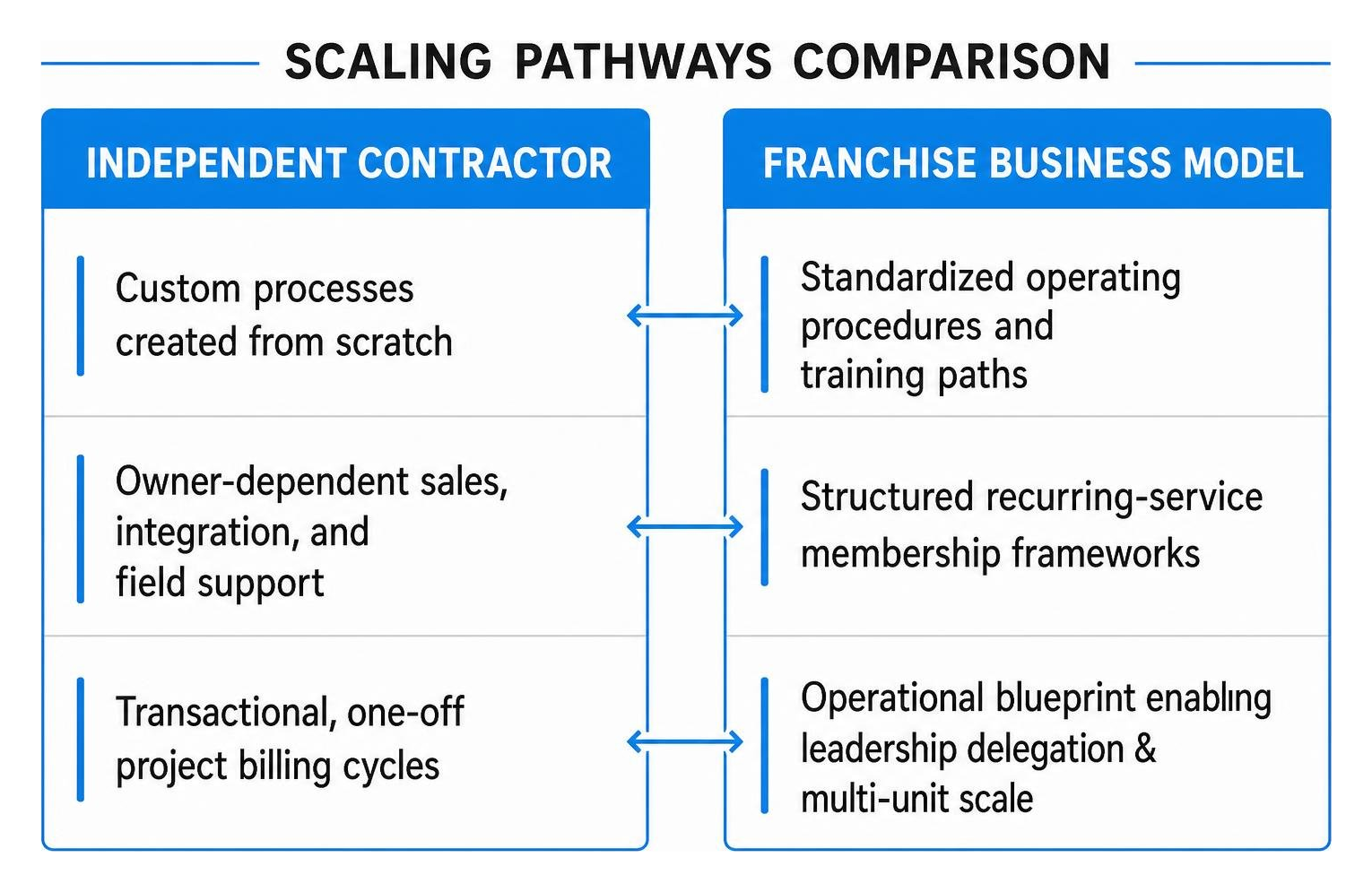
Converting an existing integration business into a franchise territory allows operators to move from owner-dependent field work to structured business leadership. Franchise platforms provide established training curricula, structured technician onboarding, and proven service agreement packages. This infrastructure makes it easier to recruit, train, and retain technicians while establishing predictable, recurring maintenance workflows that increase enterprise stability.
Frequently Asked Questions for Smart-Home Franchise Prospects
Which smart-home service categories should a new franchise operator evaluate first?
New operators typically start with core high-demand verticals: structured network cabling, smart lighting controls, and connected security systems. These categories have widespread market demand and establish the foundational infrastructure required for future whole-building additions.
How can smart-home service memberships support recurring revenue?
Service memberships bundle ongoing firmware updates, network security audits, remote system monitoring, seasonal climate recalibrations, and priority onsite dispatch. This shifts the business model from transactional project installations to stable, long-term service relationships.
What training and capabilities do smart-home franchise operators need?
Operators benefit from basic low-voltage competencies, networking fundamentals, and structured business management skills. Franchise systems provide operational playbooks, technician training pathways, and brand support to help operators lead integration teams effectively.
Conclusion
The smart-building and low-voltage integration sector is shifting away from isolated DIY gadgets toward professionally integrated, actively managed building systems. As connected lighting, climate management, security, and high-performance networks become standard requirements in modern properties, property owners require trusted integration specialists to install, maintain, and optimize their investments over time.
For prospective business owners and independent contractors seeking to scale, Smartmait offers a proven framework combining expert low-voltage integration with ongoing service memberships. Learn how our operational systems, technical training paths, and recurring service model can help you build an enterprise in your market.
Ready to explore territory opportunities in your market? Request Smartmait franchise information today to connect with our franchise development team and receive comprehensive information on launching or converting your business.