Evaluating CCTV Installation for Car Washes as a Service Niche
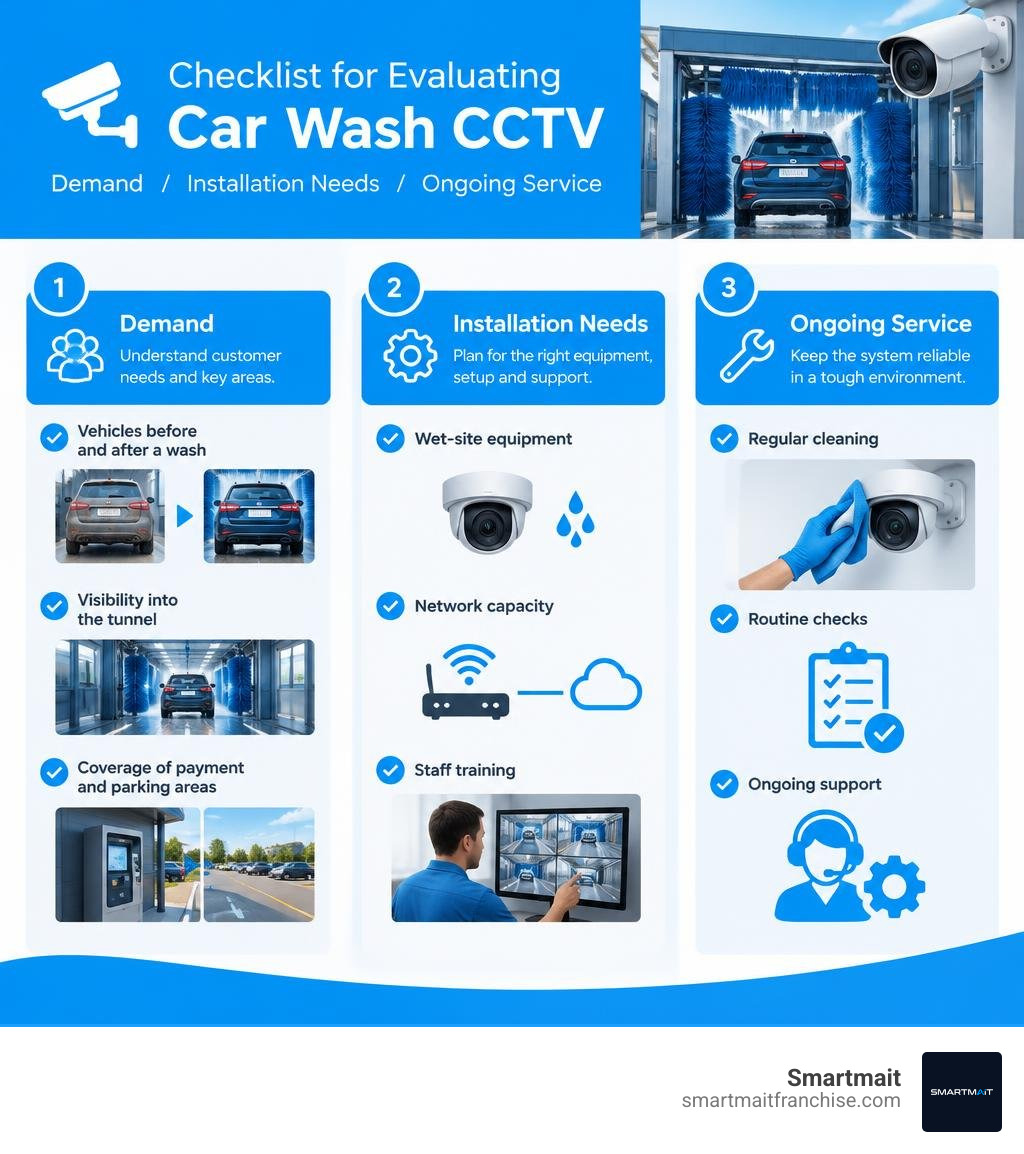
To evaluate CCTV installation for a car wash as a service niche, start with the customer’s needs: footage of vehicles before and after a wash, visibility into the tunnel, and coverage of payment and parking areas. Then assess wet-site equipment needs, network capacity, staff training, and the cost of keeping the system working. These checks help you decide whether the niche fits your skills and local market.
For a prospective franchise owner, the opportunity is not just the initial installation. Cameras in a wet, chemical-heavy setting may also need regular cleaning, checks, and support. That makes ongoing service worth considering alongside the project itself.
I’m Dominic Hesano, a franchise development professional and business operator involved in building Smartmait around technology installation and ongoing service. My background in franchising and connected-building services shapes how I evaluate cctv installation for car wash sites as a potential business niche.
Cctv installation for car wash terms simplified:
Why Car Wash Security May Be Worth Evaluating as a Service Niche

When exploring opportunities in the low-voltage integration sector, evaluating specialized commercial verticals is essential for long-term business planning. Car wash facilities present a distinct operating environment that demands more than generic commercial camera setups. For entrepreneurs exploring franchise ownership or seasoned integration business owners thinking about converting to a structured brand model, this vertical represents an intriguing intersection of technical installation and high-retention service agreements.
Car washes operate in harsh conditions: high moisture levels, airborne detergents, constant vehicle movement, and intense ambient light shifts. Independent operators often struggle to design systems that withstand these environments while delivering actionable visual records. By providing structured surveillance services that address these specific operational pain points, low-voltage integrators can differentiate their business from generalist contractors.
Evaluating Demand for Vehicle-Condition Documentation
One of the most persistent operational headaches for car wash operators is managing customer disputes over vehicle damage. Without clear visual records, determining whether a scratch, dent, or broken mirror occurred prior to entering the wash or inside the equipment tunnel becomes an expensive guessing game.
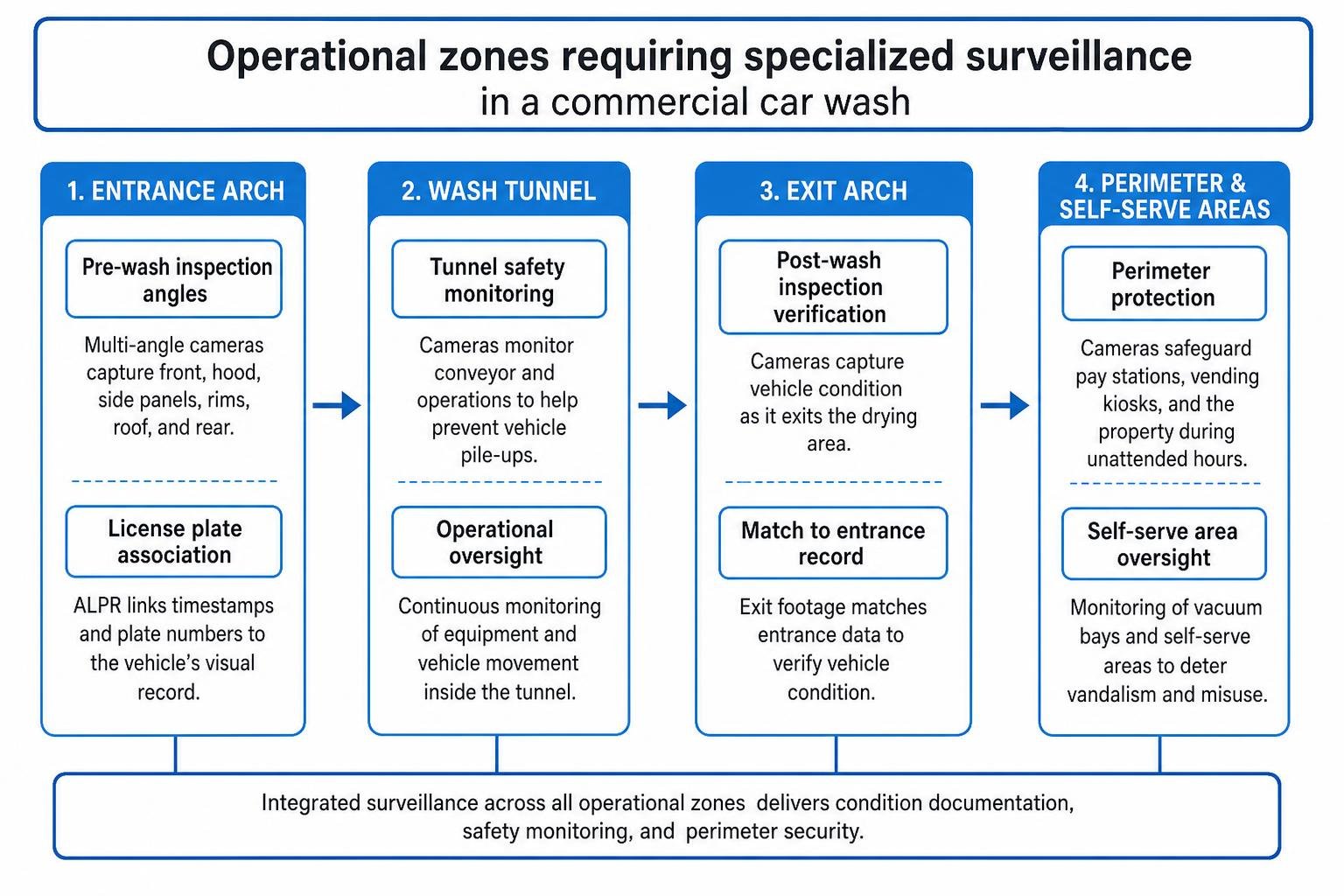
To address this challenge, high-definition condition documentation systems are installed at entrance and exit arches. When assessing demand in your target territory, consider how operators benefit from:
- Pre-wash inspection angles: Dedicated multi-angle camera arches capturing the front, hood, side panels, rims, roof, and rear of vehicles as they queue.
- License plate association: Cameras configured for automatic license plate recognition (ALPR) that link timestamps and plate numbers directly to the vehicle’s visual record.
- Post-wash inspection verification: Matching exit footage to verify vehicle condition as it departs the drying area.
Assessing local demand involves understanding how much time facility managers spend resolving unverified claims and evaluating their appetite for comprehensive, reliable visual documentation systems.
Considering Operational Safety and Security Needs
Beyond condition tracking, commercial car wash sites present continuous safety and perimeter management challenges. Busy drive-through lanes, automated conveyor equipment, and unattended self-serve vacuum areas create risks that require active oversight.
System designs often require integration with tunnel safety controls, such as conveyor monitoring systems that help prevent vehicle pile-ups inside the tunnel. Perimeter cameras safeguard automated pay stations and vending kiosks against vandalism during unattended hours. Understanding how these operational priorities intersect allows an integrator to build comprehensive service packages that provide true operational value rather than simple recording hardware.
Evaluating the Business Requirements of Car Wash Surveillance Services

Entering this vertical requires a solid grasp of specialized technical requirements. A standard off-the-shelf camera system will quickly fail when exposed to the high-pressure spray, caustic detergents, and humidity typical of an automated wash bay.
Prospective business owners must evaluate their ability to deliver robust hardware solutions and ongoing technical support that keep systems functioning reliably in demanding conditions. Technical references such as the SMARTSTOP installation guidelines illustrate the detailed physical and network standards needed when deploying camera equipment near automated wash machinery.
Understanding Image Quality and Operating Conditions
Achieving reliable image quality inside and around a car wash requires specific hardware capabilities:
- High Dynamic Range (WDR): Exterior bays experience drastic lighting changes, from direct sunlight to deep shadows under canopies. True WDR (120 dB or higher) is critical to prevent wash-out and ensure clear images of vehicle paint and license plates.
- Low-Light and Night Imaging: 24/7 facilities require advanced night vision sensors, such as high-sensitivity color night-vision cameras, to capture crisp details around vacuum stations and perimeter fences after dark.
- Frame Rate and Shutter Speed: High shutter speeds and consistent frame rates (minimum 20 to 30 frames per second) prevent motion blur on fast-moving wheels or vehicles passing through payment lanes.
Integrators must properly balance camera positioning, focal lengths, and lighting compensations to set clear performance expectations with commercial clients.
Assessing Durability and Maintenance Needs
Equipment deployed in wash environments faces rapid degradation if not correctly specified. Camera housings should carry minimum ingress protection ratings of IP66 or IP67 to resist pressurized water jets and moisture penetration. Vandal-resistant ratings (such as IK10) protect hardware in public areas.
Even the most rugged hardware faces chemical residue accumulation and lens fogging over time. This ongoing environmental wear creates a natural demand for scheduled preventative maintenance. Offering regular housing inspections, lens cleaning, seal replacements, and protective enclosure maintenance ensures system longevity while fostering stable, long-term commercial relationships.
Comparing Service Requirements by Car Wash Area
| Facility Zone | Primary Operational Purpose | Environmental Challenges | Typical Maintenance Needs |
|---|---|---|---|
| Pre-Wash Entry Arch | Vehicle condition documentation and license plate capture | Sunlight glare, vehicle exhaust, mist spray | Bi-monthly lens cleaning, optical recalibration |
| Wash Tunnel Interior | Conveyor monitoring, anti-collision tracking, equipment oversight | Constant chemical spray, steam, high humidity, low light | Monthly seal inspections, chemical residue removal, mount tightening |
| Tunnel Exit & Drying Area | Post-wash condition verification, exit queue monitoring | Water splatter, high air velocity from dryers | Regular housing wipe-downs, vibration checks |
| Payment Kiosks | Transaction oversight, customer assistance, fraud deterrence | Direct weather exposure, public tampering | Quarterly seal checks, vandal inspection, network line testing |
| Vacuum Bays & Perimeter | Customer safety, property protection, after-hours deterrence | Rain, wind, dust, temperature extremes | Semi-annual preventative tune-ups, firmware updates |
Planning a Car Wash Surveillance Service Offering
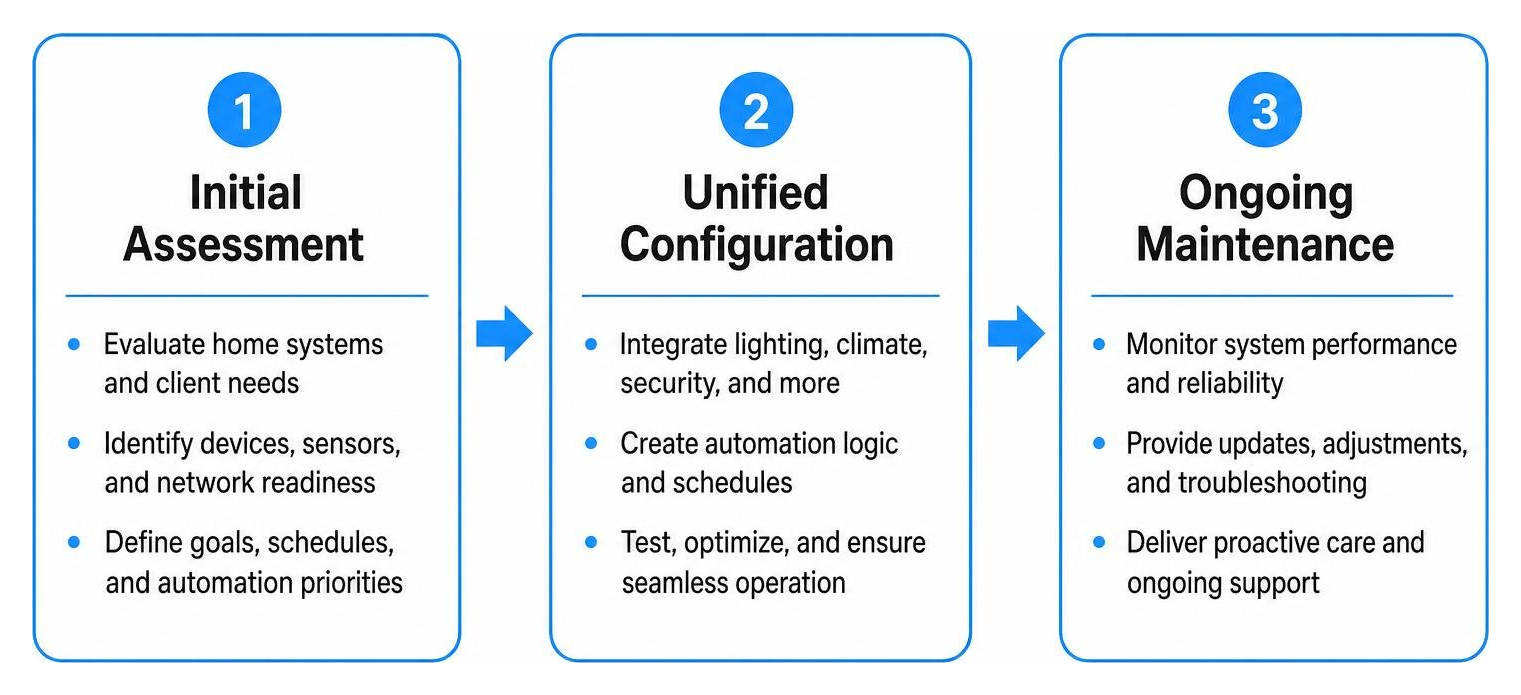
Developing a successful business model in the commercial surveillance space requires moving beyond ad-hoc installations. Integrators should structure systematic site assessments that map hardware placement to the client’s distinct operational workflows.
Whether designing solutions for single-location express washes or regional multi-site operations, a standardized site survey methodology helps define clear scopes of work, ensures reliable coverage, and simplifies technician onboarding.
Pre-Wash and Post-Wash Vehicle Documentation
The core of a specialized car wash service offering is comprehensive vehicle documentation. The system should capture every exterior surface before the vehicle engages the conveyor:
- Wide-Angle Overview Cameras: Record vehicle approach and driver behavior in the staging lanes.
- Dedicated Side-Panel Cameras: Positioned on entry poles at appropriate heights and angles to capture pre-existing rim scuffs, door dings, and rocker panel scratches.
- Roof and Hood Cameras: Overhead angled views to document windshield chips, roof rack conditions, and hood imperfections.
- License Plate Capture: High-contrast cameras focused tightly on the front and rear plate zones to create an indexed visual record.
Standardizing this deployment model allows technicians to complete installations efficiently while ensuring consistent image quality across client locations. To ensure every phase of the project meets high operational standards, teams can follow a structured checklist for security camera installation during site commissioning.
Understanding Tunnel and Facility Monitoring Needs
Inside the tunnel, cameras serve an operational rather than forensic role. They provide real-time visibility for attendants and automated systems to detect off-track vehicles, dislodged equipment, or emergency stops.
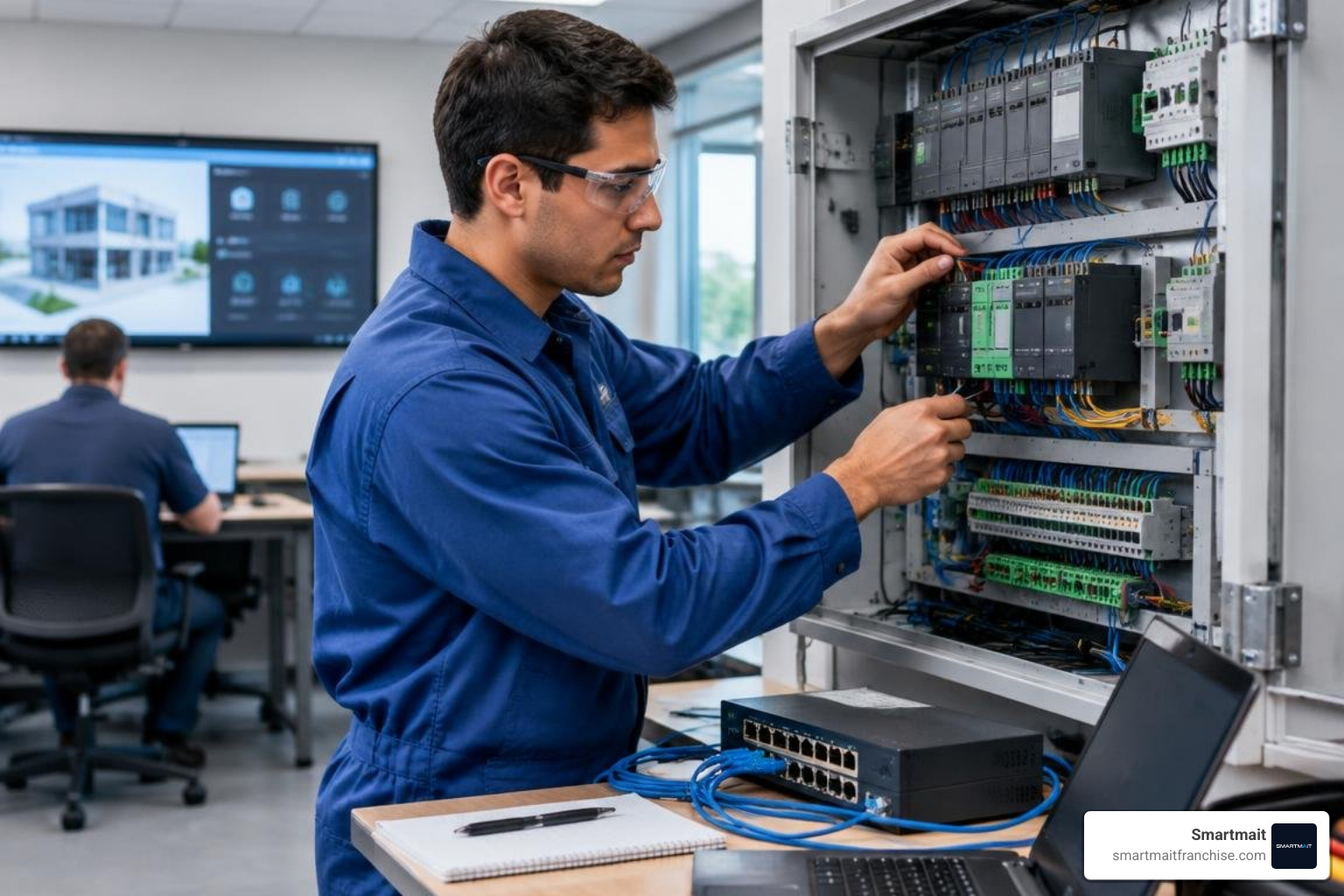
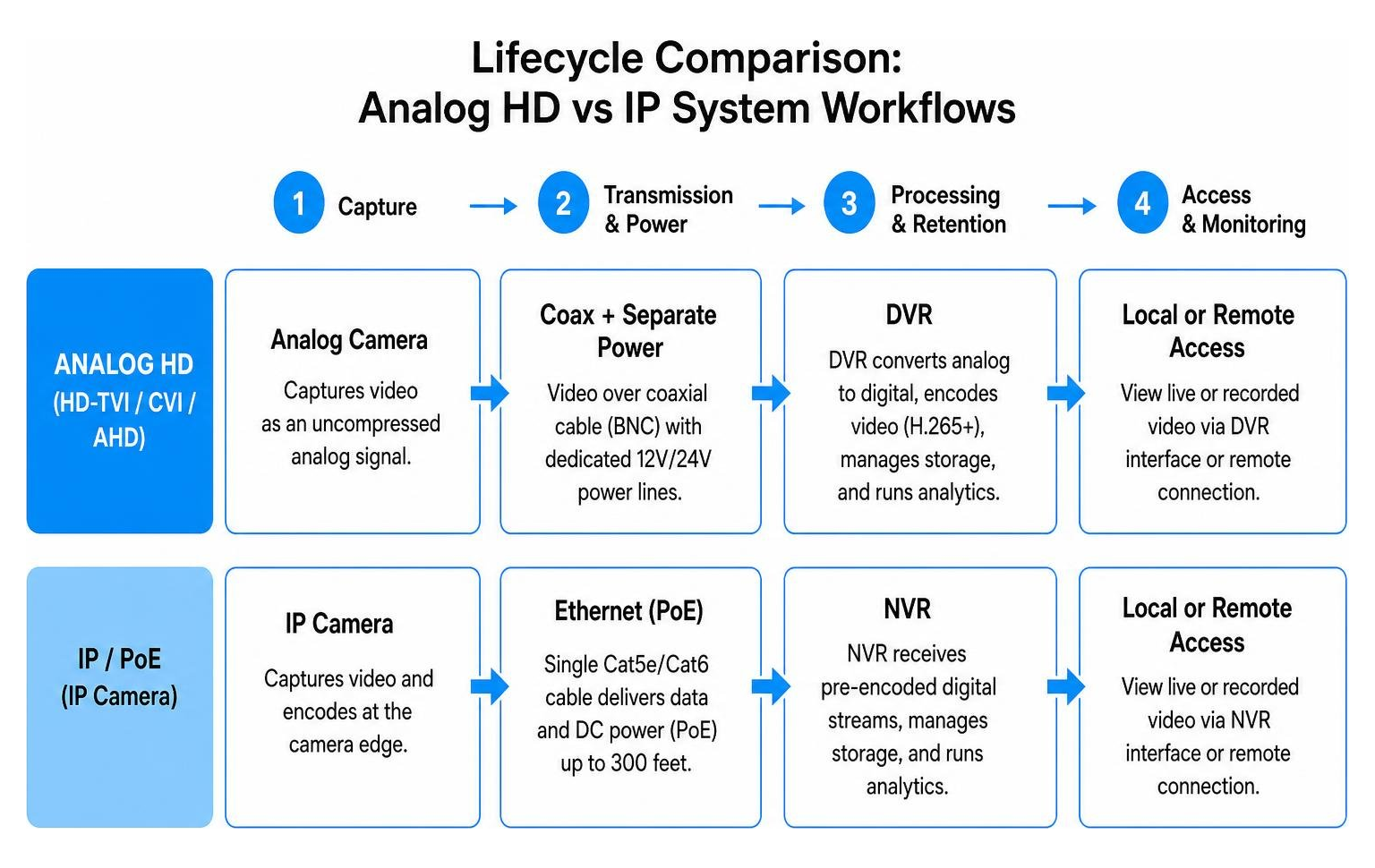
Mounting hardware inside wash tunnels requires corrosion-resistant brackets, liquid-tight flexible conduit, and isolated Power-over-Ethernet (PoE) network switches situated in dry utility rooms. Documenting clear service boundary agreements helps clients understand that while cameras provide operational visibility, regular environmental cleaning is required to keep lenses clear of wax and chemical build-up.
Considering Kiosks, Vacuum Bays, and Perimeter Coverage
Outer facility zones require broader situational awareness. Automated payment kiosks require close-up camera angles to oversee payment terminals and driver interactions. Vacuum bays benefit from high-resolution turret or wide-angle cameras to safeguard unattended equipment and record customer movements.
Integrators can combine local network video recorders (NVRs) with secure remote viewing platforms. This architecture ensures high-bandwidth local recording without bogging down the facility’s internet connection, while still allowing franchise operators and facility owners to monitor live streams across multiple sites from a centralized mobile app or web portal.
Franchise Support, Business Planning, and Service Revenue
For integration business owners and prospective franchise buyers, the fundamental challenge is building a sustainable enterprise that moves past the “feast-or-famine” cycle of one-off construction projects. Establishing a service business around specialized commercial verticals provides a clear pathway toward steady, recurring revenue.
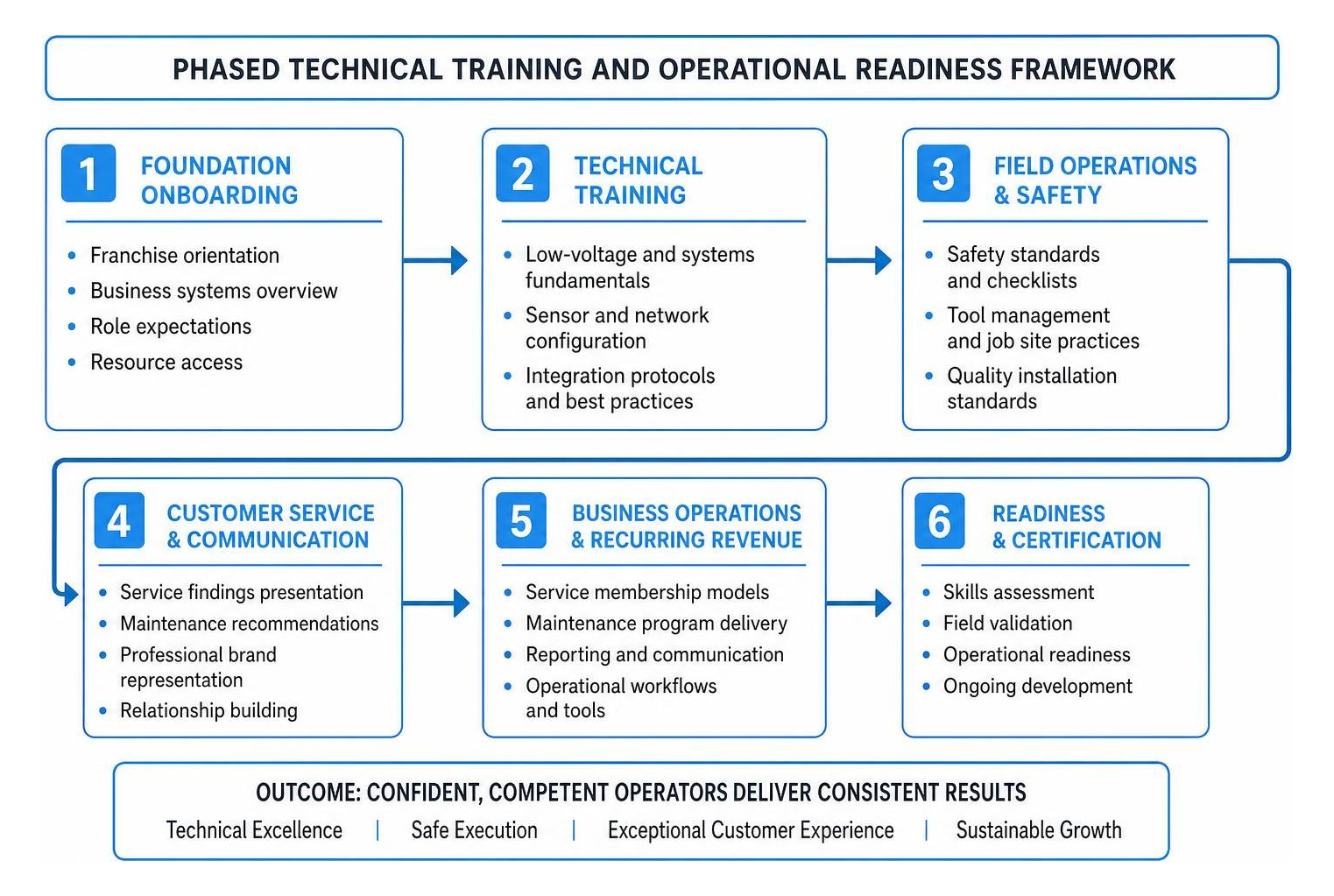
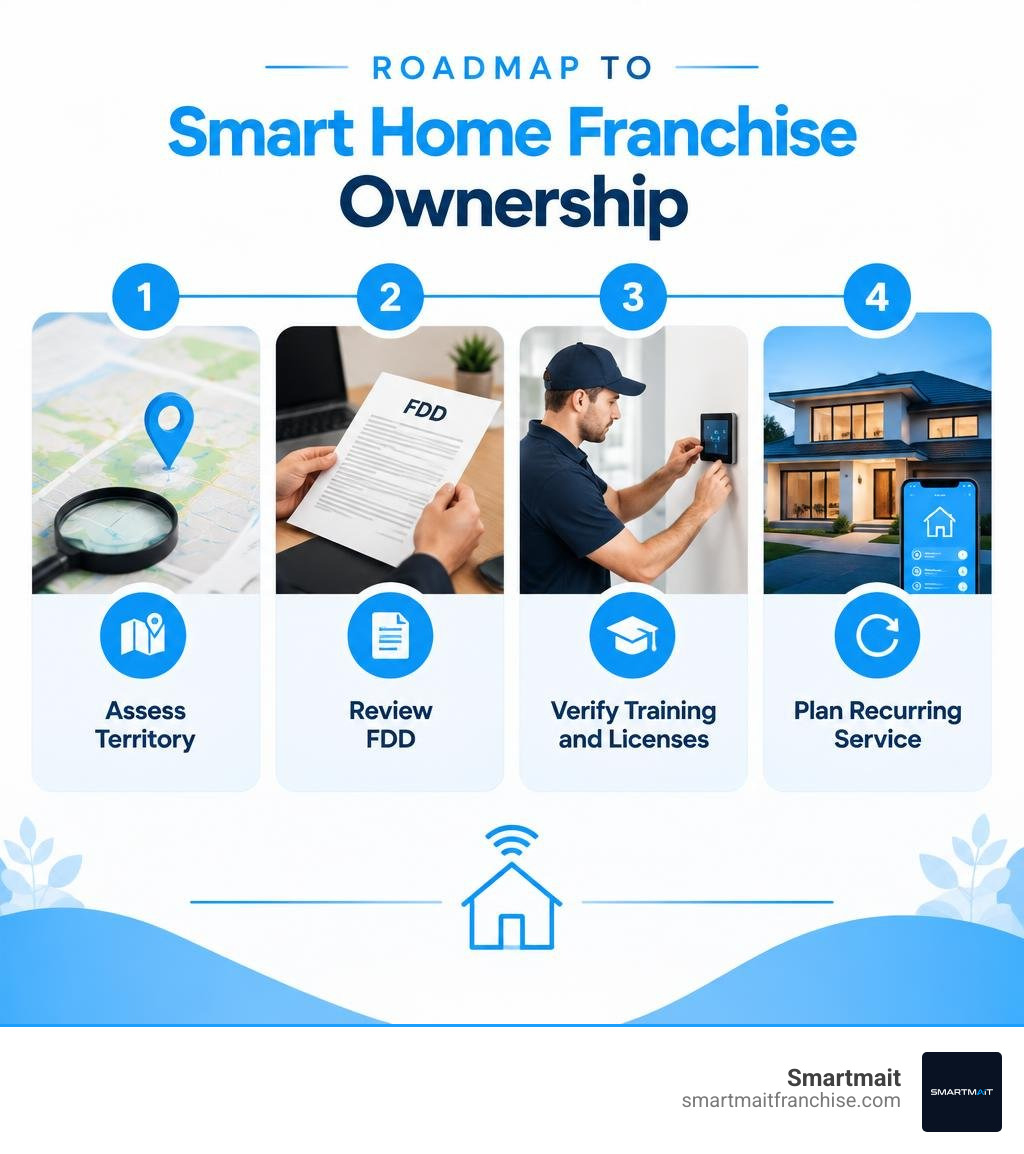
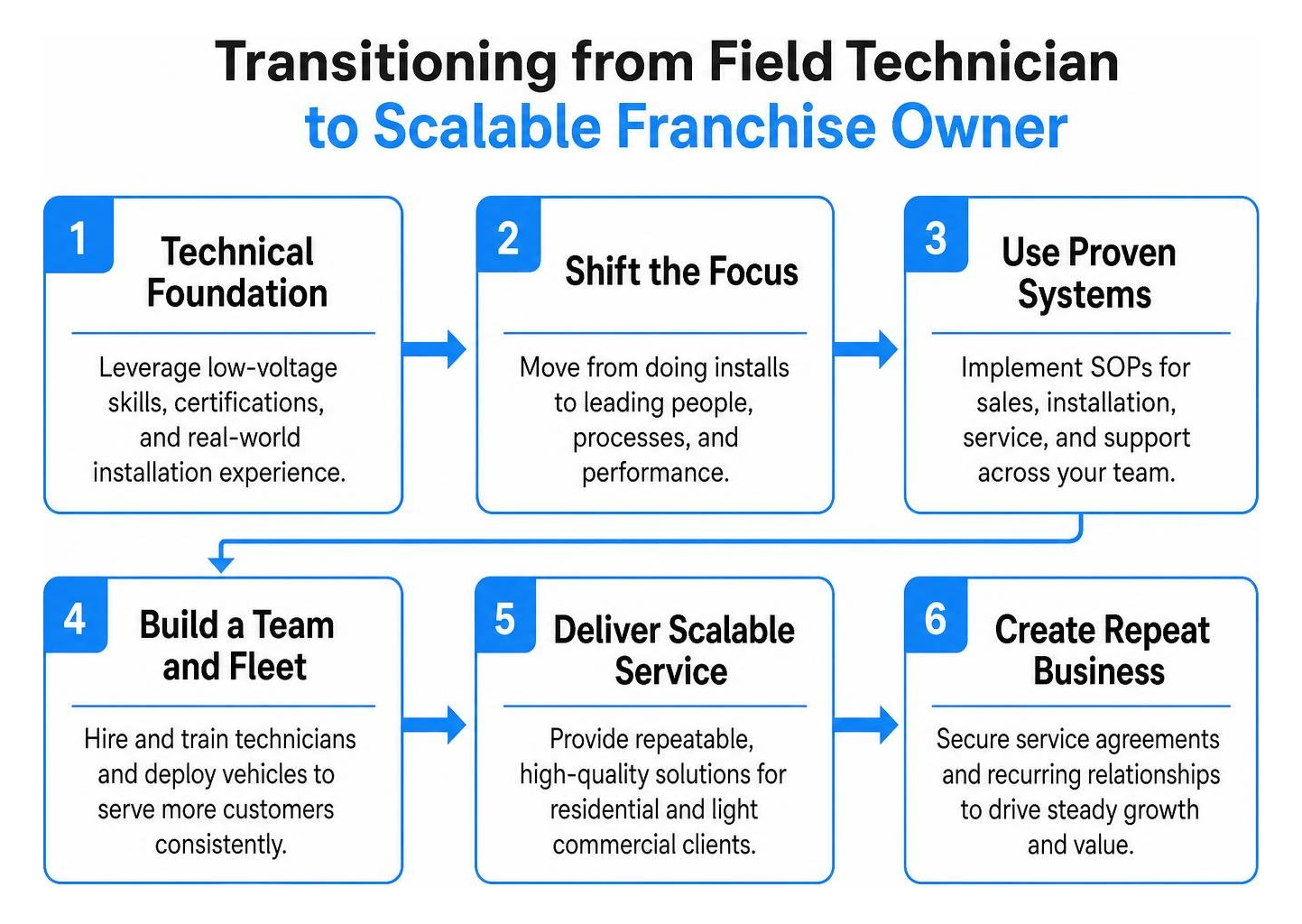
Joining a structured franchise organization provides operational frameworks, technician training programs, and standardized business systems. This support helps independent operators transition from working in the business to working on the business, accelerating growth while maintaining service quality.
Building a Service-Membership Model
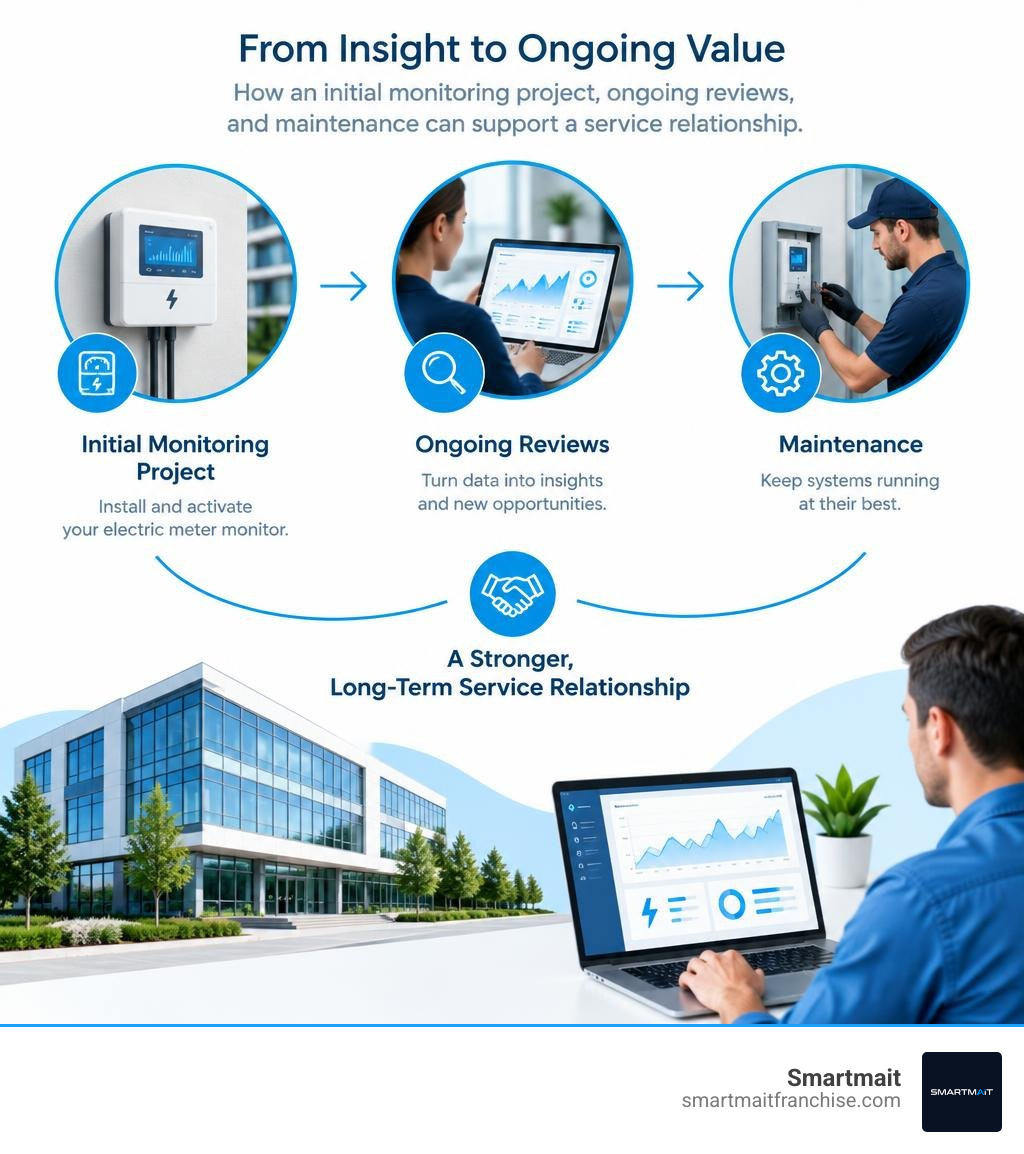
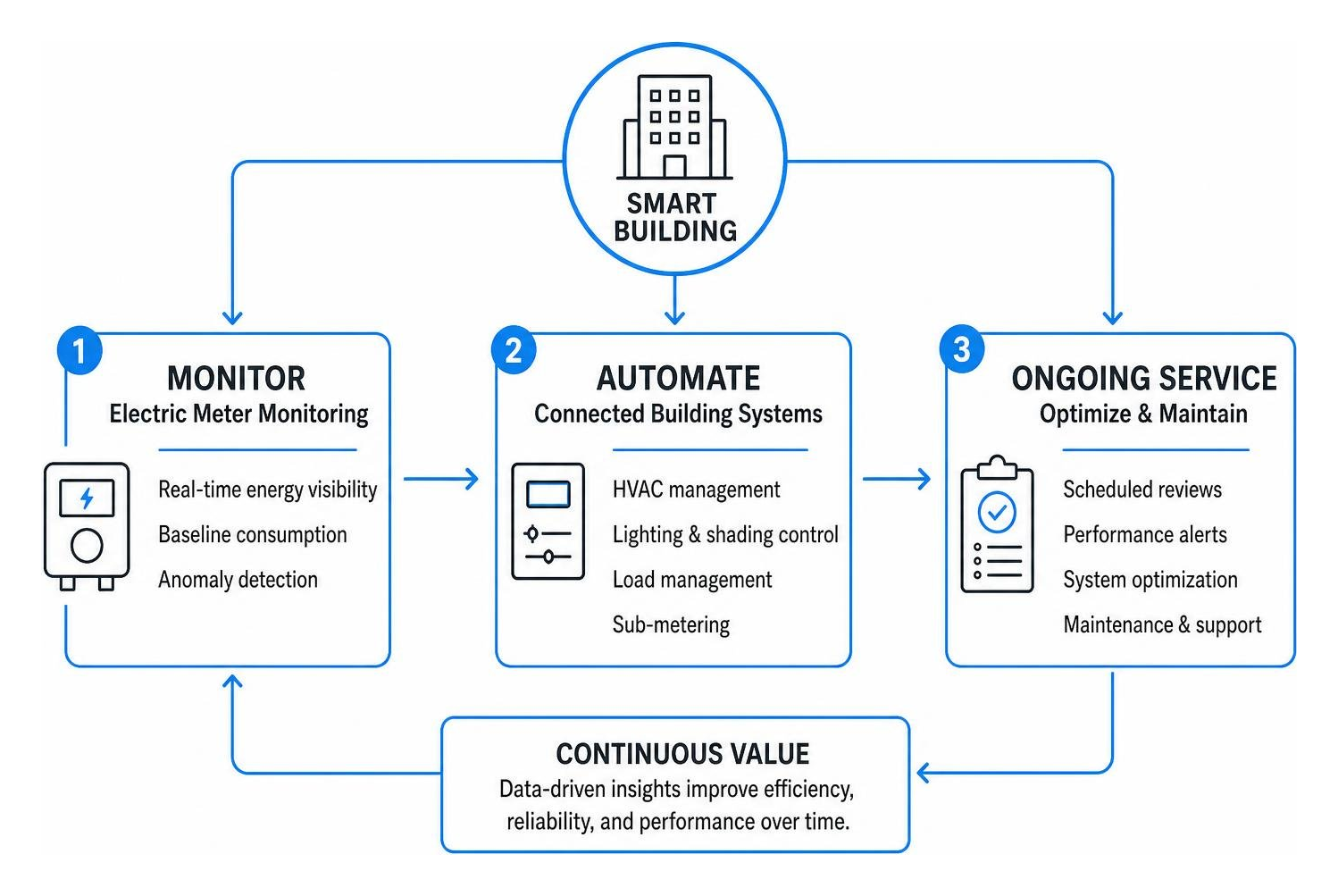
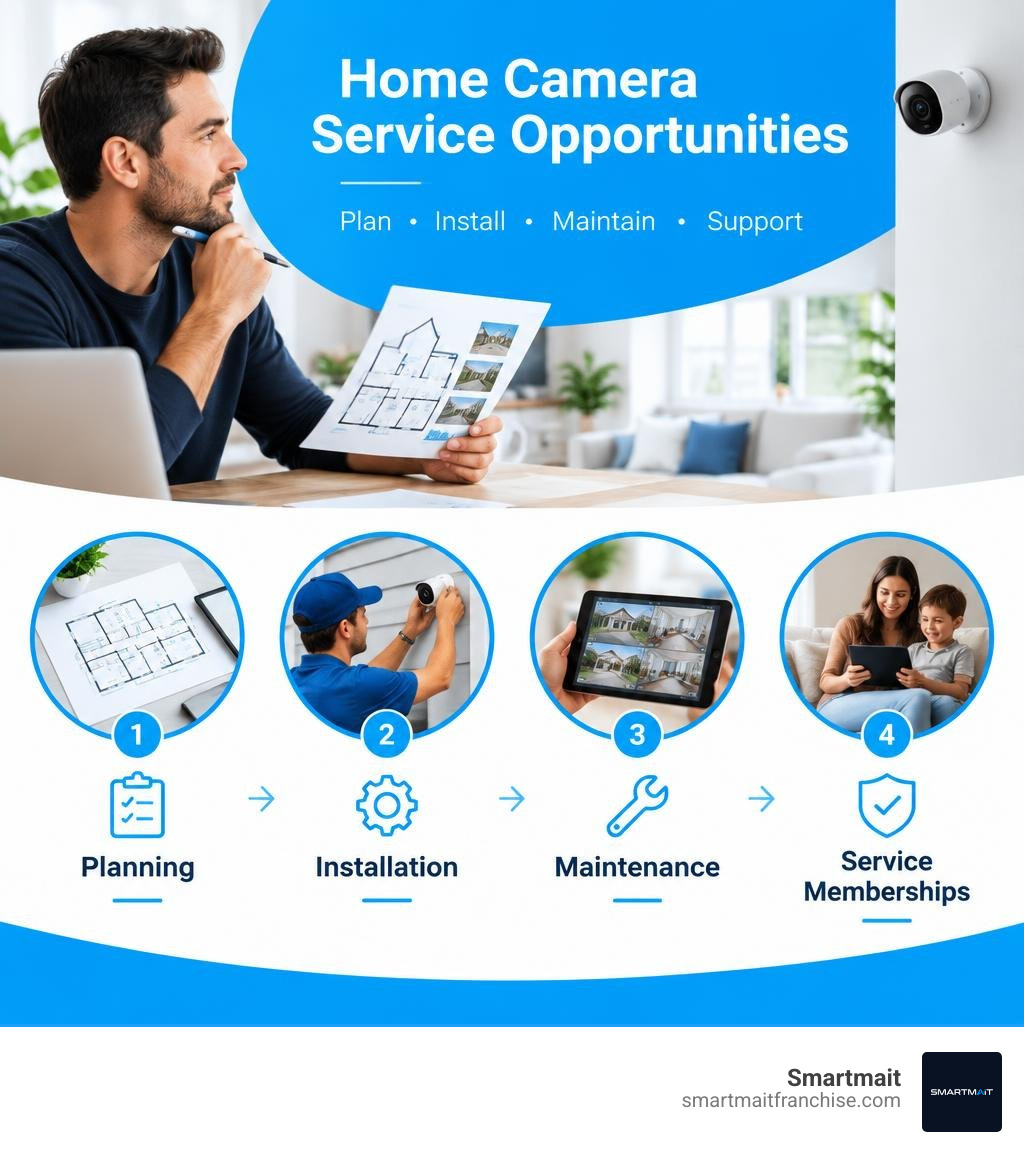
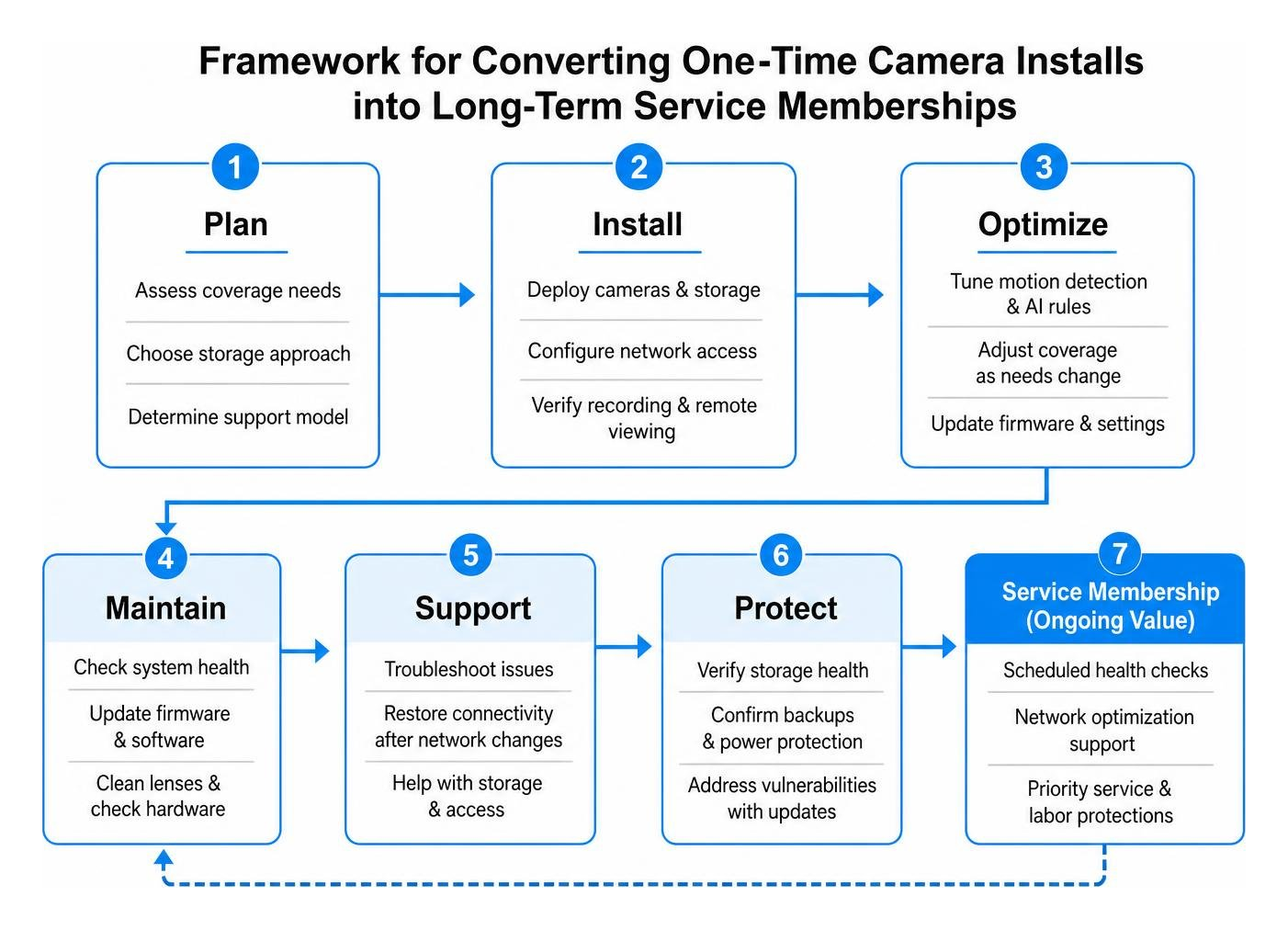
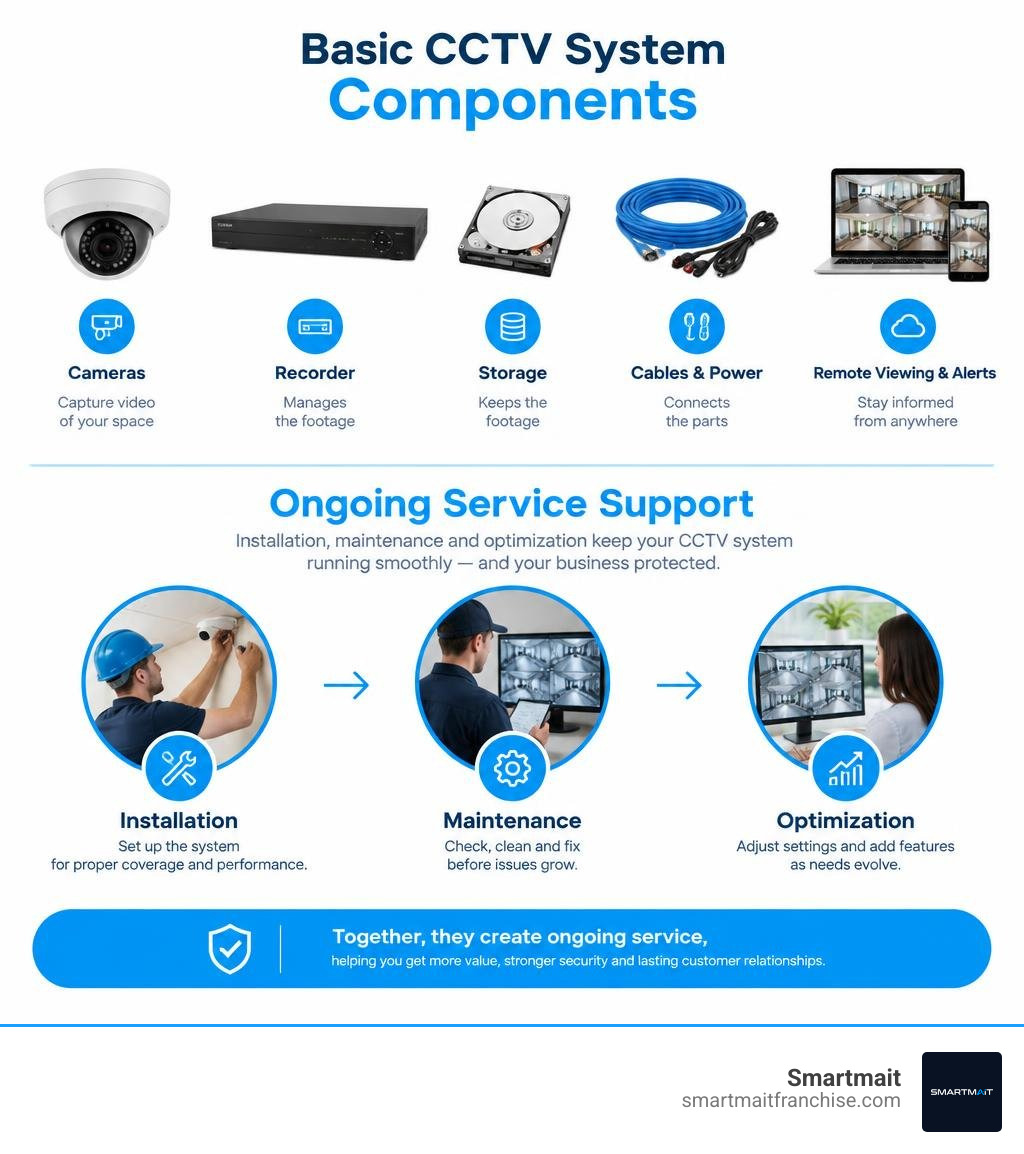
The most resilient low-voltage integration businesses combine project-based installations with recurring service memberships. In commercial environments like car washes, hardware requires consistent care to remain operational.
A structured service agreement can include:
- Scheduled Preventative Inspections: Routine on-site visits to clean camera optics, check seals, verify cable integrity, and inspect mounting brackets.
- System Health Monitoring: Automated remote alerts for network disconnections, storage drive health, and camera offline status.
- Firmware and Security Updates: Regular software patches and cybersecurity audits to maintain local compliance and protect network infrastructure.
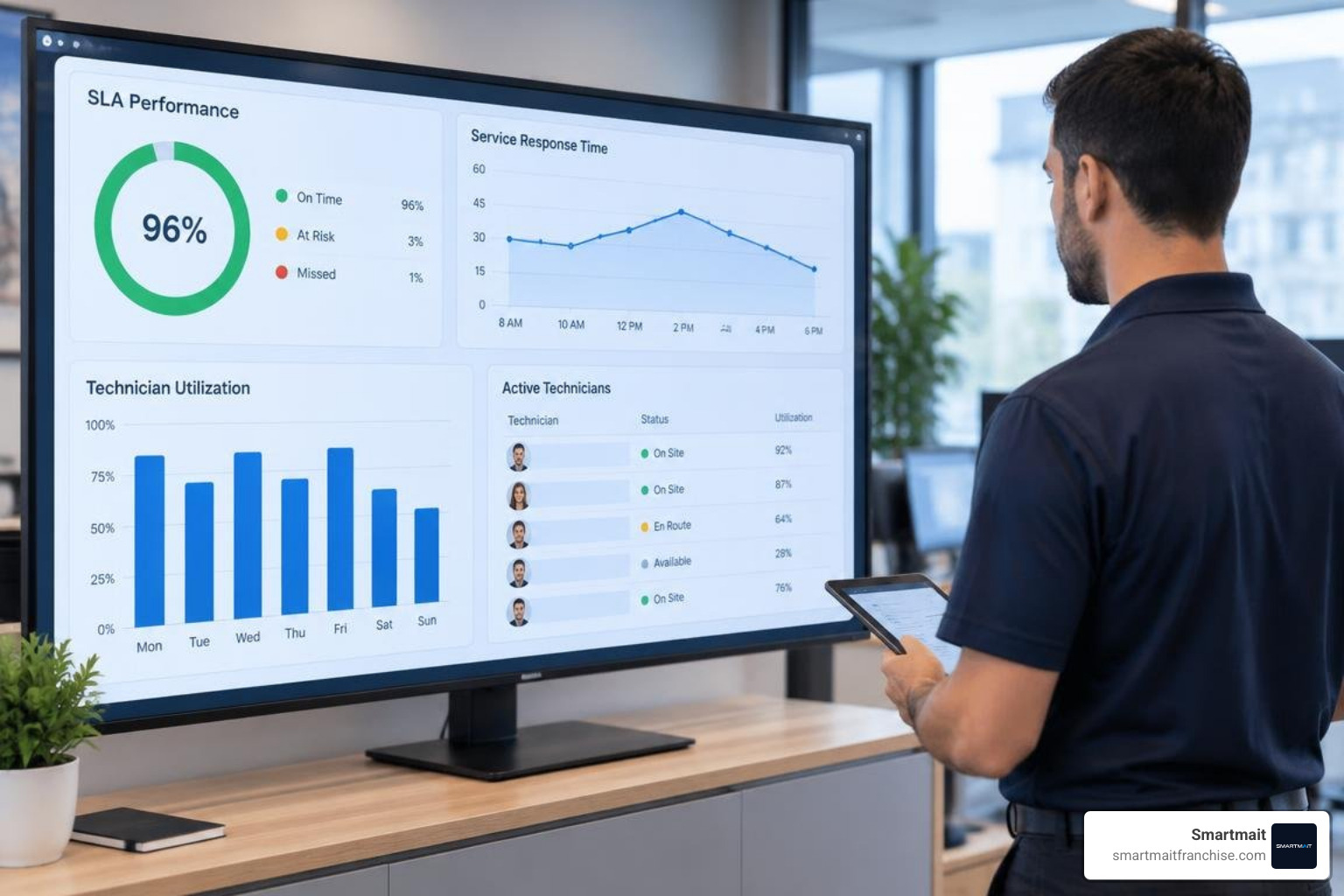
- Priority Service Dispatch: Guaranteed response windows for critical camera outages affecting vehicle-entry documentation arches.
Packaging installation projects with ongoing maintenance creates predictable operational cash flow and deepens customer retention. Entrepreneurs can explore how these service structures align with franchise ownership through our guide on CCTV services and recurring revenue models.
Evaluating Franchise Ownership vs. Converting an Existing Business
Established independent low-voltage integrators often face operational plateaus. Scaling beyond a single owner-operator setup requires formalizing standard operating procedures, creating training systems for new hires, and building recognizable brand equity.
Converting an existing integration firm into a franchise network model allows operators to retain their local market expertise while adopting proven operational systems.
| Operational Factor | Independent Integration Business | Structured Franchise Model |
|---|---|---|
| Operational Systems & SOPs | Developed through trial and error; highly owner-dependent | Turnkey, documented workflows for site surveys, quoting, and deployment |
| Technician Training Paths | Ad-hoc internal shadowing; inconsistent skill transfer | Standardized training modules, technical certifications, and onboarding tracks |
| Service Model Development | Typically project-focused with limited recurring service contracts | Built-in service-membership models designed for long-term customer retention |
| Brand Recognition & Marketing | Local, self-managed marketing with limited regional reach | National brand positioning, structured sales assets, and corporate marketing support |
| Scalability & Succession | Difficult to transition or sell due to owner-centric operations | Scalable operational structure facilitating multi-territory expansion and clear exit planning |
Environmental Maintenance and Long-Term Customer Relationships
In harsh commercial environments, an installation is simply the beginning of the client lifecycle. Long-term customer satisfaction depends on how effectively an integration business maintains system performance over time. Establishing clear maintenance protocols builds customer trust and protects the operator’s brand reputation.
Planning for Moisture and Chemical Exposure
Car wash environments subject electronics to extreme stress. Airborne waxes, acid-based cleaning chemicals, and high-pressure overspray will degrade unsealed connections and haze camera lenses.
Technicians should be trained to follow rigorous environmental protection standards during installation:
- Applying silicone grease to rubber O-rings and junction box gaskets.
- Using drip loops on all exterior cabling runs to prevent water tracking into camera housings.
- Installing protective sun/rain shields to minimize direct chemical mist contact.
- Sealing all conduit penetrations with commercial-grade silicone or duct seal.
Educating clients on the impact of these environmental factors reinforces the necessity of structured preventative maintenance visits.
Preventative Maintenance and Staff Training
A comprehensive service offering includes staff onboarding and system training for the client’s management team. When a vehicle damage dispute arises, car wash managers need to locate, review, and export footage quickly without technical frustration.
During regular maintenance visits, technicians can:
- Inspect camera lenses for chemical film and apply specialized hydrophobic glass coatings.
- Review storage capacity and verify that video retention periods meet the client’s operational policies.
- Test uninterrupted power supply (UPS) batteries to ensure recording continuity during utility fluctuations.
- Provide refresher training for new car wash shift supervisors on video export procedures.
This consultative approach transforms an integration business from a hardware vendor into a vital operational partner.
Frequently Asked Questions About Car Wash Surveillance as a Business Niche
What should a franchise candidate consider before offering car wash surveillance services?
A prospective franchise candidate should assess local commercial car wash density, the technical capability of their field technicians, and their capacity to support ongoing maintenance contracts. Because these environments involve wet, high-vibration conditions, technicians must be trained in specialized conduit bending, IP-rated sealing techniques, and network optimization. Integrators must also establish realistic service response times to support commercial clients when critical cameras go offline.
How can vehicle-condition documentation create value for car wash customers?
Vehicle-condition documentation provides car wash operators with clear visual records of pre-existing vehicle damage before cars enter the wash equipment. High-resolution entrance footage indexed by license plate numbers helps facility owners quickly resolve disputed damage claims, protecting their business reputation and eliminating unverified payouts. This clear operational value makes car wash owners highly receptive to professional surveillance installations and ongoing maintenance agreements.
Can surveillance services support recurring revenue for an integration business?
Yes. Commercial surveillance systems in harsh environments naturally require ongoing preventative maintenance, optical cleaning, firmware updates, and system health checks. By offering structured service memberships that include routine on-site tune-ups and priority technical support, low-voltage integration businesses can establish predictable monthly recurring revenue alongside upfront installation projects.
Conclusion
The demand for specialized commercial surveillance—such as tailored car wash camera systems and ongoing environmental maintenance—illustrates the broad potential within the low-voltage integration and smart-building sector. Success in this trade requires more than technical installation skills; it demands structured operating procedures, standardized technician training, and a business model rooted in recurring service relationships.
Smartmait offers franchise opportunities designed for ambitious entrepreneurs and established low-voltage integrators seeking a scalable, systemized business model. Whether you are looking to enter the smart-building integration industry as a new franchise owner or convert an existing independent business into a high-retention service brand, our platform provides the operational tools, brand strength, and technical training systems needed to scale effectively.
To learn more about market availability, operational systems, and franchise ownership opportunities with Smartmait, request franchise information today and take the next step in building a scalable integration business.